
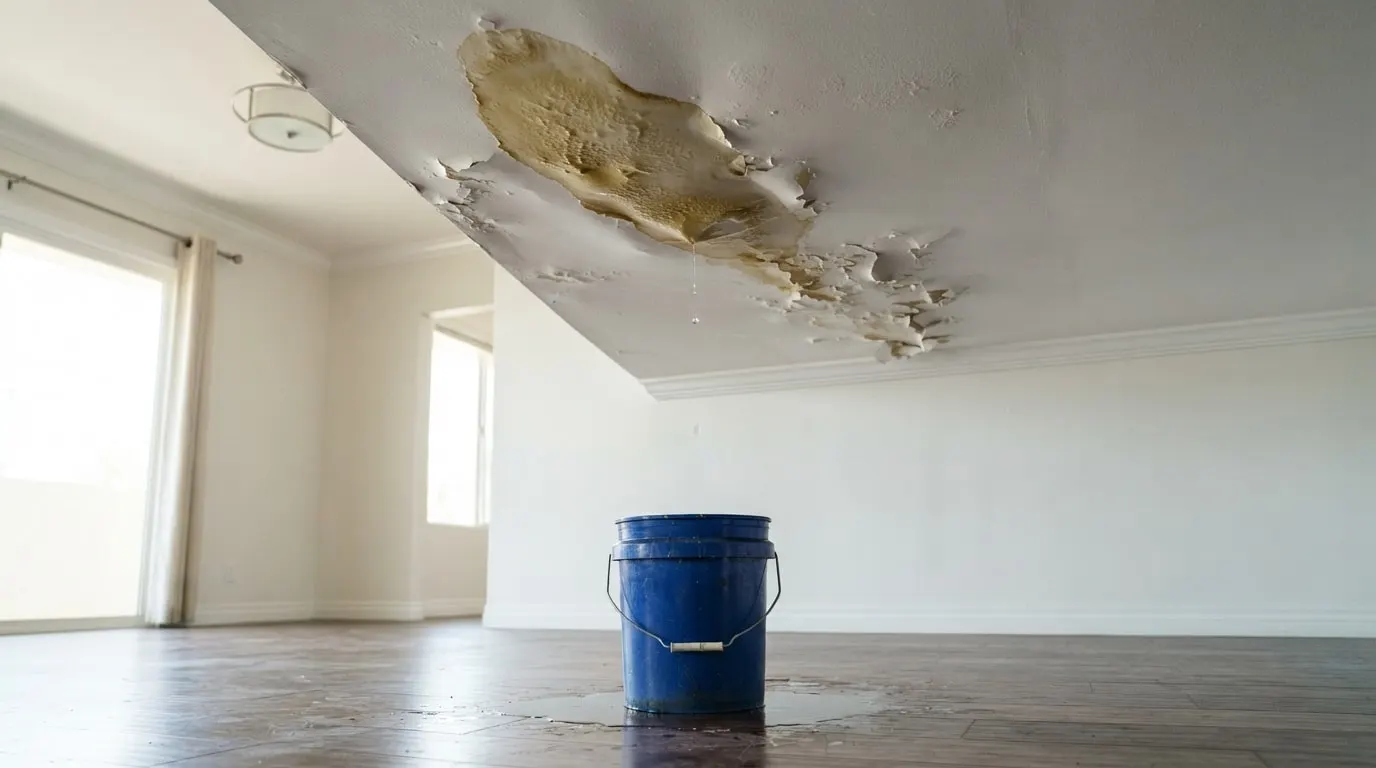
Water coming through from the unit upstairs
Census figures for 2020 to 2024 put the owner-occupied rate in the City of Los Angeles at 36 percent, which leaves close to two in three homes rented. A lot of those are apartments and condos stacked on top of each other, so ceiling water damage in Los Angeles very often starts in somebody else’s bathroom, kitchen or laundry closet. Los Angeles Water Damage Cleanup picks up the phone at any hour, and a licensed, insured restoration crew tracks where the water went and dries it.
The usual sources overhead are a toilet supply line, a cracked shower pan, a leaking tub drain, a washer hose or a dishwasher in the unit above. Water from any of them runs along the joists and pipes before it finds a seam in your drywall, so the drip can show up a few feet from the fixture that caused it.
When you call, give us your unit number and the one above you, and say whether the neighbor or the manager has been reached. The leak has to be stopped at the source before the drying does any good. Who covers which part of the damage in a shared building is its own question, answered on the insurance claims page along with the photos an adjuster asks for.
What water damage on a ceiling looks like
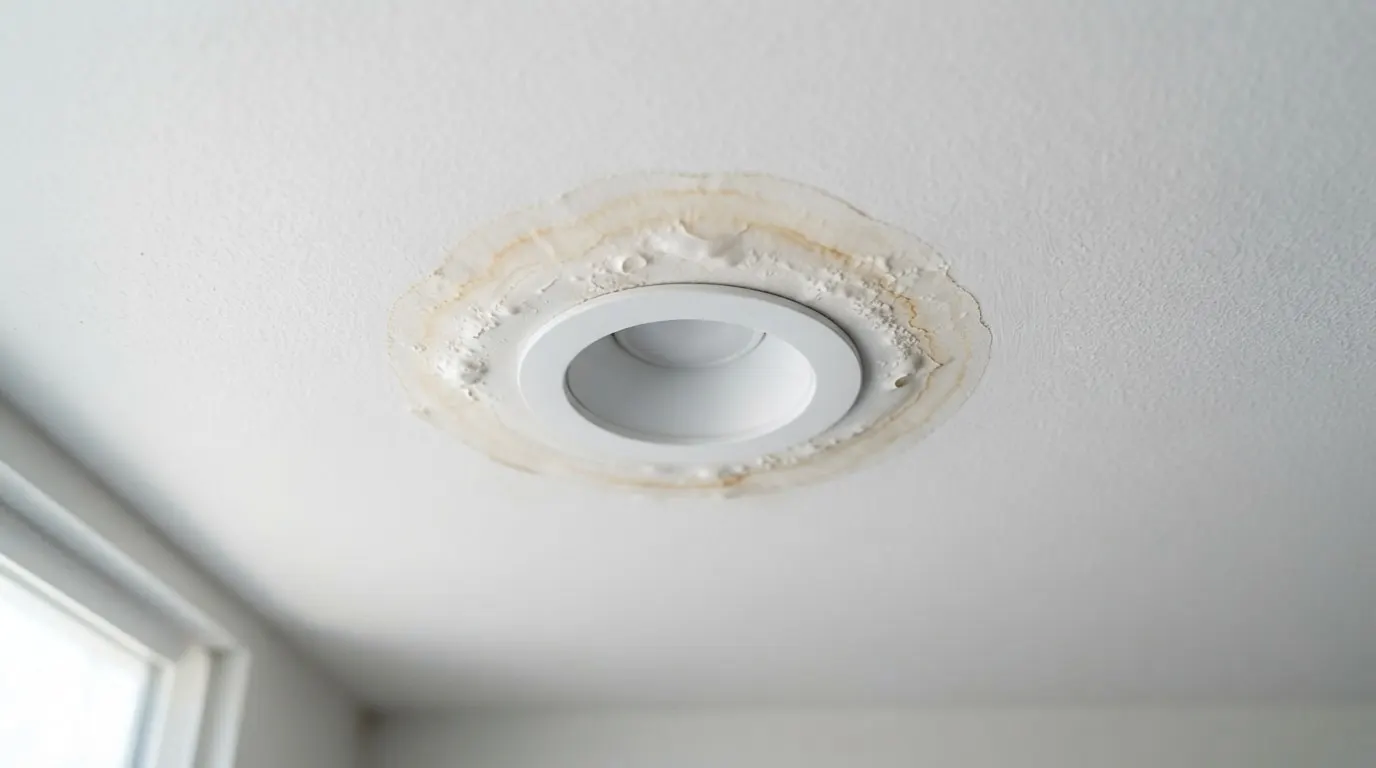
Early on it’s quiet. A pale yellow ring or a brown edge on flat paint. Paint that bubbles or peels in a patch. A drywall seam whose tape is starting to show as a line.
Later signs mean more water is sitting up there:
- a soft spot that gives when pressed with a broom handle
- a belly or bulge, often between two joists
- rusty nail or screw heads popping through the paint
- drips at a light fixture, a smoke alarm or the edge of a can light
- a musty smell in a room with no visible stain
Brown water usually means it picked up dirt, wood stain or old insulation on the way down. It tells you the water traveled through the attic or the floor above, so the wet area up there is bigger than the ring you see.
Is a leaking ceiling an emergency?
Yes, when water is still coming, when the ceiling is sagging, or when it’s dripping at anything electrical. Each of those calls for a crew now instead of a look in the morning. A dry stain that hasn’t grown since last week is less urgent, but it still needs readings, because the drywall face can look fine while the cavity above stays wet.
In a stacked building, the leak may keep running until someone shuts off the fixture or the riser upstairs. If the unit above is empty or the neighbor isn’t answering, tell us that on the call. The building manager or the HOA usually has access to the shutoff.
Can a leaking ceiling collapse?
It can. Water is heavy: the U.S. Geological Survey puts a gallon at about 8.3 pounds. Drywall that soaks it up loses strength and starts to sag between the framing, and the ceiling also carries whatever insulation sits on top of it.
That weight limit is tight even when everything is dry. Gypsum board maker CGC tells installers to keep unsupported insulation on a half-inch ceiling under 1.3 pounds per square foot when the joists are 24 inches apart. Blown-in insulation that has taken on water from a roof leak or a burst line overhead can blow past that, and the board gives way at the seams first.
Will a ceiling leak dry on its own?
Usually not, or not fast enough to head off the damage. A ceiling dries from below through paint, while the top side sits under insulation, a subfloor or roof sheathing with almost no air moving across it. Insulation holds water against the drywall, and wood joists take days to give it up.
A ceiling can feel dry to the hand while the cavity above is still wet enough to grow mold. The mold page covers how quickly that happens. The way to know is readings. The Gypsum Association notes that handheld meters are best at ranking wetter areas against drier ones, so the crew reads the stained area, then a dry ceiling elsewhere in the house, and compares the two.
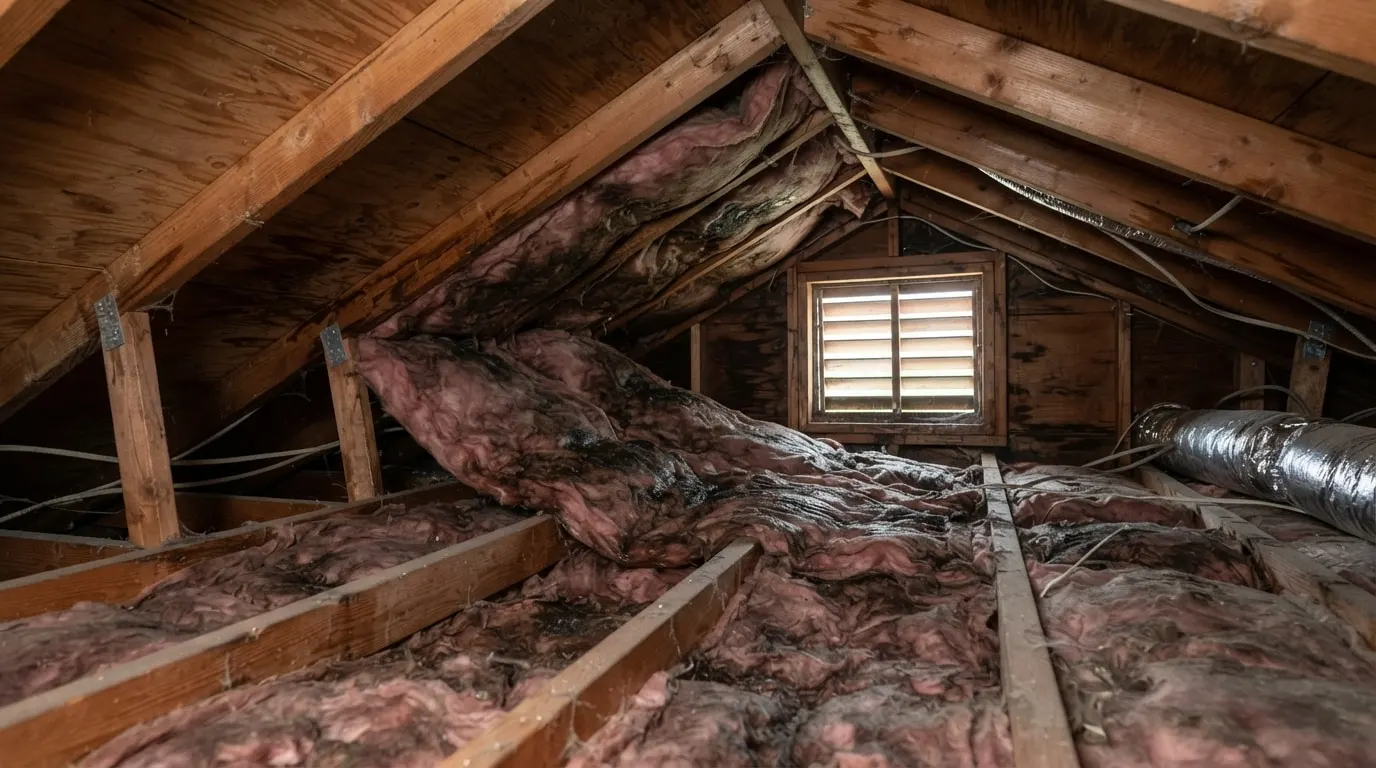
Attic insulation and the cavity above
In a single-story house with an attic, a ceiling leak usually means the insulation got wet first. Batts can sometimes be pulled back and dried. Blown-in insulation that’s soaked mats down and holds water against the drywall, so it usually gets bagged and hauled out of the wet area. With the insulation gone, the crew can dry the joists and the back of the board with air movers and dehumidifiers aimed into the attic.
If the house has a textured or popcorn ceiling, ask about testing before anything gets cut. The EPA lists textured paint and patching compounds on walls and ceilings among the materials that may contain asbestos, and you can’t tell by looking. A sample comes first, and the cutting plan follows the result.
Why is my ceiling leaking when it rains?
Rain that shows up on the ceiling is a roof, flashing or exterior wall leak, often one that only opens in a long, wind-driven storm. Water runs down the rafters, lands on the insulation and spreads before it soaks through. The storm and flood cleanup page covers what atmospheric-river storms do to roofs here. The drying above your ceiling is the same work described here.
Ceilings in two-story houses
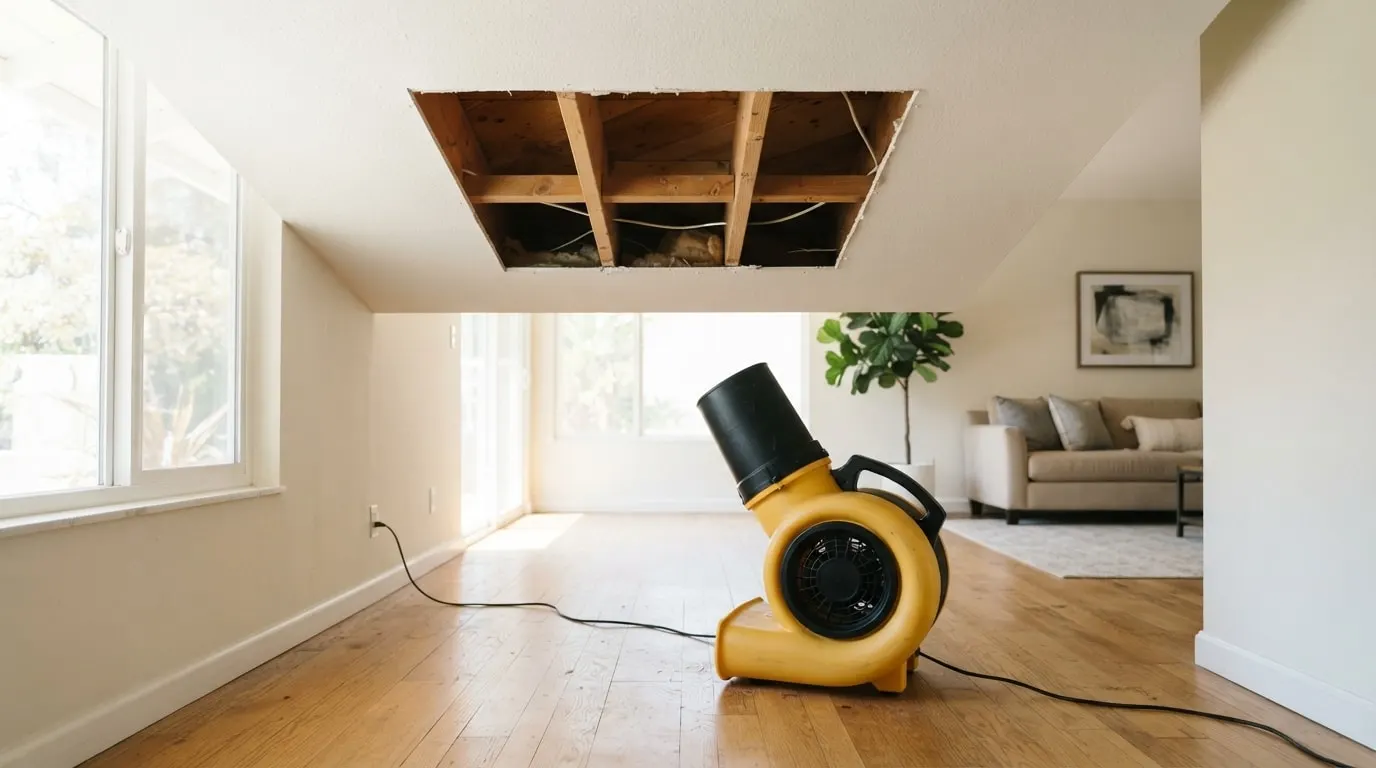
In a two-story house there’s no attic between floors, only joists, a subfloor and the finished floor above. Water from a second-floor bathroom can sit on top of the ceiling drywall with nowhere to go. The crew may open a section of ceiling to dry that bay, or drill small holes and push air in, depending on how wet the readings are and how far the water spread.
How the crew fixes water damage on a ceiling
The work follows the water from the top down:
- Stop the source. The leak upstairs or on the roof gets shut off or repaired first. Drying a ceiling under a running leak goes nowhere.
- Map it. Moisture readings across the ceiling and the walls below it, plus the floor or attic above where the crew can reach it, so the wet area is drawn on the job before anything is cut.
- Open what can’t dry in place. Sagging, delaminated or soaked board gets cut out back to sound material, and wet insulation comes out with it.
- Dry the cavity. Air movers and dehumidifiers run until the joists and the remaining drywall read dry, with a drying log kept each day.
- Close it up. New board, tape, texture to match and paint, after the last readings.
The whole sequence, including how the water category and drying class are set, is on the water damage restoration page. When the same leak also ran down a wall and into the flooring, the floors and walls page covers what can be saved below the ceiling.
Do you have to replace a ceiling after a leak?
Sometimes it can stay. Drywall is kept if the board is structurally sound, the water was clean, the source is fixed and the board dries thoroughly before mold starts. That’s the Gypsum Association’s own test, and if one of those four fails, the board gets replaced. Its guidance is blunt: when there’s doubt, replace it.
A small stain from a short leak of clean water often dries in place and only needs a stain-blocking primer and paint. A ceiling that sagged, that has paper peeling off the gypsum, or that sat wet for days usually comes down in the affected bay. Water from a toilet overflow, or anything that came through a roof with debris in it, pushes the decision toward replacing. What each of those choices does to the cost is laid out on the restoration cost page.
Ceiling leak questions from apartments and houses
Should I poke a hole in a bulging ceiling?
No. A bulge full of water can split wider than the hole and drop a whole panel with it. Put a bucket and a tarp under it, keep people out of the room and call. The crew drains it in a controlled way, from a ladder, with the circuit off.
Can an air conditioner leak through the ceiling?
Yes. When the air handler sits in the attic, a clogged condensate drain or a full drip pan spills onto the drywall below, usually near the unit or a supply register. Mention the AC when you call so the crew checks the pan and the drain line along with the ceiling.
My ceiling stain is dry. Is the leak over?
A dry stain doesn't prove the leak is over. A stain that dries out between showers or between storms points to a leak that only runs when that fixture or the roof gets water. Note when the stain grows, because that timing tells the crew where to start looking.
Is water from an upstairs toilet clean water?
Water from a supply line or a tank is usually clean at first. An overflowing bowl or a failed wax ring is a different category and changes what gets cleaned and what gets thrown out. See how that works on the sewage backup cleanup page.