
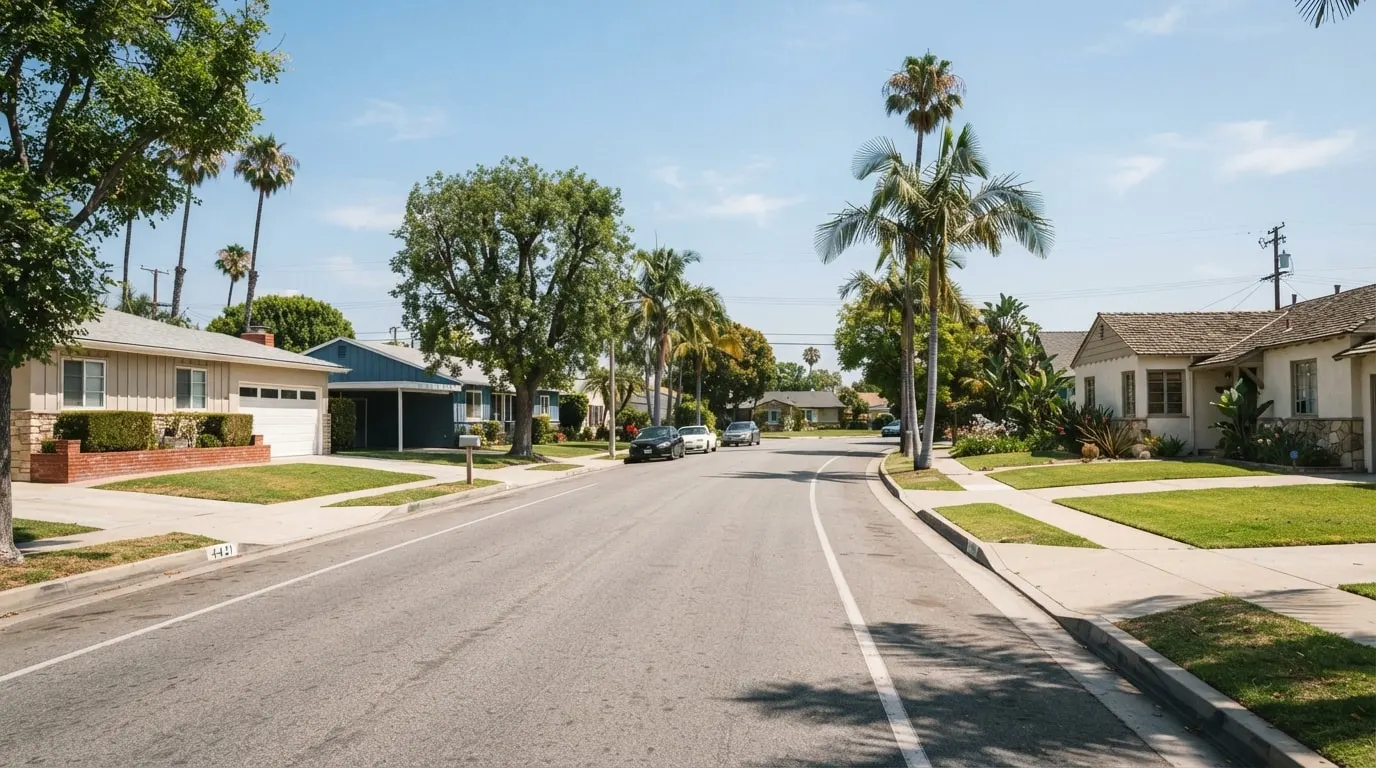
A leak in a 1950s or 60s Torrance house
About six in ten Torrance homes were built between 1950 and 1969, according to Census estimates for 2020 to 2024. That’s the city’s postwar boom, when Torrance went from dairies, flower fields and oil derricks to a city of owner-occupied single-family homes, and one developer, Wilson Development, built a majority of the houses put up in those two decades. The result is a lot of houses of the same age with plumbing of the same age.
Los Angeles Water Damage Cleanup takes calls for water damage restoration in Torrance at any hour. A licensed, insured restoration crew extracts the water, maps the moisture and runs the dry-out until the house reads dry.
Most callers here own the place. About 55 percent of Torrance homes are owner-occupied and just over half are detached houses, so the person on the phone is usually also the one who has to deal with the plumber, the claim and the rebuild.
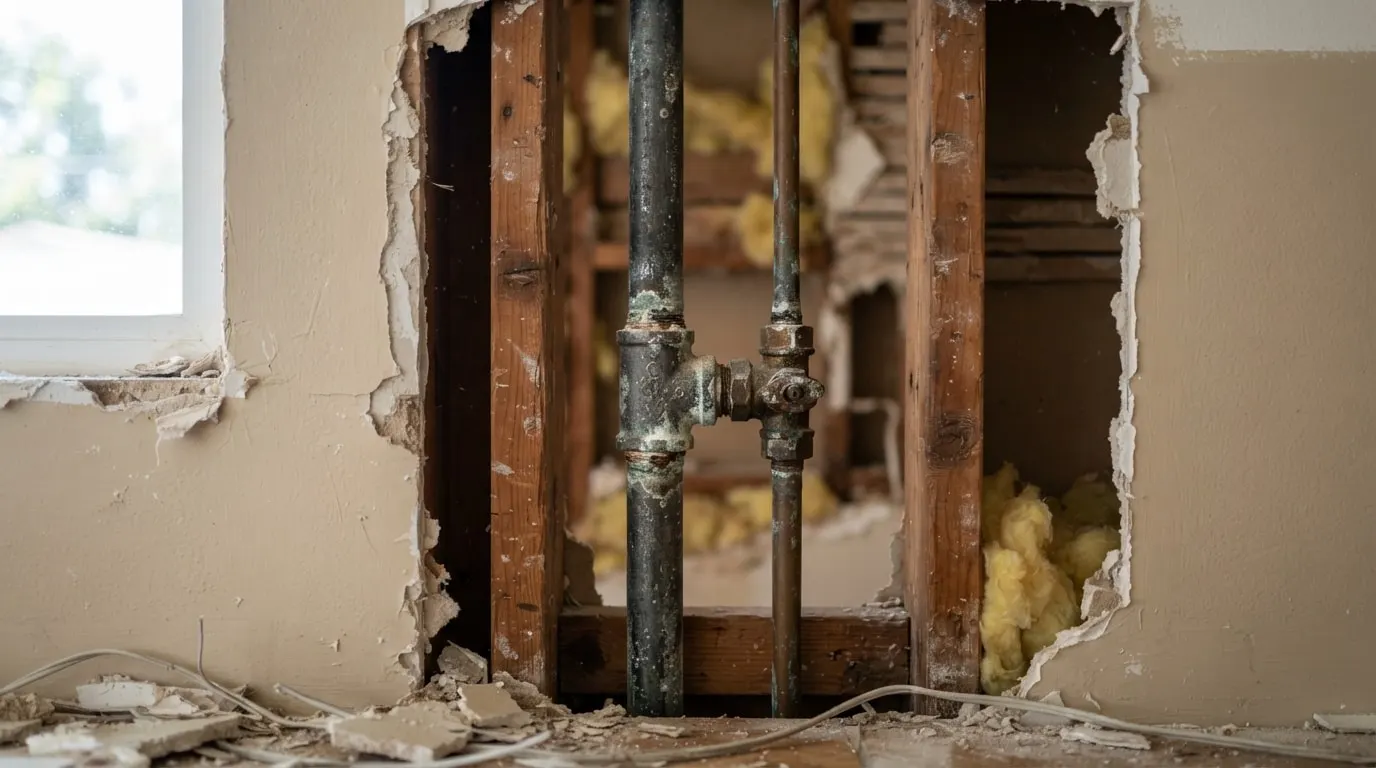
Original plumbing at 55 to 75 years
A house built in 1958 that still has its first water lines is running on pipe that’s well past middle age. Water damage repair in Torrance often starts with one of these:
- A supply line under the slab. If the house sits on a slab, a pipe that fails inside the concrete pushes water up under the flooring. It shows up as a warm spot, a damp patch of carpet, a hardwood strip that starts to cup, or a water bill that doesn’t make sense. Signs and drying after a slab leak are covered on the slab leak water damage page.
- Pinholes and rusted lines in the walls. Old copper can pinhole and galvanized steel rusts shut from the inside, and either one can leak inside a wall for weeks. The burst pipe page covers both failures.
- Fixture and appliance hoses. Toilet supplies, washer hoses and the ice maker line behind the fridge get replaced less often than they should, and they fail all at once.
Remodels hide some of this. A kitchen redone in the 1990s can sit on top of the original line in the slab, so new cabinets don’t mean new pipe.
Garage water heaters
Plenty of Torrance tract houses keep the water heater in the garage. When a tank rusts through, the water spreads across the garage slab and runs toward the lowest wall, which is often the one shared with the house. Boxes stored on the floor soak it up, and so does the drywall at the base of that wall. More on tanks, T&P valves and what gets wet first is on the water heater leak page.
Is my Torrance house in a flood zone?
Probably not on the federal map. Only a few small, isolated areas of Torrance are mapped as FEMA Special Flood Hazard Areas, and those come mainly from water ponding in shallow low spots. The city’s own storm guidance is about a different problem: localized street and intersection flooding in heavy rain, and water getting into homes, garages and businesses.
On a water damage call that looks like this:
- Storm water pools in the street or the yard and comes in under the garage door or through a door threshold.
- A clogged gutter or downspout dumps roof water against one wall, and it shows up inside along the baseboard.
- The storm drain backs up at a low corner of the lot.
Water that comes in from outside has touched soil, the street and whatever was in the gutter, so it’s treated as dirtier than a pipe leak. That changes what can be dried and what gets cut out and thrown away. Atmospheric-river storms, roof leaks and flood coverage are covered on the storm and flood cleanup page.
Torrance Municipal Water or Cal Water
Torrance Municipal Water, run by the city’s Public Works department, covers about 78 percent of Torrance and answers emergencies and outages on its system 24 hours a day. California Water Service (Cal Water) serves other parts of the city. Your water bill says which one you have.
The provider handles the main and its side of the meter. Everything past the meter is the property’s: the yard line, the pipes in the slab, the walls and the fixtures. Water coming up through the sidewalk strip or the street is the provider’s to shut down. If it’s coming up through your floor or out of a wall, that’s a plumber for the line and the restoration crew for everything it soaked.
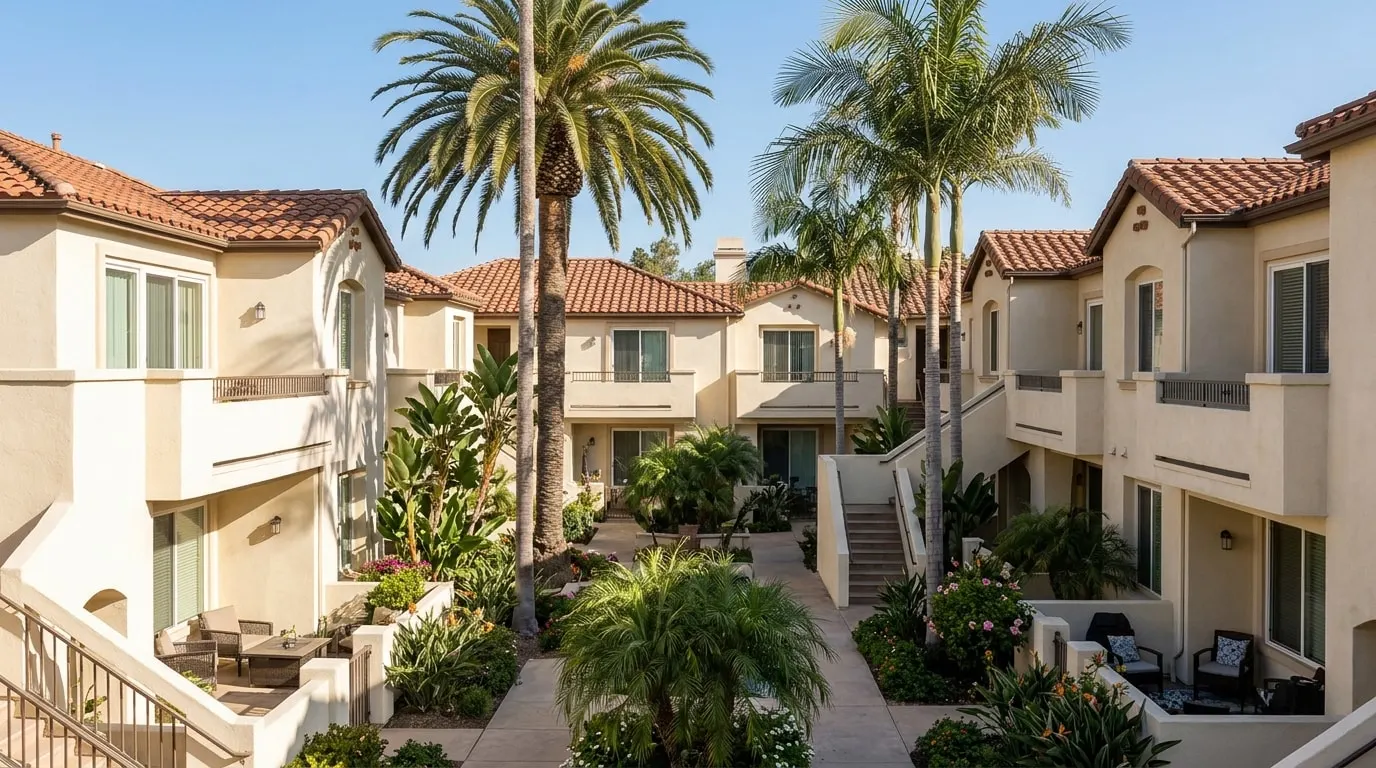
Condos, townhomes and large complexes
Not all of Torrance is single-family. About 13 percent of the city’s homes are in buildings of 50 or more units, and another 10 percent are in buildings of 20 to 49. In a stacked building, a leak in one unit can wet two or three below it, and the HOA or the management company has to be in the loop for access to shared shutoffs and the units next door.
Townhomes share walls rather than ceilings, so the water moves sideways. The crew follows the moisture map through the party wall and into the next unit when the readings say it went there.
Torrance ZIPs 90503, 90504 and 90506
This page covers 90503, 90504 and 90506. Don’t see your ZIP? Call anyway and we’ll check your address.
North of Torrance, the Inglewood page covers a city with older buildings and far more renters. Up the coast, the Santa Monica page covers the beach side of the Westside, and the service area page has sections on Gardena and Hawthorne, both a short drive north.
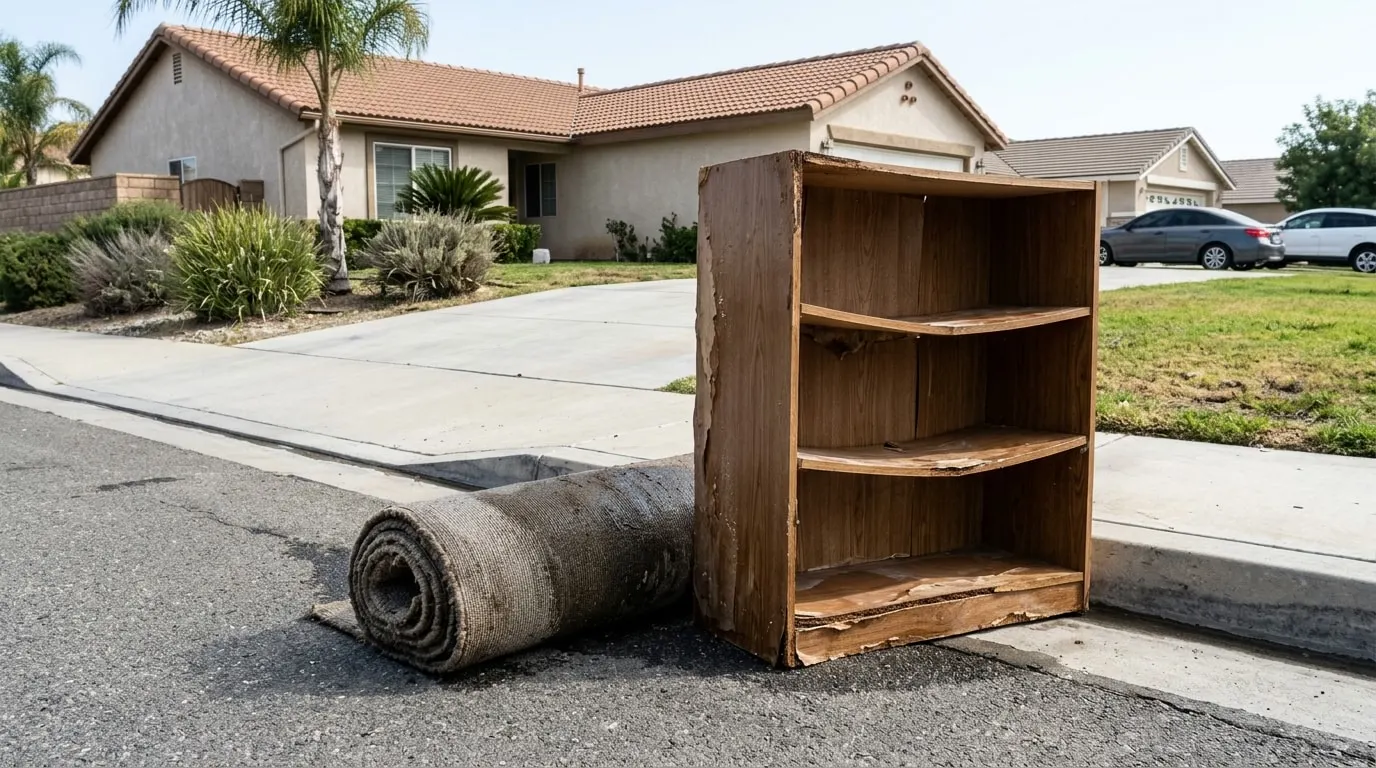
Photos before anything goes to the curb
Torrance’s emergency services office gives storm advice that holds for any leak: document the damage before you start a big cleanup or throw anything out, unless something has to move for safety. An adjuster wants to see the wet carpet, the swollen baseboard and the failed part before they’re gone.
Before the crew starts pulling material out:
- Photograph every wet room from the doorway, then up close where the water is deepest.
- Get the source in a photo: the split supply line, the rusted tank, the wet slab under the carpet.
- Set aside the failed part if the plumber replaces it. Adjusters sometimes ask for it.
On top of your photos, the crew keeps a moisture map from day one and a daily drying log until the last reading hits dry. That log is the record that the house was dried out before the walls and floors were closed back up. Sudden versus gradual leaks and what a claim needs are covered on the water damage insurance claims page.
Torrance questions about older plumbing
My water bill jumped but I can't see any water. Is that water damage?
It can be. A leak under a slab or inside a wall can run for weeks before a floor or baseboard shows it. A plumber finds and fixes the line. Then the crew takes readings across the floor and the lower walls to see how far the water spread before anyone noticed.
The water heater leaked in the garage. Can it reach the house?
Yes, when the garage shares a wall with a laundry room, a kitchen or a hallway. Water runs under the bottom plate of that wall and wicks into the drywall on the house side. The crew reads both sides of the shared wall, not only the garage floor.
Can a condo owner call before the HOA gets involved?
Yes. Call us to get the water out and the drying started, and let the HOA manager know the same day. Inside the unit is usually your side and the common pipes are usually theirs, but your CC&Rs decide. The insurance page covers how that split works on a claim.