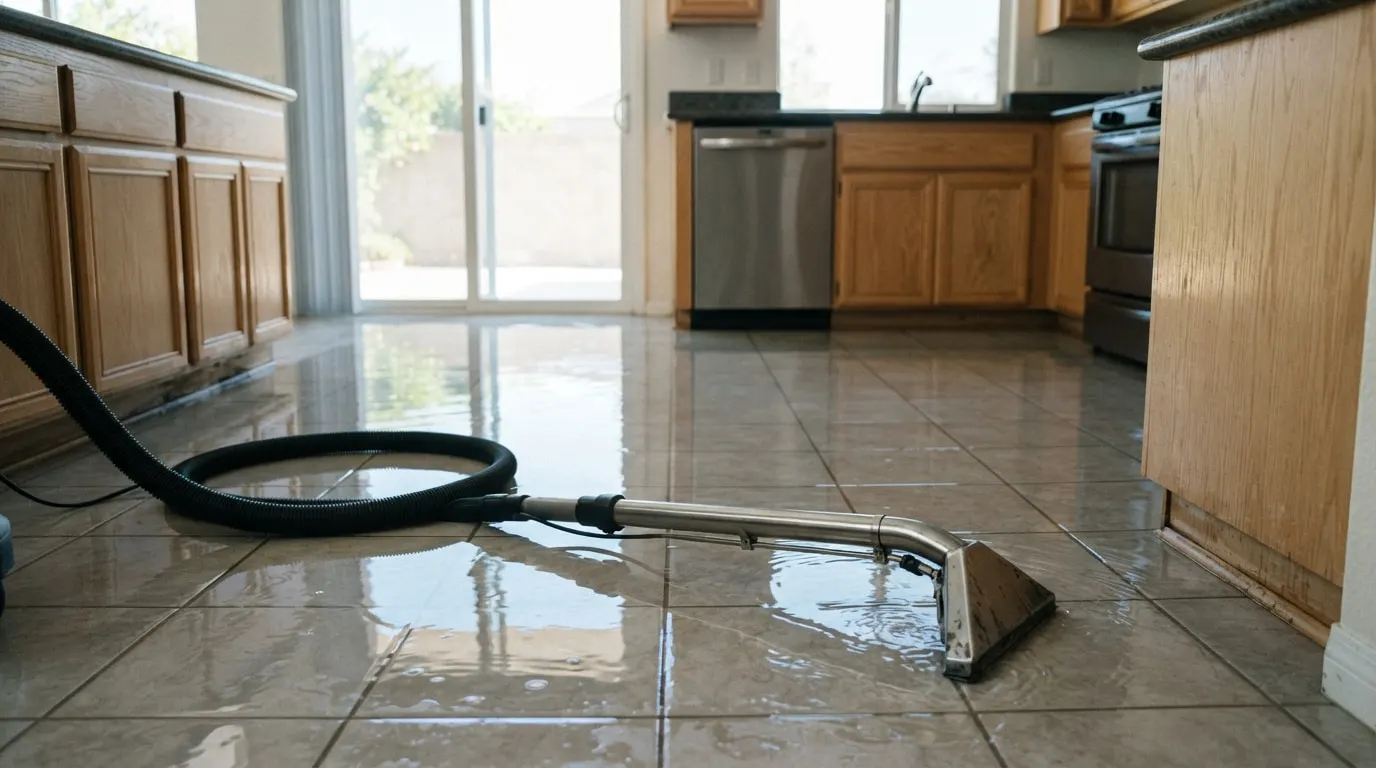
Standing water on a slab floor
Water removal in Los Angeles often happens on a concrete slab. With no basement and no floor drain to run to, water from a split supply line or a failed water heater spreads out flat. It gets under laminate and vinyl plank, into the carpet pad and beneath the toe kicks of the cabinets, then climbs the bottom of the drywall. Los Angeles Water Damage Cleanup answers around the clock, and a licensed, insured restoration crew handles the emergency water extraction and the dry-out after it.
Most calls open with two questions: where is the water coming from, and has it stopped? Next comes how many rooms are wet, what the floors are made of, and whether there’s a unit under yours. One wet bathroom might need a portable extractor and a few air movers. A soaked ground floor calls for a truck-mounted unit, carpet tools and several dehumidifiers, and your answers on the call tell the crew which to bring.
The first 24 to 48 hours
EPA’s guidance is that mold usually won’t grow if wet materials are dried within 24 to 48 hours, and the first two days of a water loss are planned around that. The mold after water damage page covers what happens when the window gets missed. On most jobs the first visit runs in this order:
- Walk-through. A safety check, the source confirmed off, and a call on the water category: clean, gray or contaminated.
- Photos and first readings, taken before anything is moved, so the claim file shows the damage as it was found.
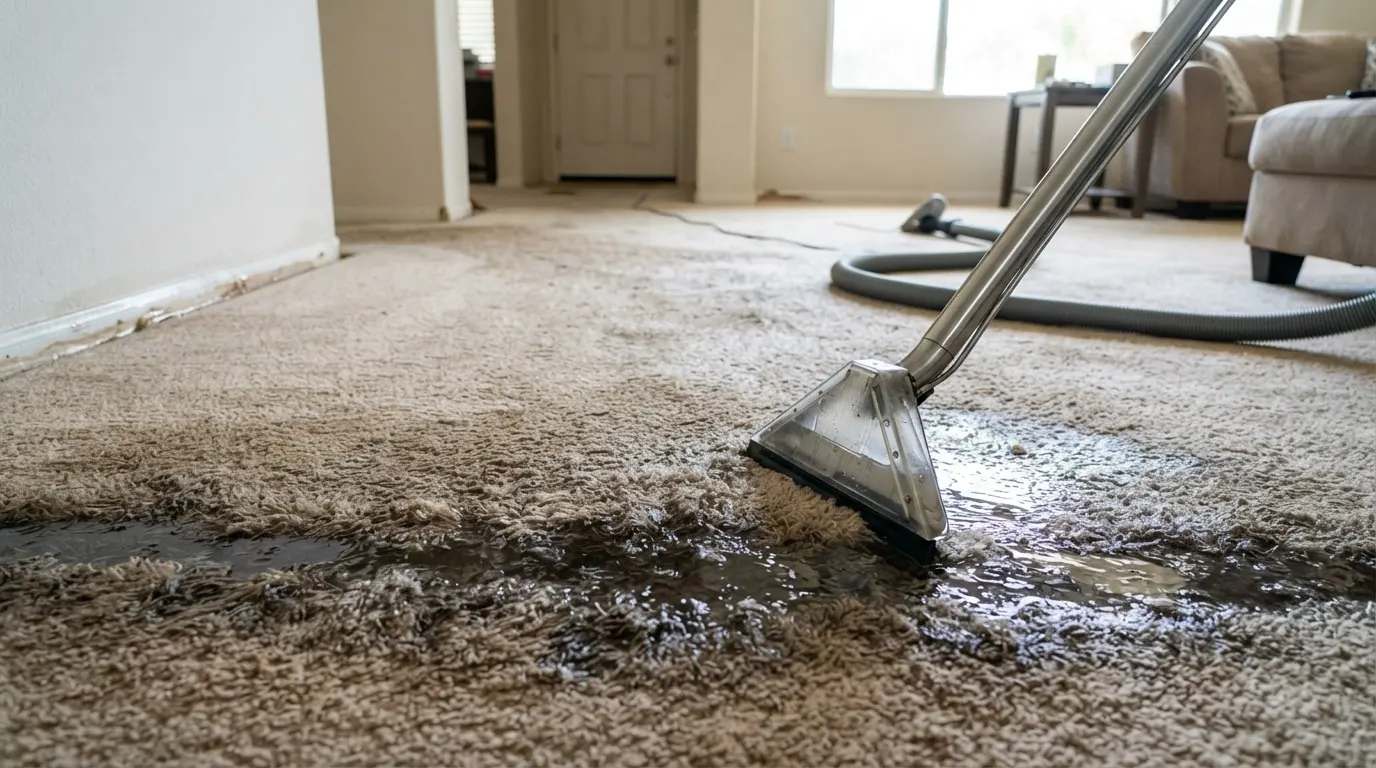
- Extraction. Standing water comes up first, then the water held in the carpet and pad.
- Removal. Anything that can’t be dried in place comes out, which means soaked pad on most dirty-water jobs and any material the inspection marks as a loss.
- Setup. Air movers go along the walls and across the floor, dehumidifiers get sized to the space, and plastic goes up if one room is drying while the next one isn’t.
- The moisture map and the first log entry, so the next check has numbers to compare against.
After that, each check is readings at every mapped point and moving the gear wherever a number isn’t dropping.
What is water mitigation?
Water mitigation is everything done to keep water damage from getting worse: stopping the source, extraction, pulling out what can’t be saved, and drying the structure until it reads dry. It stops short of the rebuild. Putting the room back is restoration, and the water damage restoration page explains how water categories, drying classes and the drying log set when that can start.
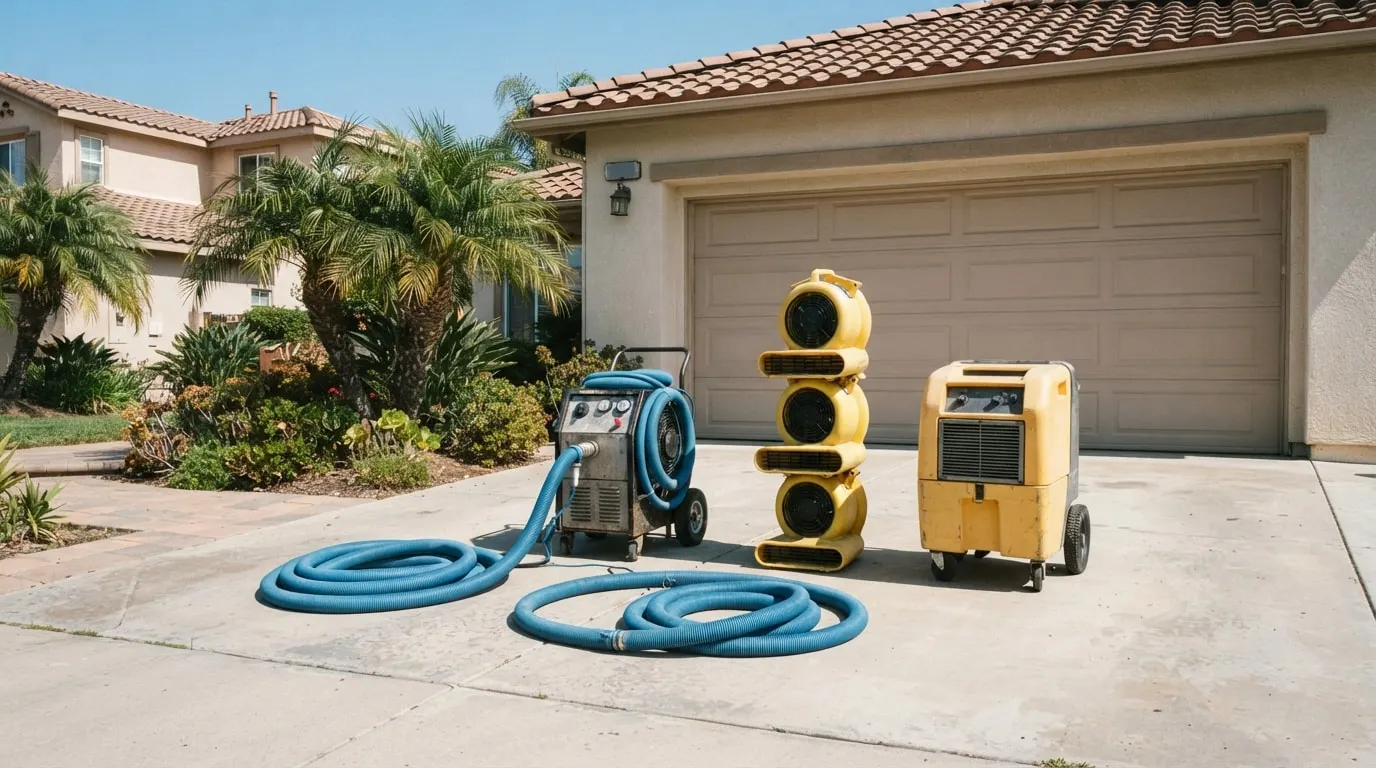
Extraction equipment and what each piece does
| Equipment | What it does | Where it gets used |
|---|---|---|
| Truck-mounted extractor | A strong vacuum powered from the van, with hoses run into the house | Large carpeted areas within hose reach of the street or driveway |
| Portable extractor | Carried in and run off household power | Upper-floor condos, hillside homes far from parking, single rooms |
| Weighted extraction tool | Presses down on carpet so the extractor can pull water out of the pad | Wall-to-wall carpet that’s staying |
| Submersible pump | Moves deep standing water before the vacuums go to work | Garages and ground floors after a storm |
| Air movers | Blow air across wet surfaces so they give up water faster | Along baseboards, under cabinets, across floors |
| Dehumidifiers | Pull the evaporated water out of the air | Every drying area; desiccant units for cool spaces and dense materials |
| Injection and floor drying systems | Push dry air into wall cavities, under cabinets or through hardwood | Trapped water and Class 4 materials |
| Moisture meters and a thermal camera | Find the wet area and measure it | From the walk-through to the last reading |
Air movers lift water out of the materials and into the air. A dehumidifier has to take it back out, or the room’s humidity climbs and the water condenses on the next cool surface. EPA’s table for clean-water losses pairs them the same way: an extraction vacuum for wet carpet, then dehumidifiers to bring the humidity down, then fans. For concrete, it adds heaters as an option.
If extraction shows the water went deeper than the carpet, the next decisions are about drywall and hardwood. The water-damaged floors and walls page covers when those get dried in place.
Dirty water changes the order
With clean Category 1 water, the air movers go in right after extraction. With gray or contaminated water, they wait. EPA says not to use fans until you know the water is clean, and moving air over a contaminated carpet pad carries what’s in it through the house. The S500 restoration standard says the same thing in its own words: clean out the contaminated material first, under containment and with protective gear, then dry.
A washing machine overflow or a toilet backup day looks different for that reason. More material goes into bags, the crew works in protective gear, and the plastic goes up before any fan turns on. The sewage backup cleanup page covers what has to be thrown out when it’s sewage.
Windows open or shut during the dry-out
That depends on the air outside, and in LA it changes by the week and by the neighborhood. Near the coast, the marine layer can keep cool, damp air and low cloud overhead for days or weeks at a stretch, the pattern locals call May Gray and June Gloom. Santa Ana winds bring the opposite, dry air with low humidity, the combination behind National Weather Service red flag warnings over much of Los Angeles County.
The crew lead decides with a reading, outdoor humidity against the air in the drying area. If the outside air is drier, opening up can help. If it’s damp, the windows stay shut and the dehumidifiers do the work. EPA’s target for indoor humidity is below 60 percent, ideally 30 to 50 percent. Your air conditioning pulls moisture out too, as long as the system itself didn’t take on water.
How long does water mitigation take?
Extraction is usually done on the first visit. The drying after it runs until every point on the moisture map reaches the dry standard, which is counted in days and confirmed in the drying log. Concrete, hardwood and plaster take longer than drywall and carpet.
Without equipment it’s a lot slower. FEMA’s 2005 flood restoration advisory put natural drying at 2 to 4 weeks for exterior rooms with good ventilation, depending on the weather outside.
What sets your timeline:
- how long the water sat before extraction started
- the drying class, meaning how much of the room got wet
- the category, since contaminated material comes out before drying starts
- trapped spaces like cabinet bases, tub surrounds and the double layer of drywall on some condo walls, which S500 counts as a Class 4 assembly
- humidity outside and inside
Will water-damaged wood dry out?
Usually, if the crew reaches it in time and the wood hasn’t come apart. Wall studs, the bottom plate and plywood subfloor dry with air movement, dehumidification and time, and a pin meter reading says when they’re done. FEMA’s 2005 advisory used these bands for wood framing on a pin-type meter: above 20% is wet, 15 to 20% is partly dry, and below 15% is dry.
Plywood that has started to delaminate, with its layers peeling apart, won’t bond back together, and wood that stays wet long enough grows mold and starts to rot. Hardwood flooring has its own rules for cupping and crowning, and the floors and walls page covers whether boards can stay. Framing and subfloor get one test before anything covers them: the meter reading, written in the log.
Extraction questions for the first night
Is it still an emergency if the leak has stopped?
Yes, if the water reached carpet, laminate or the bottom of a wall. Shutting the valve stops new water, but what's already in the pad and drywall keeps wicking until it's extracted and dried. Water on tile or sealed concrete that hasn't spread is the lower-risk case.
Can extraction get the water out from under laminate?
Only a little of it. Laminate and its foam underlayment hold water against the slab, and an extractor can't pull much through the planks. Often the planks come up so the slab and underlayment can dry. The floors and walls page covers what can be saved.
What if the water came from the unit above me?
Give us both unit numbers and say whether you've reached the neighbor or the building manager. Drying your ceiling won't hold if the floor above it is still wet, so the crew needs to get into the source unit too. The insurance claims guide covers who's responsible for what.
Do the drying machines have to run overnight?
In most cases, yes. Shutting air movers and dehumidifiers off at night lets the humidity climb back up and stalls the readings. If the noise or a tripping breaker is a problem, tell the crew lead so the setup can be changed.