
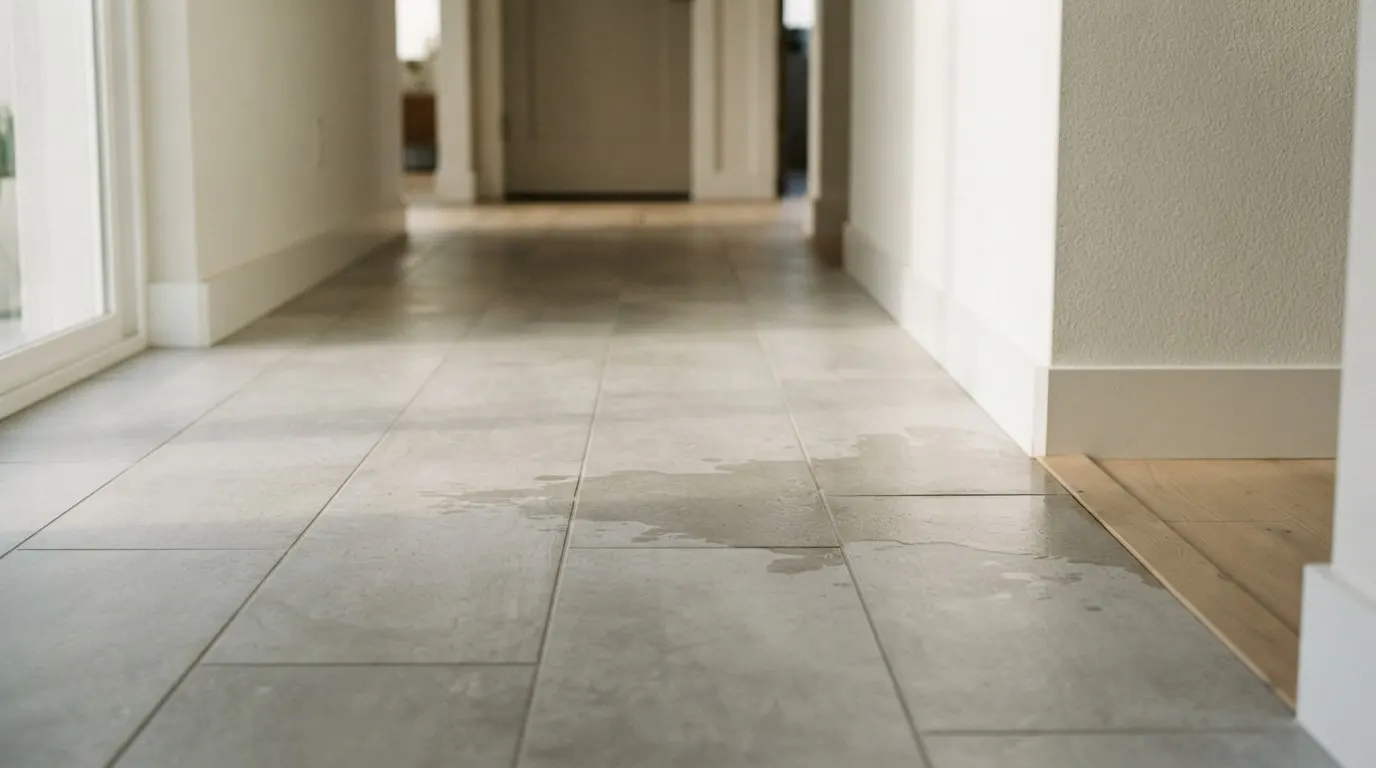
Water from under the slab has nowhere to drain
In the Census Bureau’s 2023 American Housing Survey, about 61% of single-family homes in the Los Angeles-Long Beach-Anaheim metro were built on a concrete slab. Roughly a third had a crawl space, and partial basements came in under 3%. On a slab, the water lines run under or inside the concrete. When one of them leaks, there’s no crawl space for the water to drop into and no basement to catch it. It comes up wherever the slab lets it: a grout line, the carpet pad, the seams in a laminate floor, the bottom of the drywall.
Someone at Los Angeles Water Damage Cleanup answers 24/7. On a slab leak, the plumber finds and fixes the line. A licensed, insured restoration crew handles the slab leak water damage: pulling up wet flooring, drying the concrete and the base of the walls, and logging moisture readings until the slab reads dry.
If your house is on a raised foundation, a leak under the floor drops into the crawl space instead of rising through it, and the drying starts down there. Say which kind of house you have when you call.
How do you know if you have a slab leak?
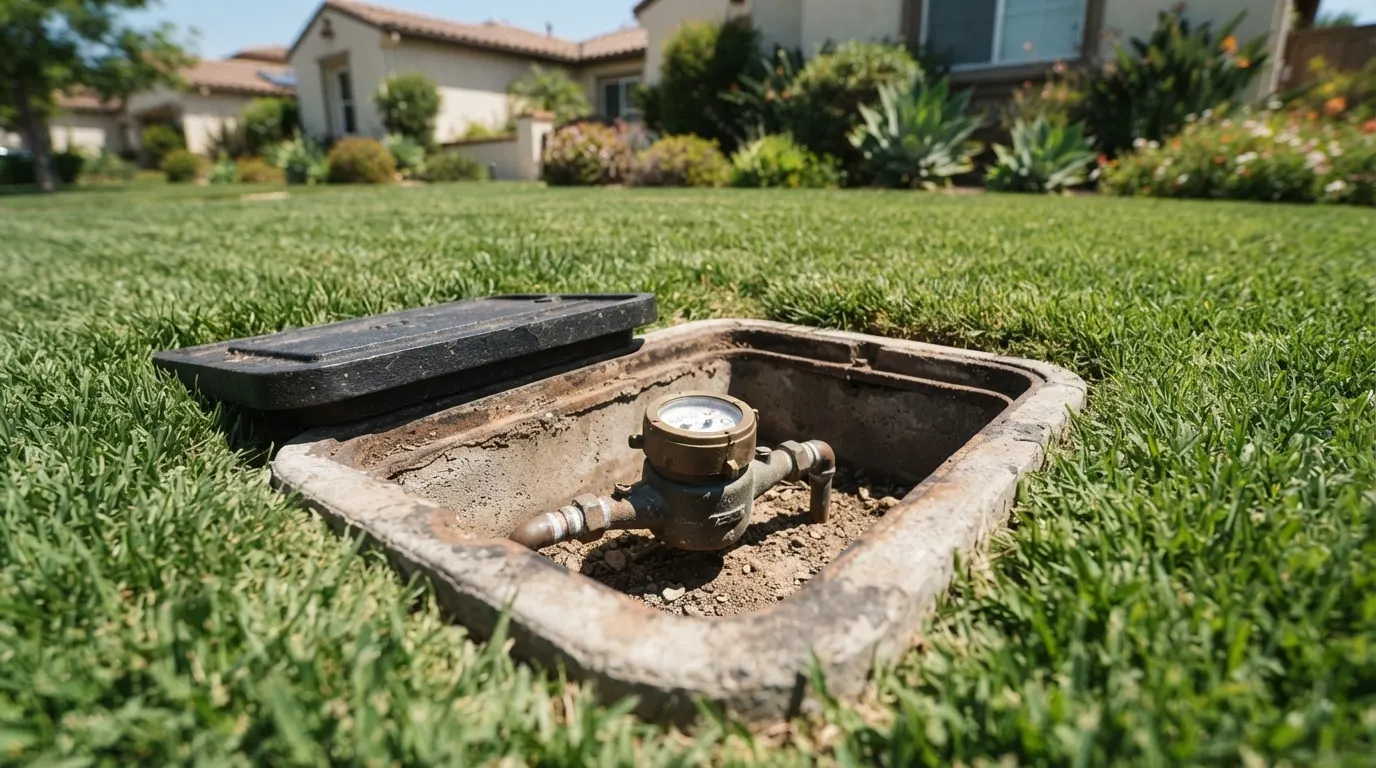
The usual first clue is a water bill that jumps while your habits stay the same. After that come a warm or damp patch on the floor, the sound of water running with every tap closed, or carpet that’s wet at one edge with no spill anywhere near it. The meter is how you confirm it.
- A warm spot on the floor. A leaking hot line heats the concrete over it, so tile or bare slab feels warm underfoot in one patch or a long stripe.
- Hissing or running water when nothing in the house is on, easiest to hear at night.
- Damp carpet, a dark grout line or cupped boards in a room with no plumbing fixture.
- Baseboards bubbling at the floor, or a musty smell that stays in one room.
- Low pressure everywhere at once, or a water heater that seems to run all day.
Will a slab leak show on the water meter?
Yes, if it’s on the supply side. LADWP’s test: shut off all water inside and outside the house, then look at the meter. If the leak indicator moves with nothing running, water is going somewhere. The meter can’t say where. A running toilet or a weeping irrigation valve will turn it too, so the leak detection tech rules those out first, then pressure-tests each line and listens through the concrete for the exact spot.
Slab leak and the water heater
A leak on a hot line under the slab keeps the water heater refilling and reheating around the clock. You’ll notice a heater that never seems to shut off, hot water that runs short, a gas or electric bill that climbs with the water bill, and that warm stripe across the floor.
Slab leak, no hot water? That’s usually the fix in progress. Closing the cold valve at the heater cuts off the whole hot side, so the house goes without hot water until the line is repaired or rerouted.
If the water is coming from the tank or its fittings and the floor around it is wet from above, that’s a water heater leak, and the cleanup starts at the closet or garage instead.
Spot repair, reroute or repipe
Fixing the pipe is the plumber’s part of the job, and the choice changes what the drying looks like afterward.
Spot repair. The plumber breaks out a section of slab over the leak, replaces the bad length of pipe and patches the concrete. That opening is the wettest spot on the job, and while it’s open it’s the easiest one to read. Ask for readings around it before the patch goes in, and keep jackhammer dust closed off from the rest of the house.
Reroute. The leaking line gets capped and left in the slab, and a new line runs up through the walls and across the attic. Nothing leaks under that floor again, but the walls and ceiling pick up a few access holes. Those cuts are dry. The wet material is still down on the floor where the old line failed.
Repipe. Every supply line in the house gets replaced overhead, usually after a second or third leak, or where old copper pinholes and galvanized pipe are failing all over. More drywall gets opened, but the drying work at the old leak stays the same.
Drying the floor after a slab leak
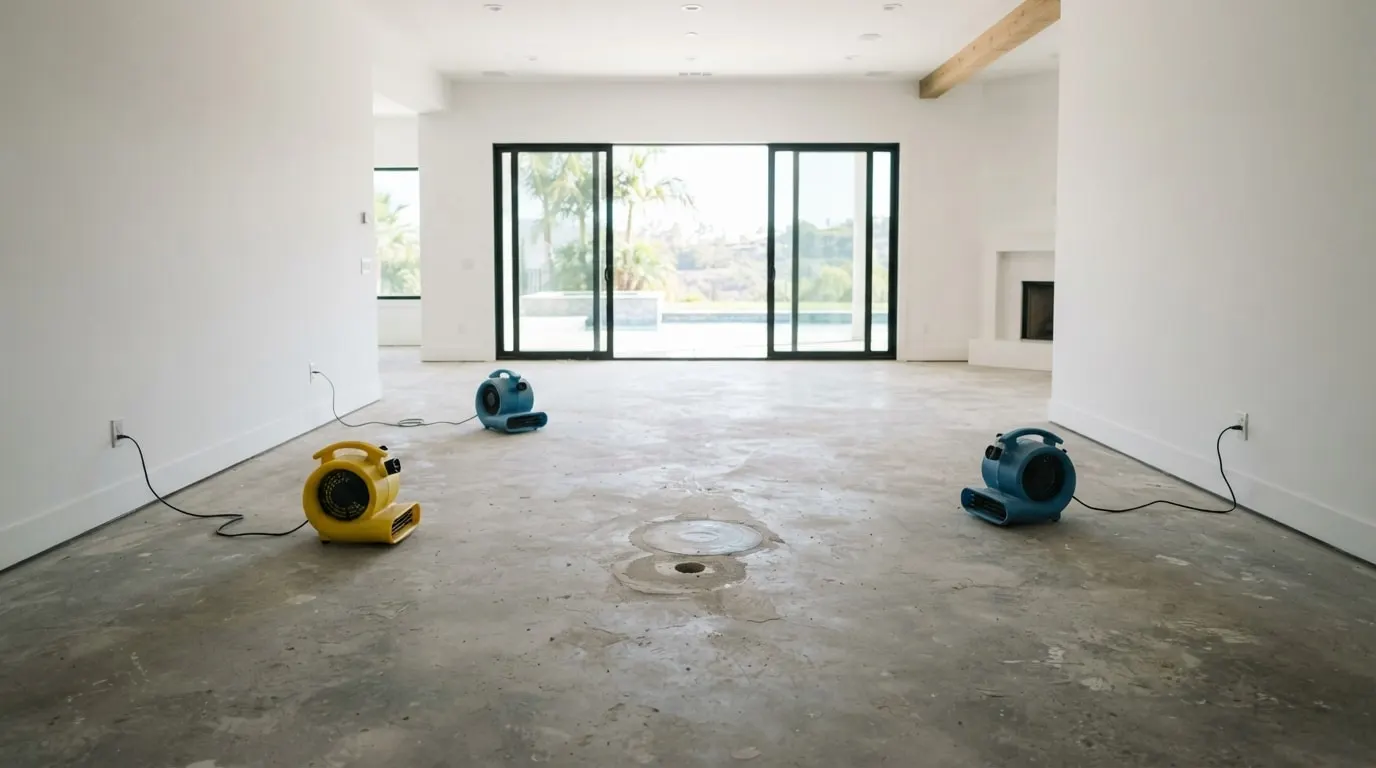
The slab has to dry, and with a floor on top it can only dry upward. Whatever covers the concrete either lets that happen or holds the water in, so the flooring decides most of the job.
| On the slab | What usually happens in the wet area |
|---|---|
| Carpet and pad | The pad is soaked from below and usually comes out. The carpet can often be dried and relaid if the water was clean and it’s caught early. |
| Glue-down hardwood or engineered wood | Boards over the leak path often come up, since the glue holds water against the concrete. |
| Floating laminate or vinyl plank | The planks come up. Water under the underlayment has no way out. |
| Tile | Tile often stays. Water moves through the mortar bed under it, so readings follow the grout lines out to the walls. |
The floors and walls page covers cupping, swelling and what dries in place.
Once the concrete is open to the air, the crew sets dehumidifiers to pull the room dry and air movers across the slab, and takes readings at the leak, along the path the water took, and at the edges where it stopped. Those readings go in the drying log at every visit. New flooring goes down only when the slab reads within the flooring and adhesive makers’ limits, which on concrete takes longer than the room feels like it should.
Walls and baseboards along the leak path
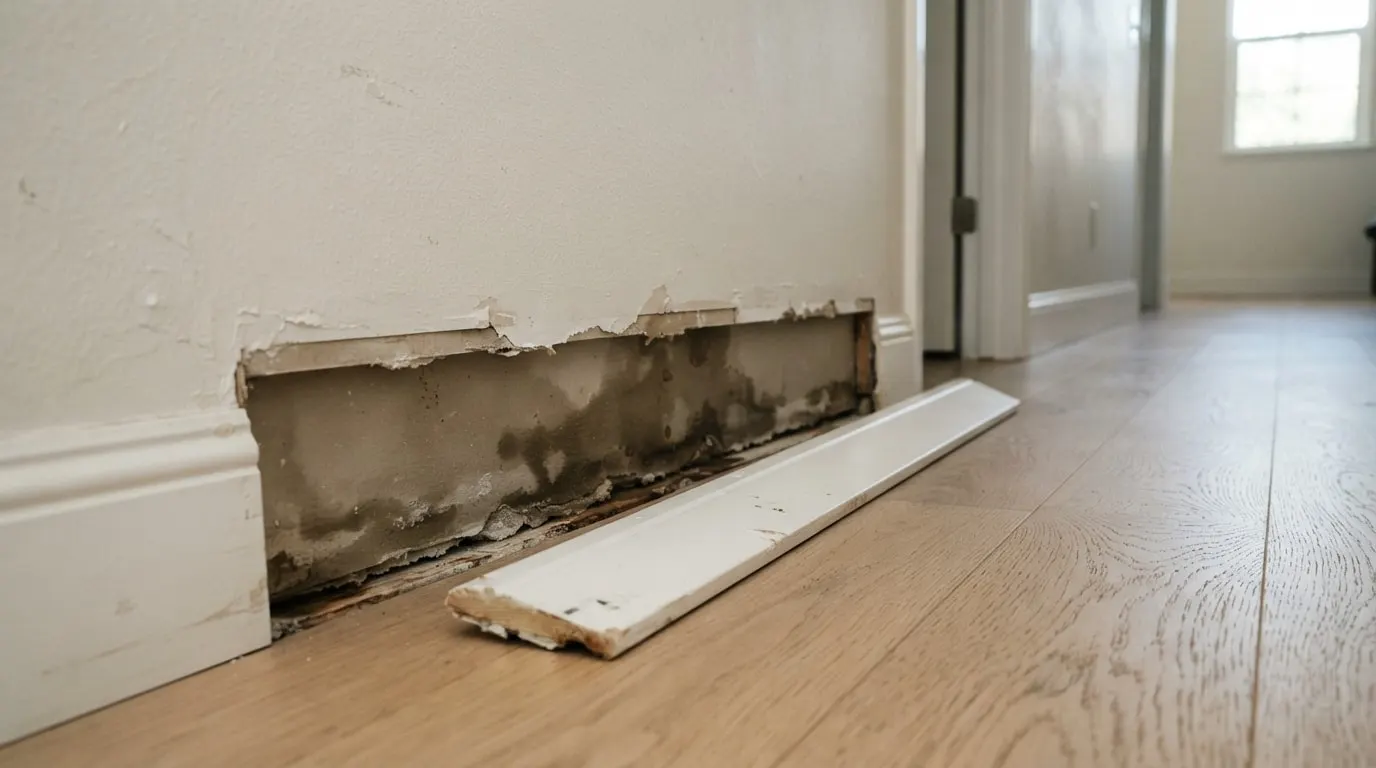
Water rising out of a slab meets the bottom plate first, the strip of wood the wall studs stand on. From there it wicks up the drywall from the inside, so the paint can look fine while the board behind the baseboard is wet a foot up. The crew reads the walls on both sides of the leak path, pulls baseboard where the numbers are high, and may drill small holes behind it to push air into the wall cavity. If drywall has to be cut, the cut line follows the readings.
Slab leak repair cost in California
A slab leak is two jobs, the plumbing repair and the water damage, and each has its own cost drivers.
- Finding it. A quiet leak under a big slab takes longer to pin down than a loud one under the kitchen.
- Which repair. A spot repair opens one hole. A reroute or repipe opens walls and ceilings and runs new pipe, and the length of the run and attic access set how much.
- What’s on top. Breaking through tile or hardwood, then matching it, adds more than lifting carpet.
- How long it ran. A leak that’s been going since the first high bill has soaked more flooring and more wall.
- How far it spread. Rooms, closets, cabinets and shared walls each add drying time.
The restoration side is priced off the moisture map: how many square feet read wet, what has to come out, and how many days the equipment runs. The water damage restoration cost guide breaks those lines down. You only pay for work you agreed to.
Are slab leaks covered by homeowners insurance?
Often the water damage is and the pipe isn’t. Insurers generally look at whether the leak was sudden and what it soaked, treat worn-out pipe as maintenance, and may help with tearing out flooring or slab to reach the repair. The water damage insurance claims guide covers sudden versus gradual, what adjusters ask for, and condo and HOA responsibility. Photograph the floor before anything comes up. The moisture map and drying log go into the claim file too.
Slab leaks in condos, apartments and HOA buildings
In a condo or apartment building, one slab runs under several units, and the line that leaks may feed the unit next door or the one upstairs. So a slab leak in a condo can show up in a neighbor’s hallway first, and water doesn’t stop at the property line under a shared wall. The crew reads both sides of that wall.
Who handles the pipe and who handles the floor comes from the CC&Rs or the lease, and that’s covered in the insurance guide linked above. On the call, give us the unit number, the building manager or HOA contact, and whether a neighbor has wet floors too. If you rent, let the landlord or manager know at the same time you call us, so the building’s plumber and the drying can be scheduled together.
What to tell us on a slab leak call
- Where the floor is warm, wet or stained, and what flooring is down there.
- What the meter did with everything turned off.
- Whether a plumber has found the leak yet, and whether it’s getting a spot repair or a reroute.
- House, condo or apartment, plus the unit number.
- About how long it’s been going. The first high water bill is a good clue.
With that, the crew can plan which floors come up first and where the first readings go.
Slab leak questions: floors, meters and condos
Can we stay in the house while the slab dries?
Usually, yes. The air movers and dehumidifiers run day and night and they're loud, and a leak on the hot side can leave the house without hot water until the line is repaired. Tell us who's living there, pets included, and which rooms you can't give up, so the setup works around them.
Is the concrete slab itself damaged by the water?
Rarely. Concrete takes water without much harm. The trouble is what's fastened to it: glue, tack strip, underlayment and the bottom edge of the drywall all hold moisture against the slab. The floors and walls page covers how glue-down and floating floors react.
Does a slab leak lead to mold?
It can, because most slab leaks run for days or weeks before anyone finds them. California's Department of Insurance warns that leakage over time may mean mold has already started. The crew checks under flooring and behind baseboards along the leak path, and the mold page covers testing.
Can drying start before the plumber fixes the leak?
Extraction and clearing the room can start once the leaking line is shut off. Full drying waits for the repair, since a live line keeps feeding the slab. If the plumber has to open the floor, line the two jobs up so nobody dries a spot that's about to be broken out.