
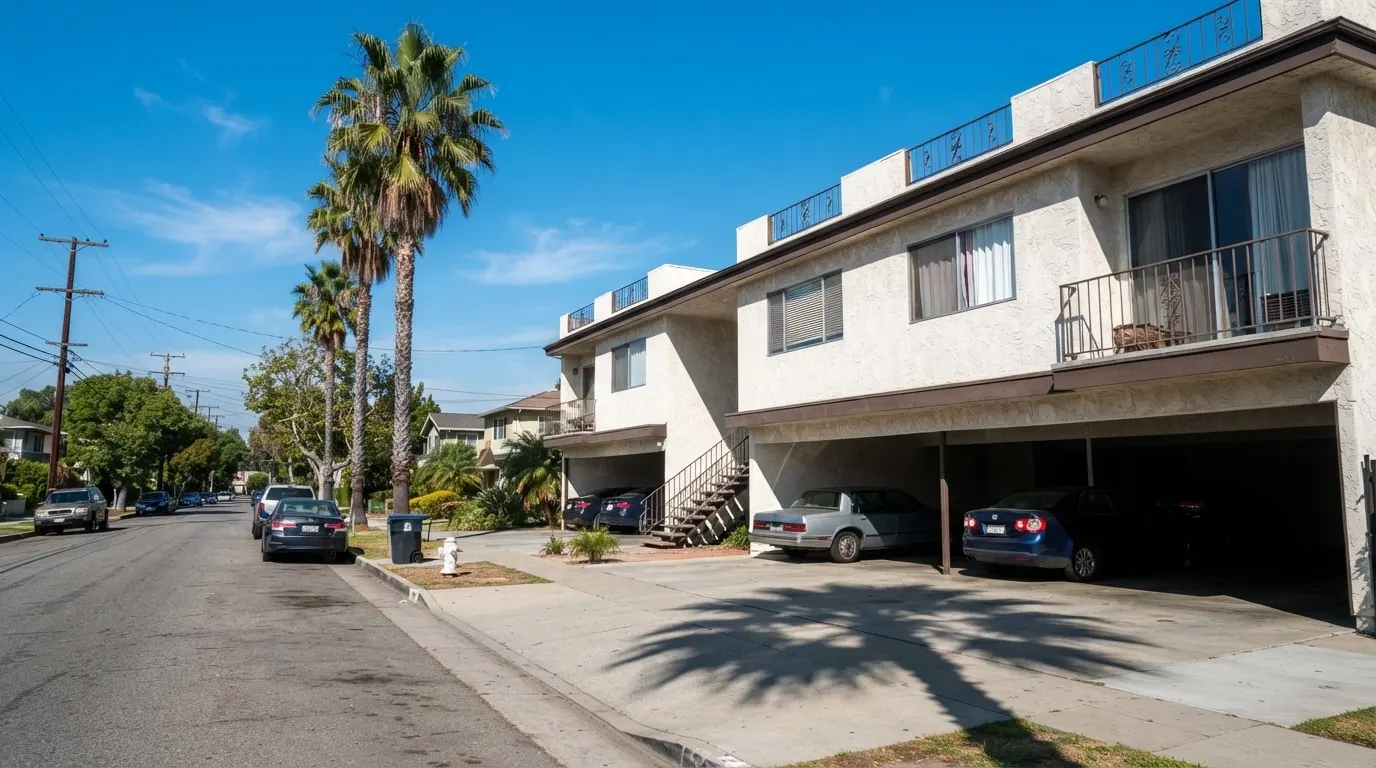
Water damage restoration across North Hollywood and Valley Village
In 91601, 83 percent of homes are rented. In 91602, 91606 and Valley Village’s 91607 the share runs between two-thirds and 70 percent, going by the Census Bureau’s 2020-2024 survey. That makes a North Hollywood water call a building call more often than a house call. For water damage restoration in North Hollywood, Valley Village, Studio City and Universal City, Los Angeles Water Damage Cleanup picks up day or night and lines up a licensed, insured restoration crew for the extraction and dry-out.
Before anyone sets up equipment, the crew lead asks what kind of building it is. Around here the answer is often a 1950s or 1960s stucco box or a newer building several floors tall. On the side streets it may be a wartime house.
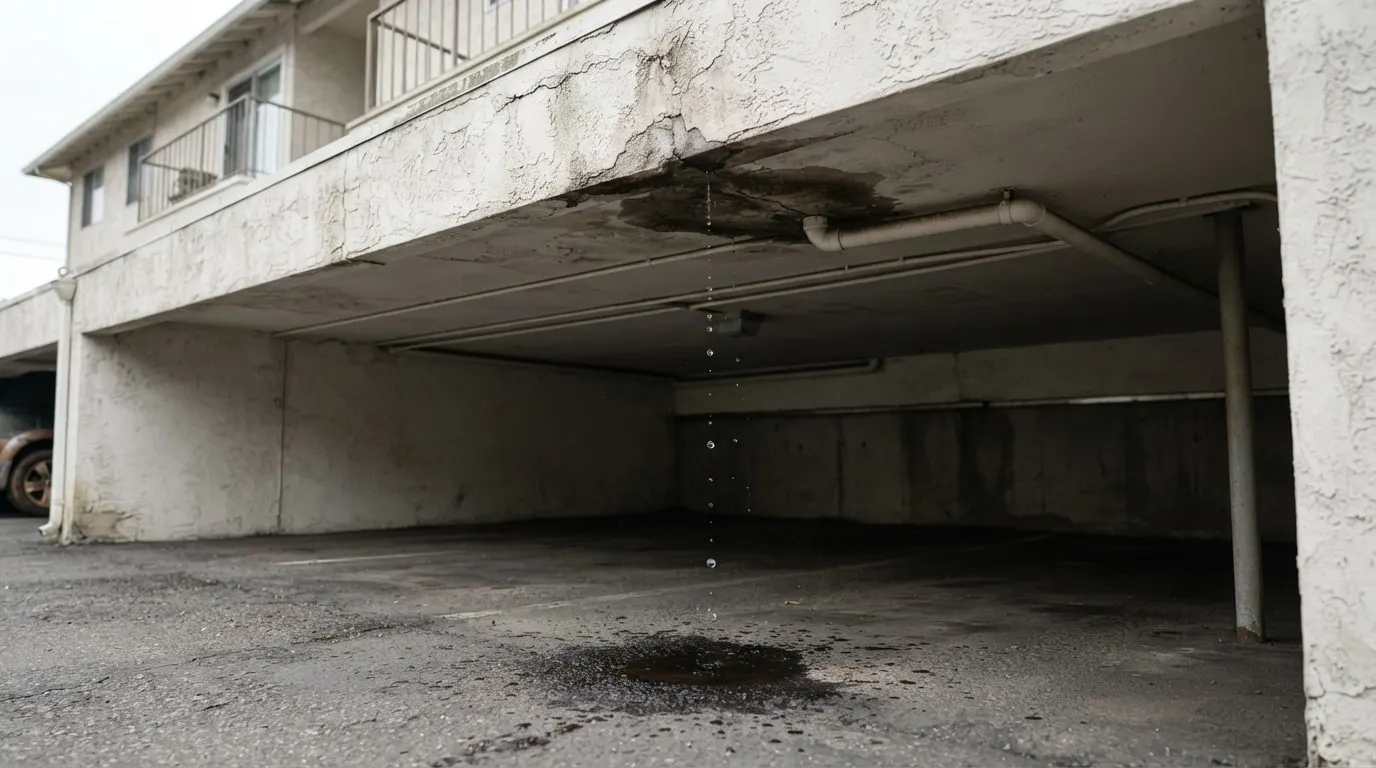
Stucco boxes over the carport
Los Angeles city planners call the stucco box, better known as the dingbat, one of the most distinctive apartment types of postwar LA. Most went up between 1954 and 1968, typically two stories, built over the full depth of a single-family lot, with tuck-under parking. The city’s historic survey of the southern Valley says large numbers still line the Valley’s major boulevards, and the Lido Capri in Studio City is one example the Daily News wrote about in 2016. In 91606, more than a third of homes date from the 1950s and 1960s.
The layout changes how a leak behaves. When the units are built over the parking stalls, the ceiling above your car is the ceiling below someone’s bathroom. A failed wax ring or a leaking vanity hose upstairs can leave a stain on the carport soffit before it shows up inside any unit. Where one unit sits on top of another, water from the upper one comes down through the ceiling and inside the wall to the unit below.
When you call, say where the water showed up first, whether that was inside your unit or over the parking. That tells the crew which ceiling to open, and our page on ceiling leaks from the unit upstairs covers the checks before any drywall is cut.
Newer buildings in 91601
91601 is also where the newest buildings are. About one home in six there was built in 2010 or later, and a quarter of all homes are in complexes with 50 or more units. In a building with several floors of units, a burst line or an overflowing tub on an upper floor can travel through more than one ceiling on the way down.
If the building has a manager or maintenance staff, bring them in early, since they can reach shutoffs and locked units you can’t. Who covers which unit between tenants, owners and an HOA is laid out in the insurance guide’s apartment section. The crew’s job is the same in every unit the water reached: extraction, readings and a drying setup until it’s dry.
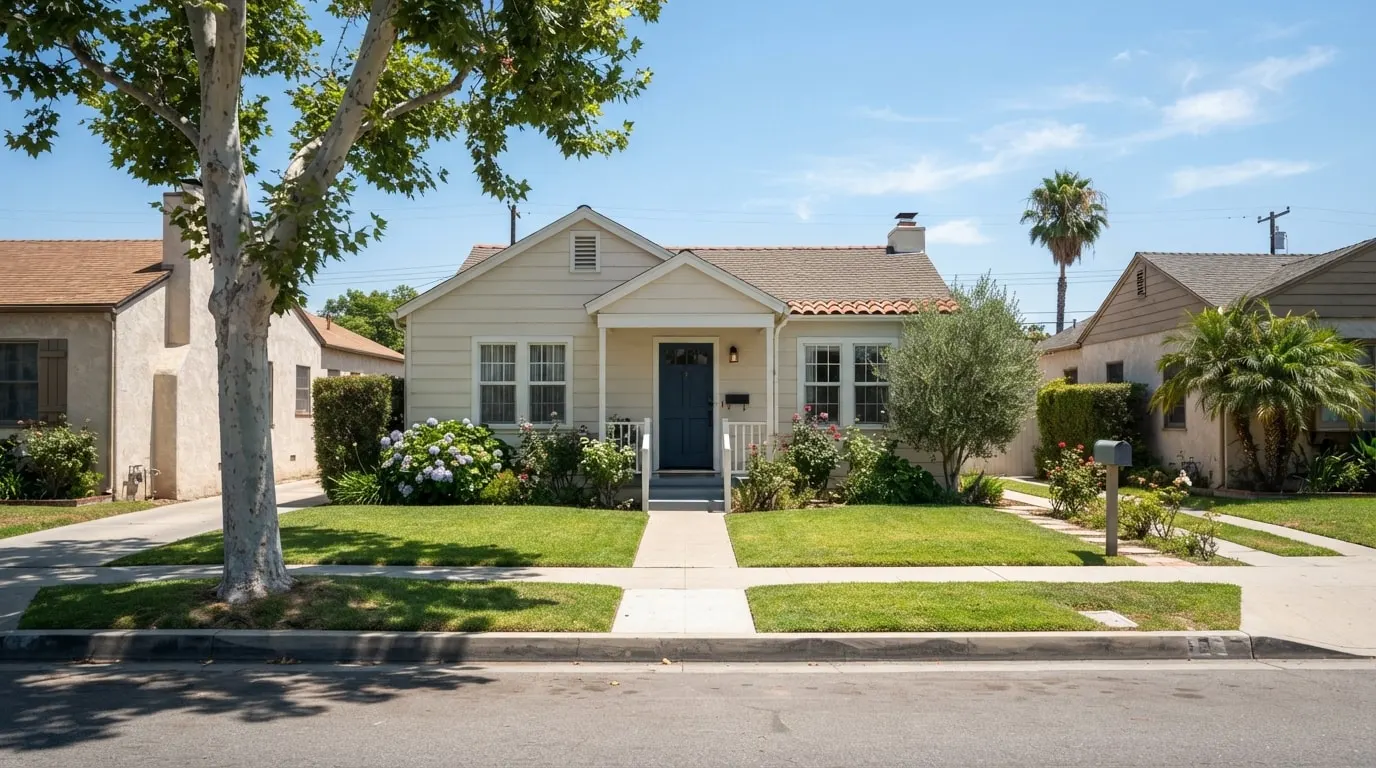
Wartime houses between Burbank and Chandler Boulevards
Some of North Hollywood’s single-family streets are older than the apartments around them. When Lockheed-Vega was hiring in Burbank during World War II, small Minimal Traditional houses went up along Carpenter, Simpson and Morella Avenues between Burbank and Chandler Boulevards, built from 1940 to 1948, in the city’s SurveyLA findings. In 91606, 22 percent of homes were built in the 1940s.
In a house that age, ask yourself where the water heater sits before you call. A tank in the garage floods the garage slab and runs under the door into the house. A tank in a hallway closet soaks the closet floor, the hall and the bottom of the wall behind it. The page on water heater leaks and the damage they leave covers what gets wet first in each spot. If there might be hardwood under the carpet, the crew lead will lift a corner to check before deciding what can be dried and what gets pulled.
Flat ground and the Tujunga Wash
North Hollywood and Valley Village sit on flat ground. After the floods of 1938, the area’s creeks were channelized into the concrete Tujunga Wash, which runs through the community plan area, and the drop in flood risk is part of why it filled in with housing.
If rain got in during a storm, tell us whether it came through a flat roof, around a window or under a door. Storm and flood cleanup covers roof leaks in atmospheric-river storms and what changes when the water is dirty.
ZIPs from North Hollywood to Universal City
- 91601, North Hollywood
- 91602, North Hollywood and Toluca Lake
- 91606, North Hollywood
- 91607, Valley Village
- 91604, Studio City
- 91608, Universal City
Don’t see your ZIP? Call anyway and we’ll check your address.
Next door, Burbank has its own page for water damage restoration in Burbank. To the southwest, the Sherman Oaks page covers the hillside streets south of Ventura Boulevard and Van Nuys.
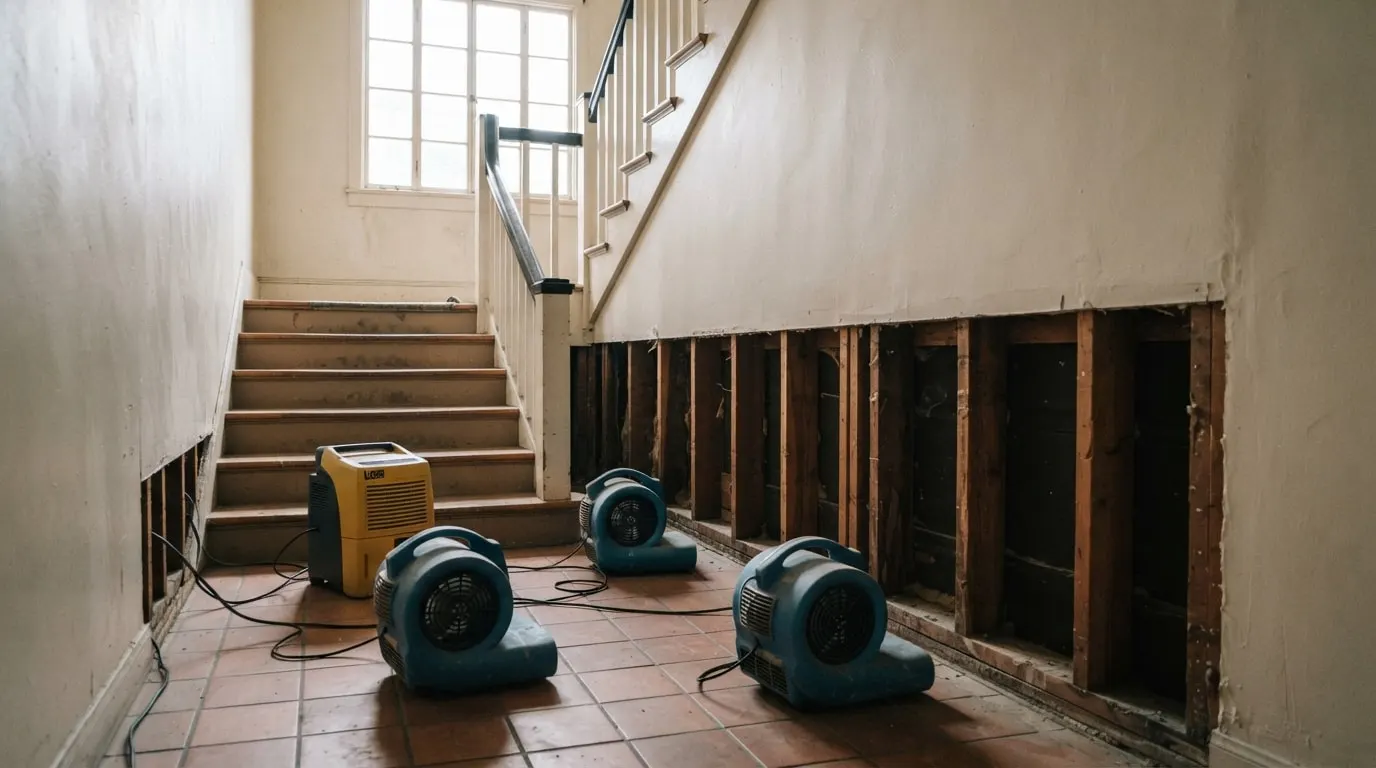
Drying every level the water touched
On a stacked building, the dry-out isn’t finished when the unit that leaked is dry. Your crew lead takes moisture readings in that unit, then in the ceiling and walls below it, and on down to the carport or the next floor if the numbers say the water got there. Each wet area gets its own air movers and dehumidifiers, and each one gets logged.
Fans and dehus come out only after every unit reads dry. That log, with your photos, is what your landlord, the HOA or an adjuster will want to see.
North Hollywood questions: carports and laterals
Who fixes a sewer backup in a North Hollywood building?
LA Sanitation runs the public sewer main in the street. The lateral pipe from the building out to that main belongs to the property owner, so a clog there is the owner's repair. Cleaning up what came out of the drain inside your unit is a restoration job either way.
Is North Hollywood part of the City of Los Angeles?
Yes. North Hollywood, Valley Village and Studio City are Los Angeles city neighborhoods, so water comes from LADWP and sewer service from LA Sanitation. A wet unit gets extracted and dried the same way under either utility.
How fast does drying need to start?
As soon as the water source is stopped. The EPA advises drying wet building materials within 24 to 48 hours to keep mold from growing, and drywall in a ceiling below a leak counts.
What if the unit upstairs is empty or the neighbor isn't home?
Call the building manager or owner, who can get into the unit to shut off the fixture. The crew can start extraction and readings in your unit while that happens, so you aren't waiting on the neighbor to begin.