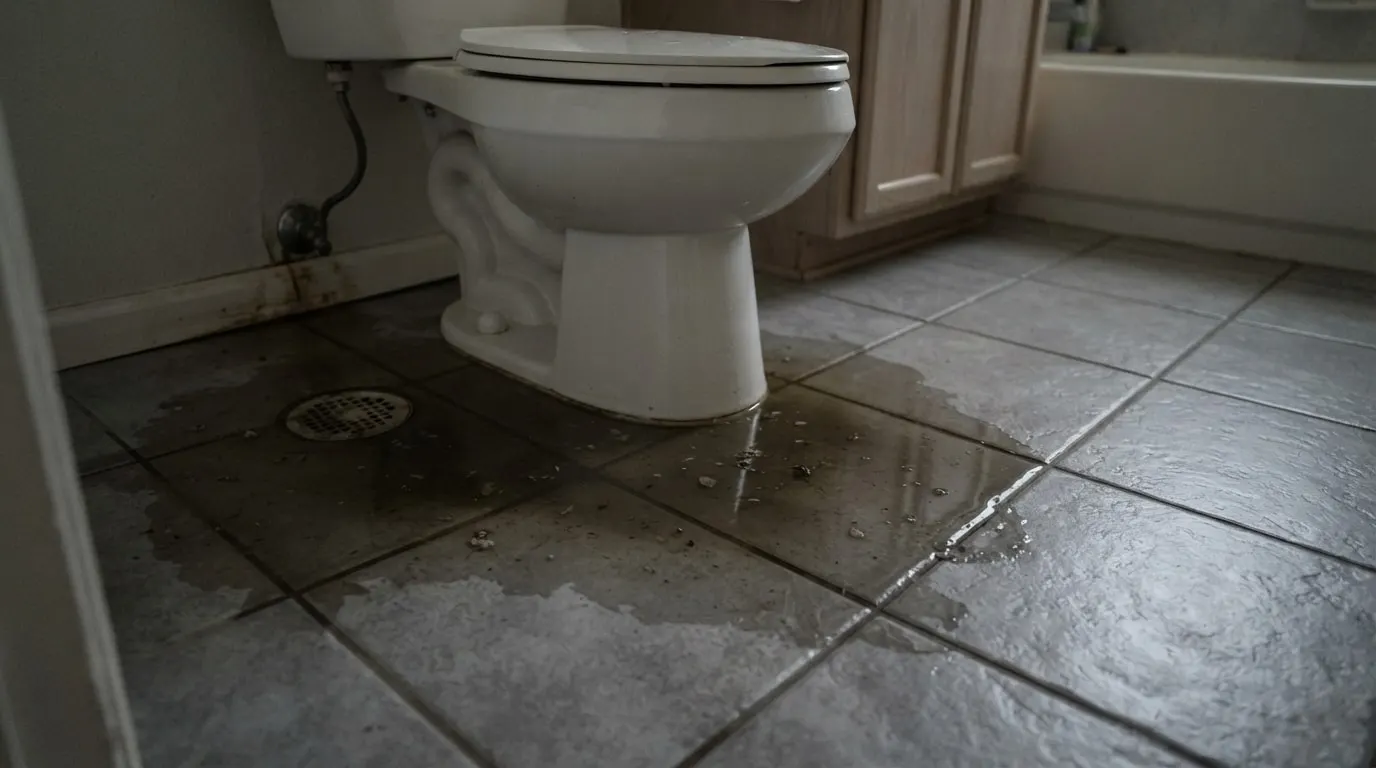
Sewage in the house is Category 3 water
Yes, a sewage backup is a biohazard. The IICRC S500 standard puts sewage in Category 3, grossly contaminated water that can carry pathogenic and toxigenic agents, and the EPA says sewer overflows expose people to bacteria, viruses and other microorganisms that can cause serious illness. That classification is why sewage backup cleanup in Los Angeles gets handled differently from a clean supply-line leak.
Los Angeles Water Damage Cleanup answers at any hour. A licensed, insured crew sets up for Category 3 work: protective gear, the wet area closed off from the rest of the house, the sewage extracted, and anything porous it soaked into cut out and bagged. Only after the cleaning and disinfecting does the drying start.
It usually shows up at the lowest drain in the house. Water rises in the shower when a toilet flushes, the laundry floor drain pushes back, or a downstairs toilet overflows and the plunger makes it worse. Each of those points at a blocked line downstream of that fixture.
Is it safe to stay in a house with sewage backup?
It depends on where the sewage is and how far it spread. A backup that stayed on the tile in one bathroom, with the door shut and nobody walking through it, is a different situation from sewage that ran under carpet into bedrooms or reached a floor register. The CDC advises keeping children and pets out of the affected area until cleanup is finished.
Two things make staying harder. Every sink, shower and washer load in the house drains into the same blocked line, so using them can push more sewage up at the lowest drain. And soaked carpet, pad and drywall keep giving off odor and moisture until they’re removed. If the only working bathroom is the one that backed up, or someone in the home is ill, plan on staying elsewhere until the crew lead says the area is clean and dry.
What gets thrown out after a sewage backup
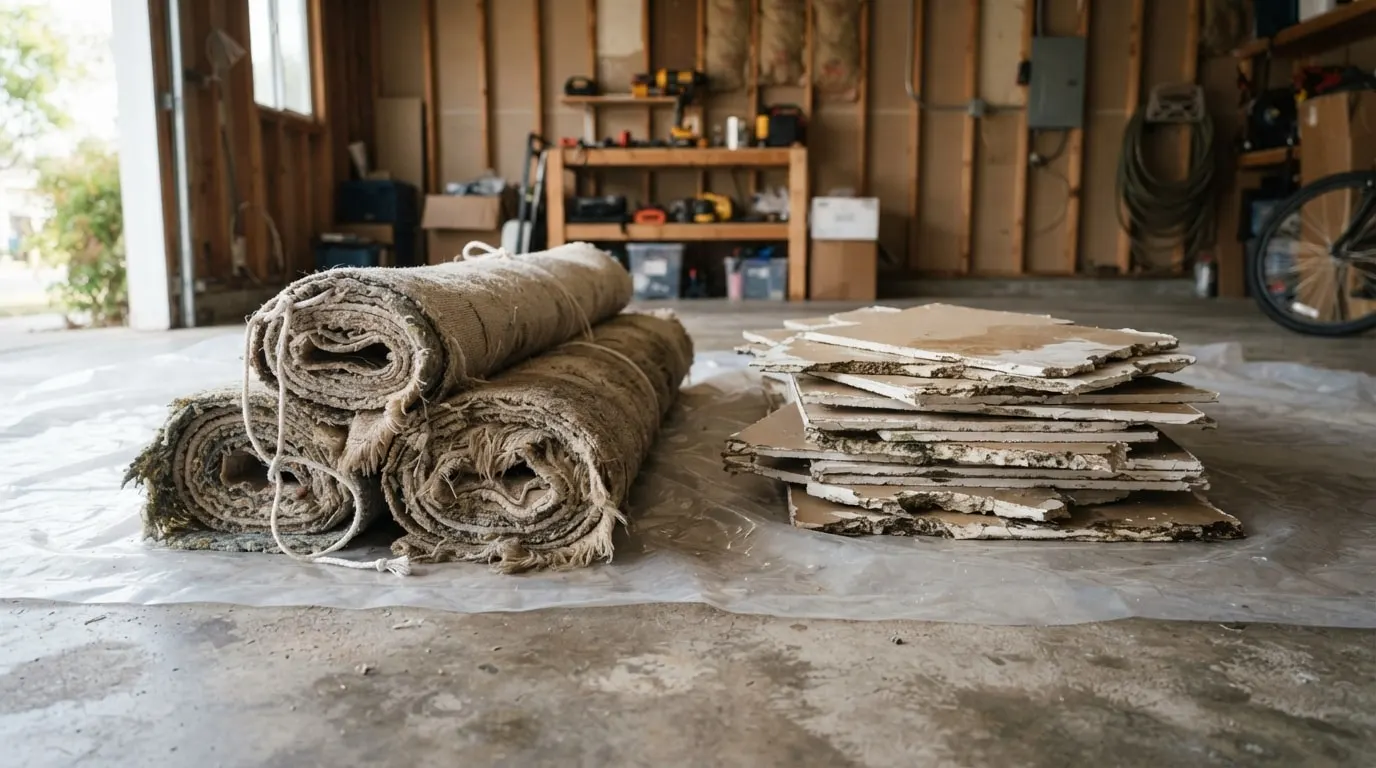
The EPA’s rule of thumb after contaminated water is simple: things that soak up a lot of water and can’t be cleaned and dried get thrown away, and things that don’t soak it up can usually be cleaned. S500 guidance for Category 3 goes the same way, with highly porous and most semi-porous materials expected to be removed and replaced.
| Material | What usually happens | Why |
|---|---|---|
| Wall-to-wall carpet and pad | Removed and disposed | The pad holds sewage and can’t be cleaned through |
| Drywall below the flood cut | Cut out and bagged | Paper face and gypsum core absorb it |
| Wall insulation in the wet zone | Removed | Fibers hold contamination and moisture |
| Particleboard vanities and cabinet bases | Detached and usually discarded | Swells and stays contaminated inside |
| Upholstered furniture and mattresses it touched | Usually discarded | Can’t be cleaned through the padding |
| Tile, sealed stone, metal, glass | Cleaned and disinfected | Surfaces don’t soak it up |
| Concrete slab and wood framing | Cleaned, disinfected and dried | Structure stays and gets read dry |
Not every case is that clear. Point out a solid wood dresser, framed photos or a good rug to the crew lead before anything goes in the bin. Take photos of everything first, and the insurance claims page covers what an adjuster wants to see before the haul-out.
What causes sewage backup in LA homes
LA Sanitation says more than half of sewer backups come from two things: tree roots and fats, oils and grease poured down drains. Roots work into small cracks in the private line looking for water and grow into a plug. Grease cools in the pipe and hardens. Wipes are on the LA County Sanitation Districts list of causes too.
The pipe at the center of most of these calls is the sewer lateral, the private line that runs from the house to the public main. In the City of Los Angeles the property owner is responsible for the whole thing: the upper lateral from the building to the property line, and the lower lateral from there to the middle of the street. So when roots choke that pipe under the front yard, the backup ends up inside the house even though the blockage is outside it.
LA Sanitation lists the warning signs: drains that run slow, water standing in the shower, toilets that gurgle, and wet patches in the yard over a cracked pipe. A backup in the public main happens too, and the sewage comes out at the same lowest drain either way. Clearing the line is plumbing work, often with a camera run down the lateral. Tell us on the call whether that’s done, because the cleanup holds only once the line flows again.
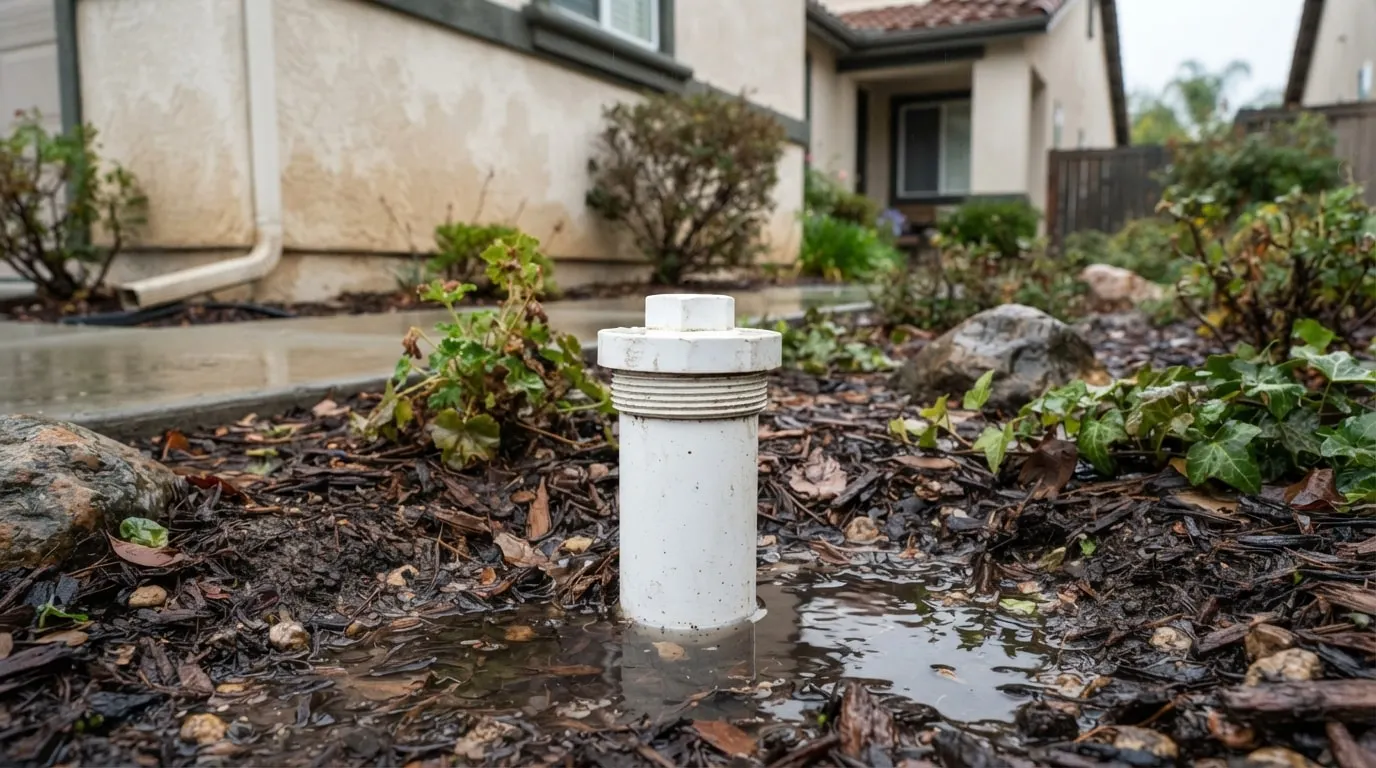
Sewage backup after rain
The City of Los Angeles keeps storm drains and sanitary sewers as two separate systems, and the municipal code bars connecting downspouts, area drains or storm drains to the sewer, directly or through a lateral. Rain is supposed to go to the street, not down the sewer.
It still finds a way in. A cracked or root-filled lateral lets groundwater seep into the pipe, and an old yard drain or downspout tied into the sewer line sends roof water straight down it. Add a partial blockage from roots, and a heavy storm can be the moment the line finally backs up. LA Sanitation’s wet-weather checklist has property owners get the lateral camera-checked before the rains for exactly this reason.
Homes with a drain set low are the most exposed: a sunken bathroom, a lower-level laundry, a house below street grade on a hillside lot. LA Sanitation requires a backwater valve wherever the lowest plumbing fixture sits lower than the street manhole cover, installed under an LADBS permit, so sewage from the main can’t flow back in. If storm water came in from outside rather than up through a drain, the storm and flood cleanup page is the better fit.
Sewer backup vs water damage
The difference is the category. A burst supply line under the sink is usually Category 1, clean water, and much of what got wet can be dried in place. A sewer backup is Category 3 from the first minute, so porous materials come out and everything left gets cleaned and disinfected before drying. Gray water from a washer or dishwasher drain sits between them, and it can turn into Category 3 if it’s left standing.
Insurance treats them differently too: many homeowners policies cover sewer and drain backup only if a backup endorsement was added. How that plays out on a claim is on the water damage insurance claims page.
How the cleanup runs
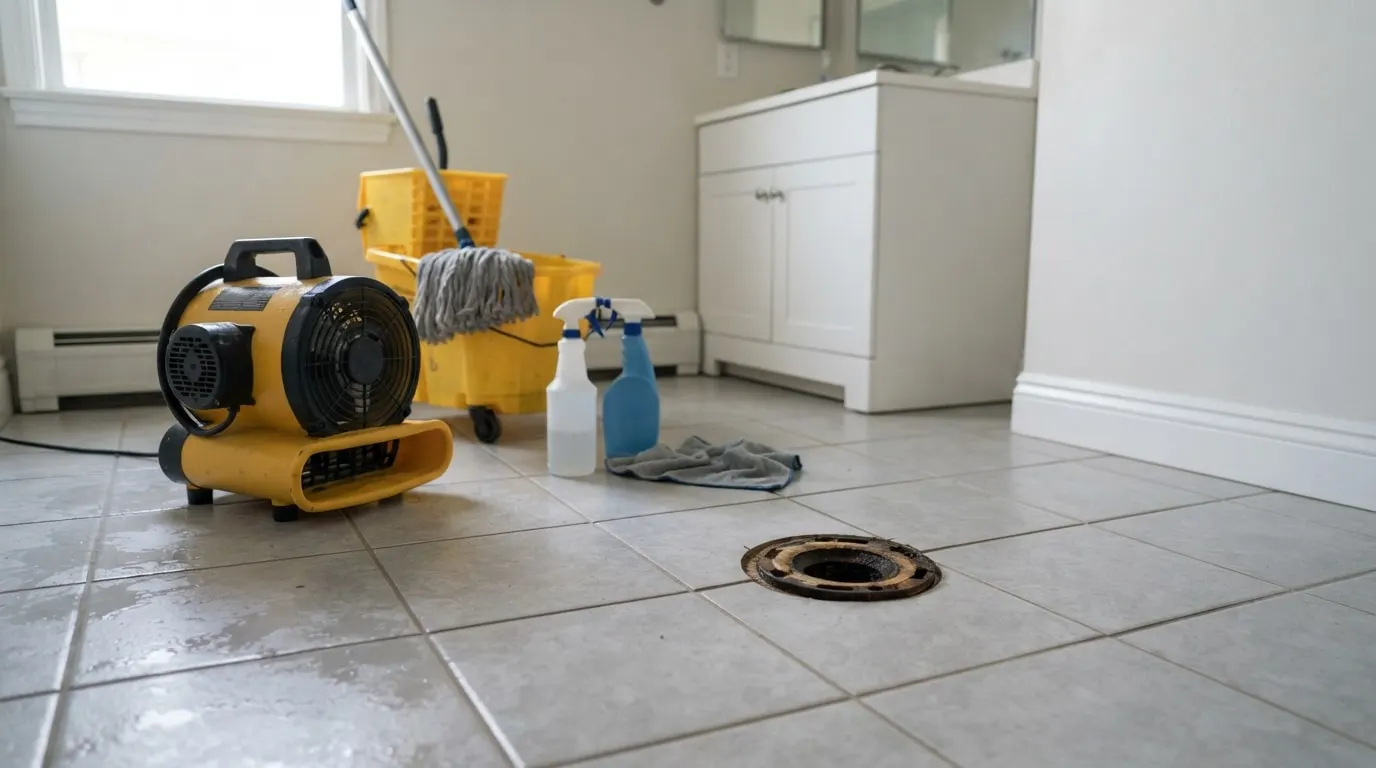
The crew lead starts with where the sewage went, using a moisture meter along the walls and under the flooring so the flood cut follows the actual wet line. Then the work goes in order:
- Close off the work area with plastic sheeting so contamination doesn’t travel through the house.
- Extract standing sewage and bag the solids.
- Pull carpet, pad, baseboards and drywall below the cut, plus insulation and cabinet bases in the wet zone.
- Clean the slab, framing and hard surfaces with water and detergent, then apply a disinfectant to the cleaned surfaces. The EPA’s point is that disinfectants don’t work on surfaces that haven’t been cleaned first.
- Set air movers and dehumidifiers, and take readings until the framing and slab read dry.
- Haul the bagged material out of the house.
Wet framing left too long can grow mold, which the mold after water damage page explains. What the job costs depends on the wet area and what has to come out, and the water damage restoration cost page breaks down those drivers.
What to tell us when sewage is coming up
A few details let the crew show up ready for the right job:
- which drain it’s coming from: toilet, shower, floor drain, tub or a cleanout in the yard
- whether it’s still rising, and whether anyone has used water since
- the rooms and flooring it reached
- whether a plumber has cleared the line yet
- house, condo or apartment, and who else shares the line
You’ll have a written scope and price to look over before the tear-out starts, and the work ends when the room is sanitized and the readings say dry.
Sewage backup questions, answered plainly
Is a toilet overflow the same as a sewage backup?
Not always. A tank that overfills with clean supply water is a plain leak. Water that comes up from beyond the toilet trap counts as Category 3 under the IICRC S500 no matter how clear it looks, so it's cleaned up as sewage.
Can wall-to-wall carpet be saved after a sewage backup?
Generally no. S500 guidance for sewage has wet carpet and pad removed and disposed of, since the pad holds the contamination and can't be cleaned through. An area rug with real value is a separate call, so raise it with the crew lead before anything is hauled.
How soon can we use the bathroom or room again?
After the cleaning, disinfecting and drying are done and the readings show dry material. The drying part depends on how much got wet and what it's made of. The emergency water extraction page covers how long a dry-out usually runs.
The backup came from the unit next door. Who handles it?
Your unit gets cleaned the same way wherever the sewage started, so call either way. Shared lines in apartments and condos raise questions about the building, the HOA and each unit's policy, and those are covered on the insurance claims page.