Mold after a leak in your home or unit
You fixed the leak under the bathroom sink two weeks ago. Now the cabinet smells like a wet basement and there are gray-green spots on the back wall. Or the ceiling stain from the unit upstairs dried out, but the corner of the closet below it smells off every time you open the door.
That’s the point where most people start searching. Los Angeles Water Damage Cleanup answers 24 hours a day and gets a licensed, insured crew out for mold remediation in Los Angeles homes, condos and apartments when the mold followed water damage: a supply line, a water heater, a roof leak in a storm, a slow drip nobody saw. The work covers both halves of the problem, finding and drying the water and getting the moldy material out, because cleaning the mold without drying the wall just resets the clock.
How fast does mold grow after water damage?
Fast enough that the first two days matter most. EPA guidance says that if wet materials are dried within 24 to 48 hours of a leak, in most cases mold won’t grow. That’s the window the whole dry-out is built around, and it’s why the first hours of water extraction move so quickly.
The 48 hours is a guideline. The same EPA guidance notes that mold doesn’t always appear after 48 hours, and that it can show up even on materials dried inside that window. What decides it is moisture. The California Department of Public Health puts it simply: mold needs only moisture and food, and food is almost always there in wood, paper and dust. For wood, the NWFA notes mold can start growing once the moisture content passes about 15 percent.
Does water damage always mean mold?
No. Plenty of leaks get dried in time and never grow anything. Whether yours does depends on three things:
- How long the material stayed wet. A floor extracted and dried within a day or two is a different job from a wall cavity that stayed damp for a month.
- What got wet. Mold grows readily on drywall paper, ceiling tiles, wood, carpet, insulation and the dust on them, according to the CDC. Tile, metal and glass give it little to work with.
- Whether the water was clean. A clean supply-line leak starts with fewer problems than a toilet overflow or a sewer backup. Those follow the stricter rules for sewage backup cleanup.
Water damage vs mold
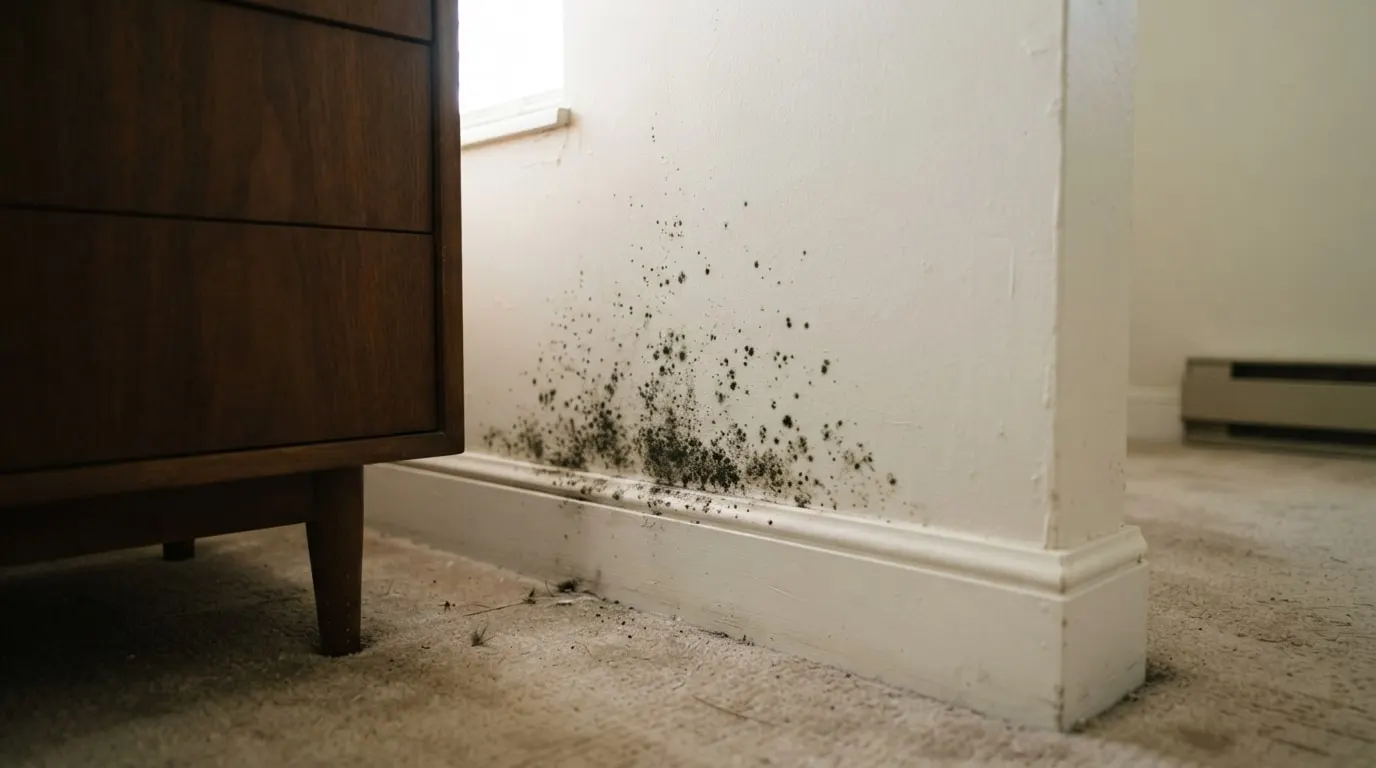
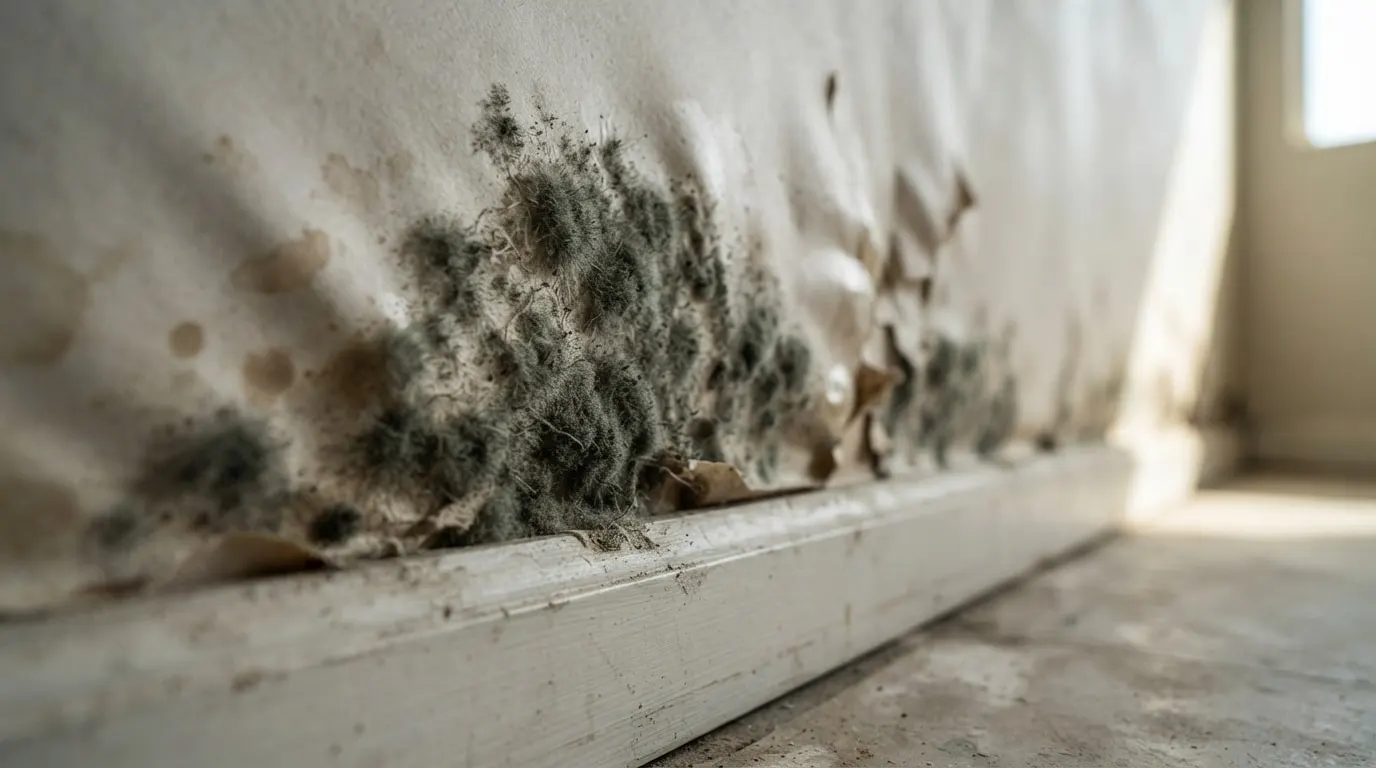
A water stain is usually a flat tan or brown ring with a defined edge, often darker at the outer line where the water stopped. It doesn’t rub off, and it doesn’t smell much once it’s dry. Mold sits on the surface as spots or fuzz in almost any color, and it often comes with a musty smell. A lot of walls have both: the stain from the leak with mold growing inside or along its edge. Either one means the material got wet, and a meter tells the crew whether it still is.
What mold looks and smells like after a leak
The CDC describes mold as spots of many different colors that can smell musty. CDPH describes the smell as earthy, musty or moldy, and treats it as a warning sign on its own, even with nothing visible.
The smell often shows up before the spots do, because mold usually starts where you can’t see it. EPA lists the usual hiding places: the back side of drywall, wallpaper and paneling, the top side of ceiling tiles, and the underside of carpet and pad. After a leak, the crew checks these places first:
- the back wall and floor of the sink cabinet in a kitchen or bathroom
- the bottom of the drywall behind a toilet or a washer
- the closet next to a water heater
- the ceiling and wall corner below an upstairs bathroom
- carpet pad and tack strip along a wall that got wet
Peeling or bubbled paint, warped flooring and soft drywall are signs of water damage that often go with it. How those are dried or replaced is covered under water-damaged floors, baseboards and drywall.
Is black mold from water damage dangerous?
Treat black mold with care, the same as every other color. The CDC’s page on Stachybotrys chartarum, the greenish-black mold people usually mean, says it grows on high-cellulose material like gypsum board, fiberboard and paper when there’s constant moisture. It also says no test proves a link between that mold and particular symptoms, and that all molds should be treated the same way for health risk and removal. CDPH goes further: current evidence doesn’t support singling out some molds as “toxic molds” that are especially hazardous to healthy people.
What the health agencies do agree on is that damp, moldy rooms aren’t good for anyone to live in:
- EPA lists allergic reactions, asthma attacks and irritation of the eyes, skin, nose, throat and lungs.
- The CDC lists a stuffy nose, sore throat, coughing or wheezing, burning eyes and skin rash, with severe reactions possible for people with asthma or mold allergies and lung infections possible for people with weak immune systems or chronic lung disease.
- CDPH links water damage, dampness, visible mold and mold odor with a higher risk of asthma developing, asthma attacks and respiratory infections, and says children are more sensitive than adults.
So the color doesn’t change the plan. If someone in the house has asthma, a lung condition or a weak immune system, tell us on the call, because that changes how the work area is sealed and whether they should be home during it. Health questions belong with their doctor.
When to test for mold
Usually you don’t need to. If mold is visible, EPA says sampling is generally unnecessary, and there are no federal limits to compare results against. CDPH recommends against measuring mold in the air to judge health risk, and the CDC notes that good sampling can be expensive while no standard says how much is too much. All three say the same thing: find the water, then remove the mold.
Testing still helps in a few cases:
- A smell with no visible source. EPA lists a moldy odor you can’t trace, or health complaints after known water damage, as reasons to suspect hidden mold.
- Checking the cleanup. Surface sampling can show whether an area has been cleaned well, according to EPA.
- A dispute. When a landlord, an HOA or an adjuster wants documented results, a lab report gives everyone the same numbers.
EPA says sampling should be done by people experienced in designing the sampling plan and reading the results, since an air sample only shows what was in the air the moment it was taken. If you want testing as part of the job, say so when you call.
How the moldy material comes out
The professional standard for this work is ANSI/IICRC S520, the mold remediation standard (fourth edition, 2024). EPA’s remediation guidance sorts jobs by size: under about 10 square feet is small, 10 to 100 square feet is medium, and over 100 is large. Size sets how much containment the job needs, though heavy growth in a small spot can need more.
On a typical job after a leak:
- The water source gets stopped first. If the plumbing’s still leaking, the mold comes back. Pipe, supply line and slab problems are covered under burst pipes and supply lines and slab leaks.
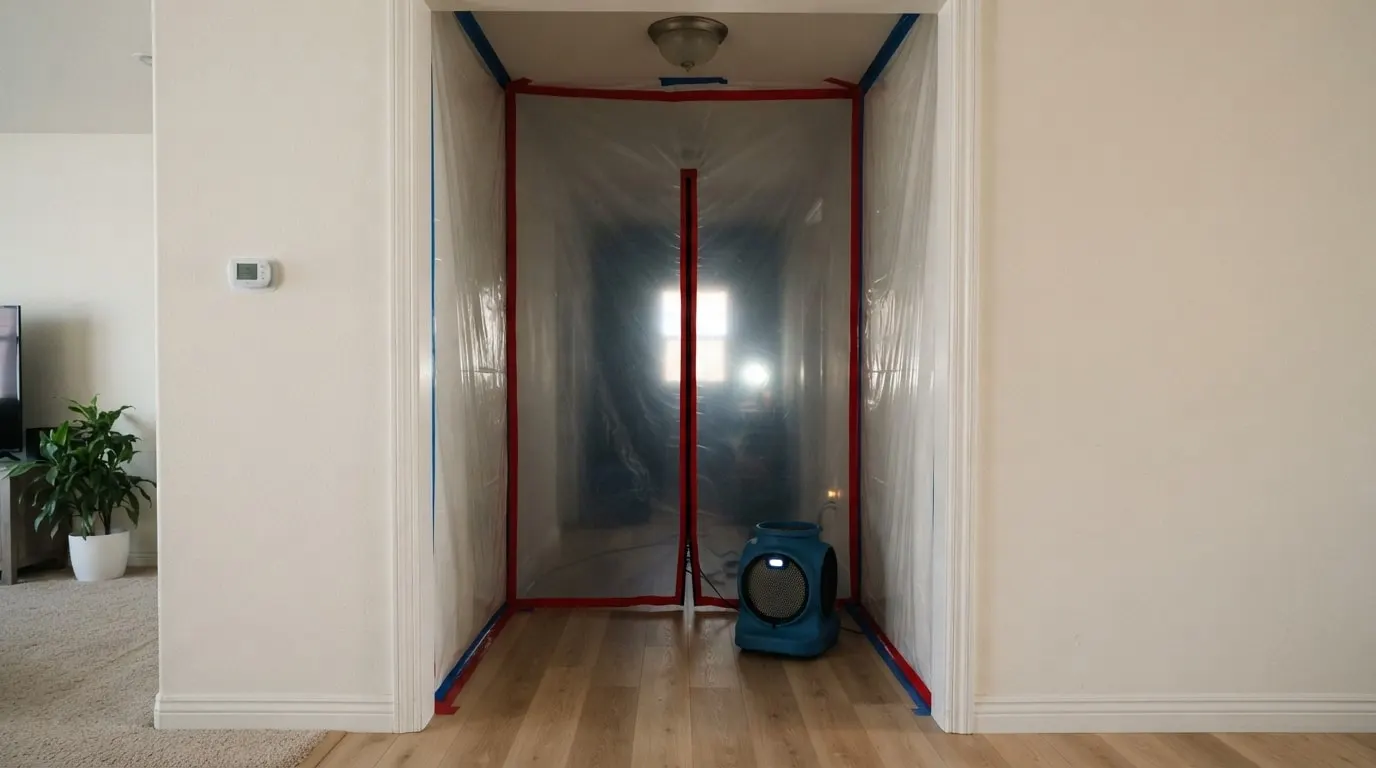
- The area is sealed off. For a medium job, EPA describes a single layer of 6-mil fire-retardant plastic sheeting with a slit entry and flap, held under negative pressure by a HEPA-filtered fan exhausted outside, so spores don’t drift into the rest of the house.
- Moldy porous material is cut out. Drywall, insulation, ceiling tiles, carpet and pad that have grown mold usually can’t be cleaned well enough and get removed. EPA notes mold can fill the gaps in porous material, so it may be impossible to get out completely.
- Debris is bagged inside the containment. EPA calls for double bags of 6-mil plastic before anything leaves the work area.
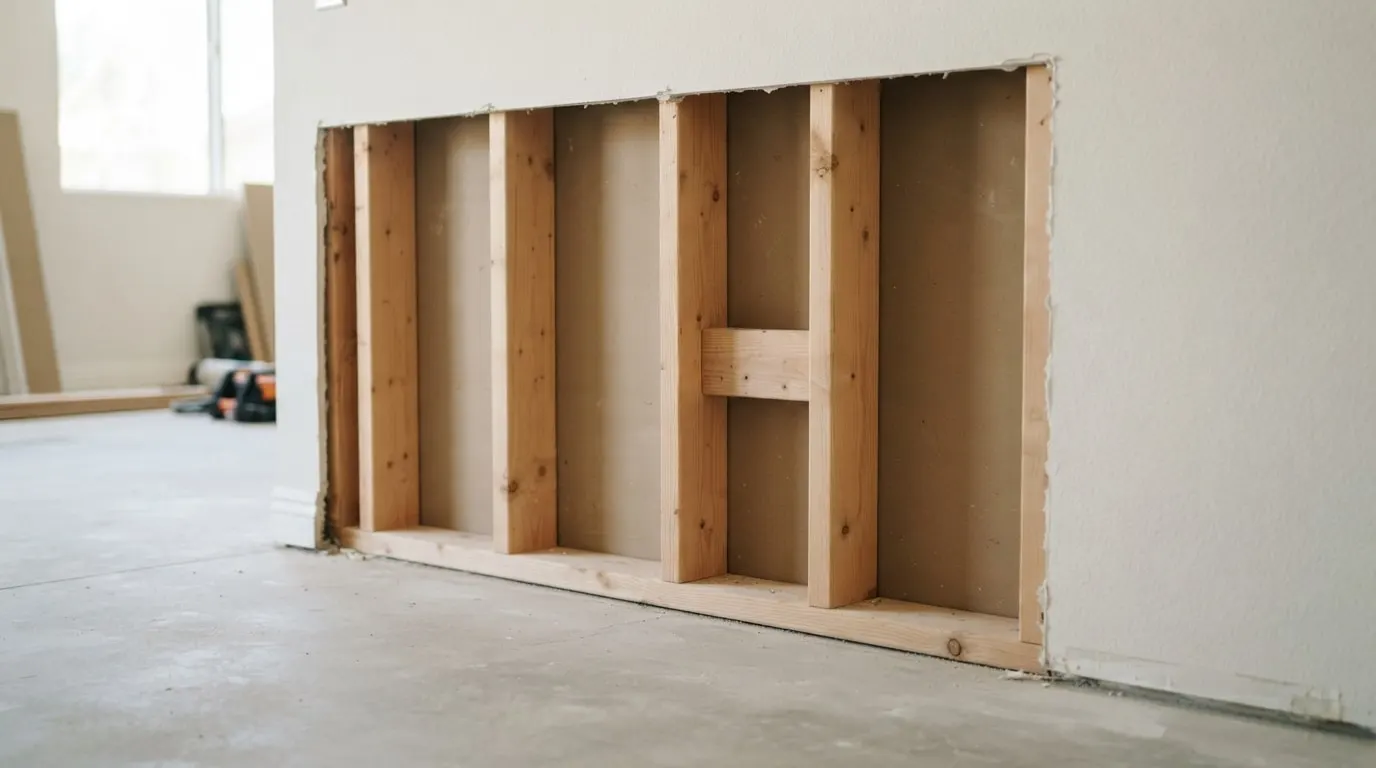
- Hard surfaces and framing are cleaned. Studs, subfloor and other solid surfaces get scrubbed and dried, then HEPA vacuumed once the material is dry.
- Everything is dried and read. The framing has to read dry before new drywall goes up.
Renters, condos and the unit upstairs
A lot of LA mold calls start in a shared building, where the leak came from a neighbor’s unit or a pipe in the common wall. CDPH tells renters to report dampness and mold to the property owner or manager, and California’s Health and Safety Code treats dampness or visible mold that’s a health hazard as a substandard housing condition the owner has to fix. Report it in writing, with photos. Who handles which part of the repair in an apartment or HOA building is covered on the insurance claims page.
Bleach, paint and why mold comes back
Spraying bleach and painting over it is a fix that often fails. CDPH warns that if a moldy area is bleached, cleaned or painted over without fixing the source of the dampness, the mold is likely to grow again. EPA adds that dead mold can still cause allergic reactions, so killing it isn’t enough. It has to be removed. On drywall the growth is often on the back side, out of reach of any spray from the room.
When the job counts as done
EPA’s checklist for a finished cleanup is short: the moisture problem is fixed, no visible mold, no moldy smell, and people can use the room again without symptoms. Some mold spores will always be in the air, indoors and out. EPA says those background spores won’t grow once the moisture problem is solved.
The last moisture readings count for more than the last wipe-down. The crew reads the framing and subfloor before anything gets closed up, and the drying log goes into your file. EPA’s target for indoor humidity afterward is below 60 percent, ideally 30 to 50 percent. You’ll have the scope and price in writing up front, and you only pay for work you agreed to.
Mold questions after a leak
Can I stay in the house while the mold is removed?
Often, yes, for a small area that's sealed off. Containment and a HEPA-filtered fan keep spores in the work zone. Anyone with asthma, a weak immune system or lung disease should ask their doctor first, and larger jobs may mean staying out of those rooms.
Can mold grow on a concrete slab?
Bare concrete gives mold little to eat, but carpet, pad, tack strip, dust and adhesive sitting on a damp slab do. EPA advises against carpet on concrete floors that leak or sweat often, so pad on a wet slab usually comes up.
Should I run the AC or furnace to dry things out?
Not if any part of the system got wet or mold is near the returns. EPA flood guidance says not to use an affected HVAC system for drying, since it can spread spores through the ducts. The crew checks the air handler and returns before anything gets switched on.