
Renter, owner or manager: who’s on the call
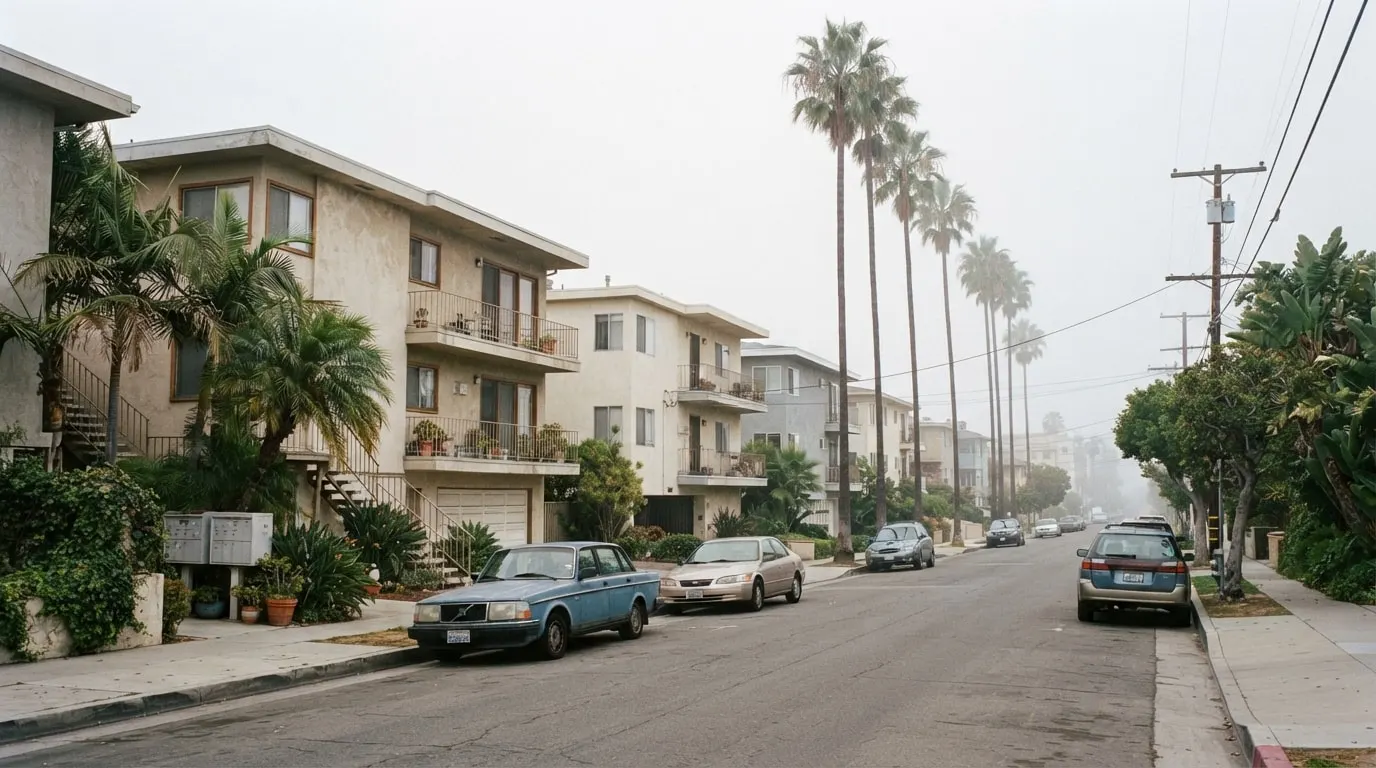
Only about 28% of Santa Monica homes are owner-occupied, by the Census Bureau’s 2020 to 2024 estimate. Most water damage restoration in Santa Monica starts in a rental, and the person calling often doesn’t own the pipe that broke.
Call Los Angeles Water Damage Cleanup anyway, at any hour. A licensed, insured restoration crew can start extraction in your unit while the building owner, the manager and the neighbor above or below get pulled in. What helps on the first call is plain: your unit number, which room is wet, whether water is still coming, and whether you’ve reached the manager.
If you own a house or a condo, the call is shorter. You’re the one who decides, and the questions turn to where the water came from and how long it sat.
City meter leak alerts with no water in sight
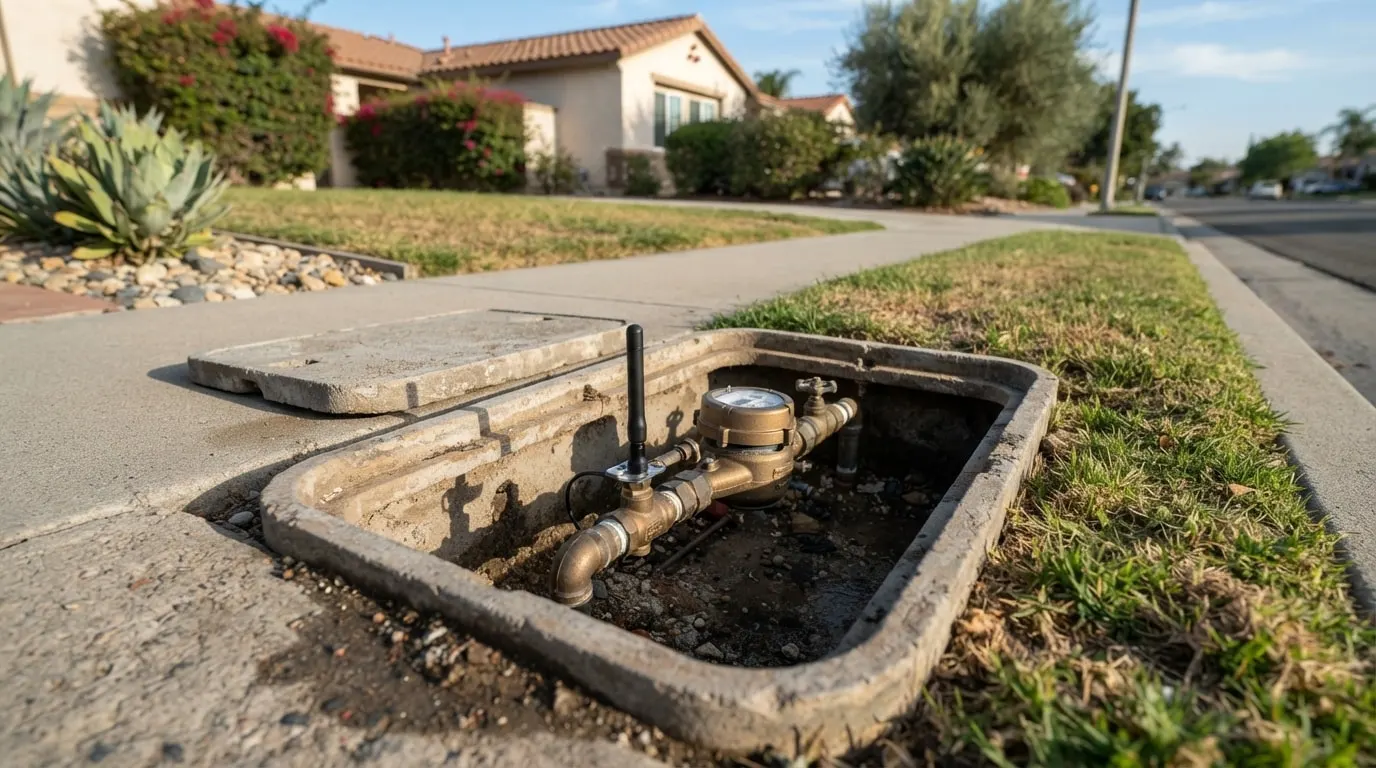
Santa Monica has been switching its water customers to advanced meters that report use in 15-minute intervals, with leak alerts through the city’s customer portal. For some people that alert is the first sign anything’s wrong.
A leak alert with no visible water is often a running toilet or a sprinkler line, and those are easy to find. The ones that do damage are supply lines leaking inside a wall or under the slab. That water spreads under flooring and wicks up into drywall before it shows.
So if the alert came and you can’t find the water, look low. Warm spots on the floor, baseboards that feel soft, a musty smell in one closet. The crew’s moisture meter finds the wet area, and the slab leak page covers what happens when the plumber has to reroute a line before drying can finish.
Rent-controlled units without a working bathroom
Santa Monica’s rent control covers most rental units in buildings built before April 10, 1979. Most single-family homes, most condos and many small owner-occupied properties are exempt. Census estimates for 2014 to 2018 showed more of the city’s housing built in the 1970s than in any other decade, so a lot of apartment stock was built right around that cutoff.
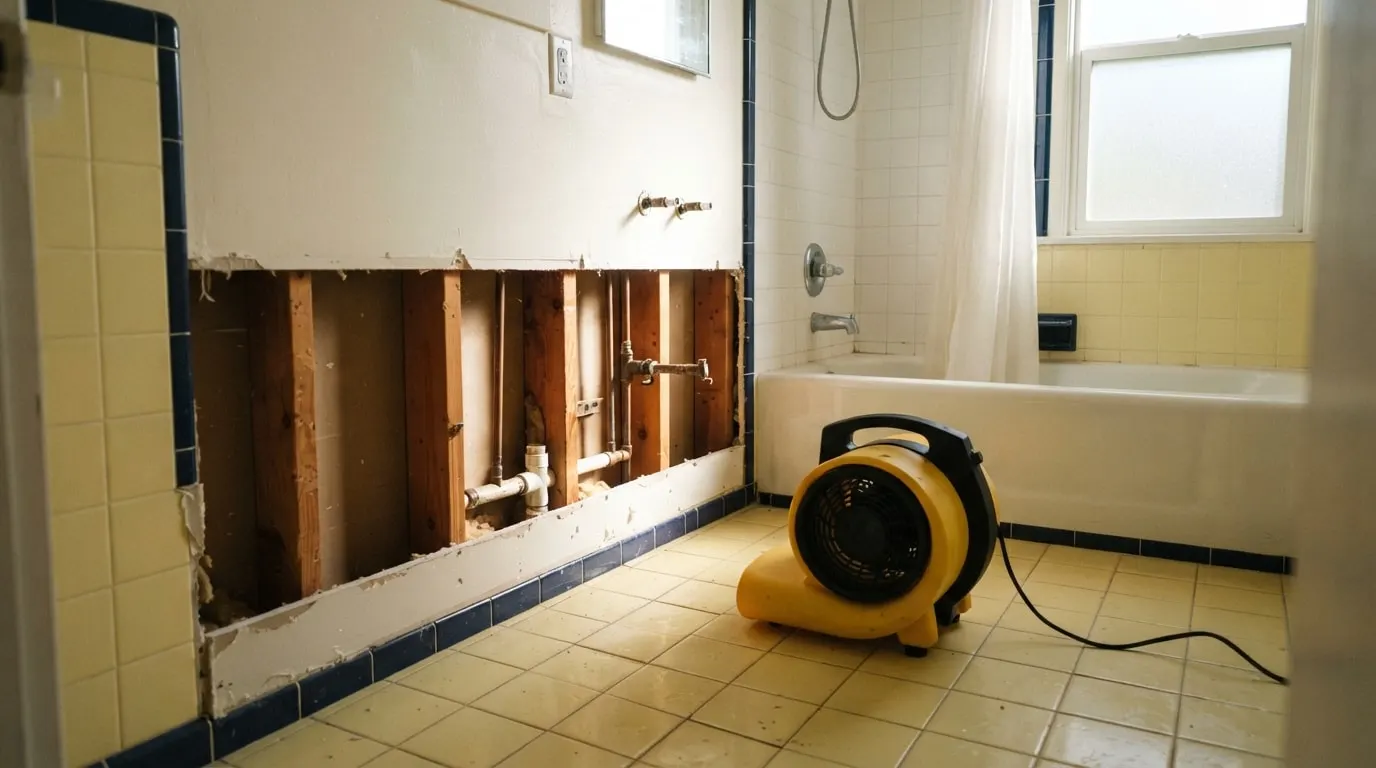
The rule that changes a water damage job is about habitability. Under the city’s Tenant Relocation Assistance Ordinance, a landlord has to provide temporary relocation when a unit can’t be lived in, such as when there’s no working bathroom or no hot and cold water. The city’s guidance says that duty doesn’t apply when the displacement comes from an earthquake or another natural disaster.
On a water job, that means two things:
- If the dry-out or the repairs take out your only bathroom or your water, say so on the call. It changes how the crew schedules the work and what the manager needs to arrange.
- If storm water got in, the relocation answer may be different. The storm and flood cleanup page goes through rain damage and the insurance side of it.
Owners and renters often both ask who covers the rebuild. The insurance claims guide has the apartment and condo section.
Drying a stacked apartment building
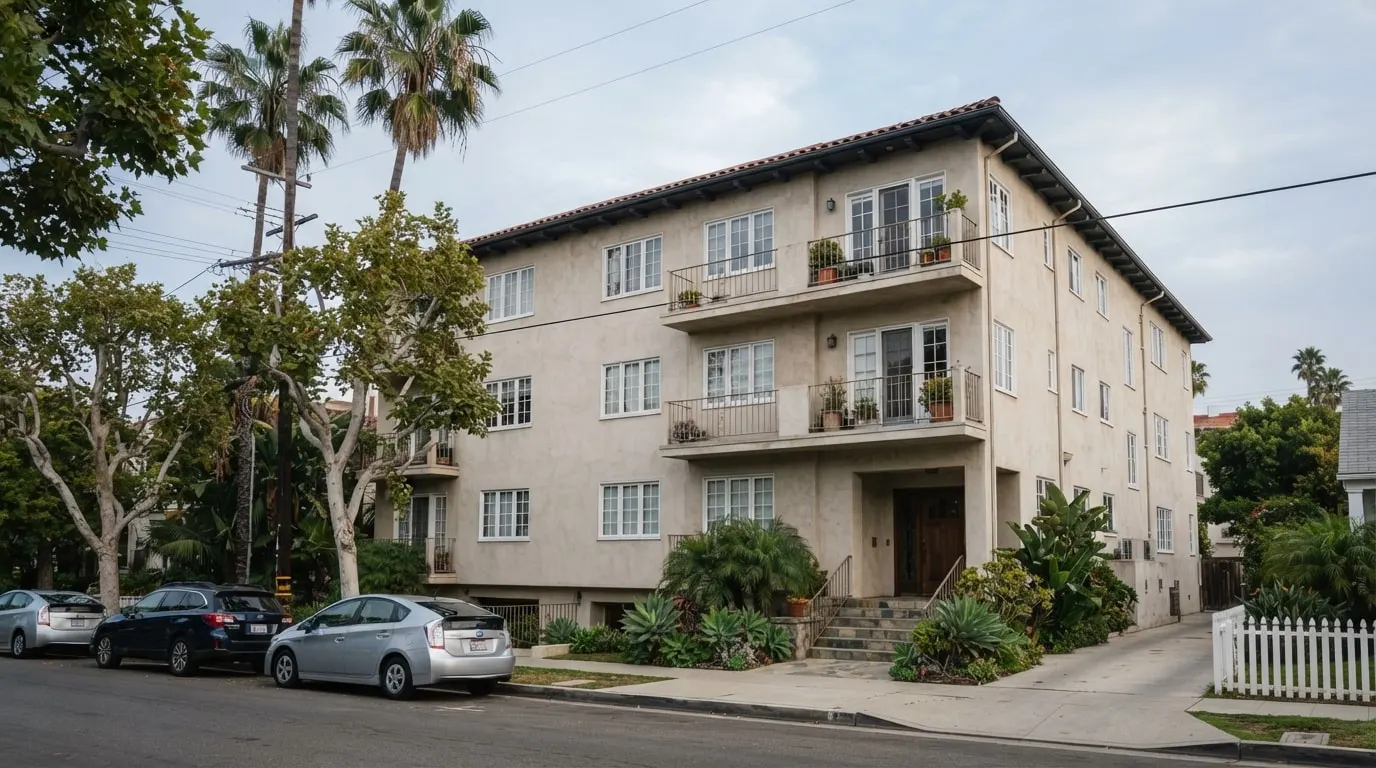
Roughly two-thirds of Santa Monica’s housing units sit in buildings of five or more units, according to state housing counts from 2020. In a building like that, water rarely stays in one apartment.
A leak in a second-floor bathroom runs down through the floor framing into the ceiling below. A washer hose in a ground-floor unit can push water under a shared wall into the next unit’s closet. The crew lead takes readings in every unit that shares a wall, floor or ceiling with the wet one. Drying follows those readings, which can lead well past the room where the water first showed.
Where carpet and pad sit on a concrete slab, the pad usually comes out once it’s soaked, because it traps water against the concrete. The carpet sometimes gets saved. Drywall at the bottom of the wall gets read first, and the flood cut goes only as high as the readings say. The ceiling leak page covers what happens in the unit below when the water came through the ceiling.
Condos, houses and the first 48 hours
Condo owners in Santa Monica deal with the HOA more than the rent rules. The association’s policy usually covers the building and common walls, and your policy covers the inside of your unit. Sorting the line between the two goes faster with the crew’s moisture map in hand.
In a single-family house the job looks more like it does anywhere else in LA: find the source, extract, set up air movers and dehumidifiers, and read the materials daily until they’re dry. Speed still matters. What happens in the first 24 to 48 hours is on the emergency water extraction page.
Santa Monica ZIP codes, beach to inland
Calls come in from 90401, 90402, 90403, 90404 and 90405. In a building near the beach or a house farther inland, the crew lead wants the same thing first: the spot where the water started, and every unit it could have reached.
Up the road, the Beverly Hills water damage page covers hillside houses and the city’s construction plan rule for occupied rentals. The West Hollywood page is about leaks from the unit upstairs. Venice and Marina del Rey are listed on the service area page.
Santa Monica questions about rentals and leaks
Does my landlord have to fix water damage in a rent-controlled unit?
Repairs are on the owner, and the city's rent control rules let a tenant file a rent decrease petition when necessary repairs don't get made. Report the leak to the manager in writing and keep a copy with your photos.
Should I open the windows to help it dry?
Leave them closed once the dehumidifiers are running. The machines pull water out of the air in the room, and outside air coming in gives them more to remove. The crew lead sets up the room and says when to open it back up.
My unit is dry but the leak came from mine. Do I still need a crew?
Probably, because the water went down. Supply line and toilet leaks usually soak the subfloor and the ceiling of the unit below before they show on your side. The crew reads both.
What happens to my things during the dry-out?
Wet furniture gets moved off the floor or out of the room, and soaked rugs and boxes get photographed before anything is thrown out. Your belongings usually fall under renters insurance, not the building's policy.