Restoration from the first reading to the last coat of paint
Water damage restoration in Los Angeles usually starts after the mop is put away. A supply line let go under the bathroom vanity, the floor’s been wiped down, and now the question is what’s still wet. Los Angeles Water Damage Cleanup answers that call around the clock, and a licensed, insured restoration crew handles the work on site: the inspection, extraction, drying, and the repairs once the structure reads dry.
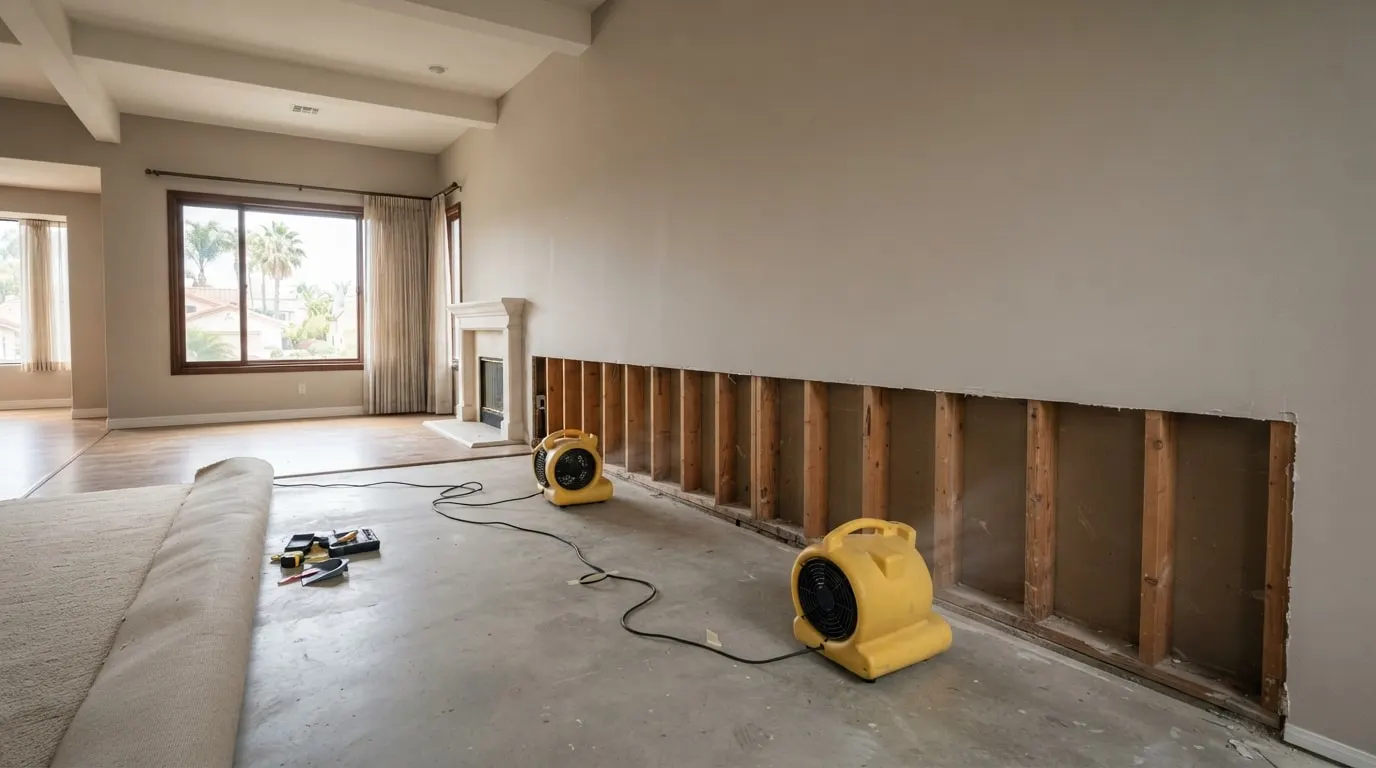
On a slab floor the water has nowhere to go but sideways. It runs under laminate and vinyl plank and soaks the tack strip at the carpet’s edge. From there it wicks into the bottom of the drywall and the baseboards. Much of what needs drying is out of sight, so the whole job runs on meter readings instead of on how the room looks. If the leak started under the slab itself, the slab leak water damage page covers how floors get dried after the plumbing repair.
Restoration vs mitigation on the same job
Mitigation is the part that keeps the damage from growing: stopping the water, pulling it up, removing what can’t be saved, and drying the structure. Restoration is the whole job, which means mitigation plus the repairs that put the room back the way it was.
The order never changes, because nothing gets rebuilt over wet framing. What happens in the first 24 to 48 hours, and the extraction gear that does it, is laid out on the emergency water extraction page. This page follows the job from the inspection to the finished wall.
Inspection before the first cut
A water damage inspection starts with where the water came from and where it went, then how dirty it is, before anything comes out. The industry’s standard for this work is the IICRC S500 (5th edition, 2021), and it lays out what the first visit covers. Your crew lead will:
- check the site for hazards, such as power near the water or a ceiling that’s sagging
- ask what you care about most, like a bedroom you need back first or a tenant downstairs
- confirm the source of the water and that it’s stopped
- trace how far the water traveled, into the next room, the closet or the unit below
- note damage that was there before this leak
- set the dry standard and the drying goals every later reading is measured against
Pushed into drywall or wood, a pin meter gives a reading at depth. The pinless kind gets slid along a floor or wall to find where the wet area ends. Thermal cameras show cool patches where water is evaporating, and each one gets checked with a meter, since the camera reads temperature and only the meter reads moisture.
In a condo or apartment the trace often crosses into someone else’s unit. Water from a third-floor kitchen can end up in the ceiling below, and that ceiling gets read too. Who covers which side is an insurance question, and the water damage insurance claims guide walks through it.
Category 1, 2 and 3 water
S500 sorts water by how contaminated it is, and the category sets what can be dried in place and what has to go.
| Category | What it means | Typical sources | What changes on the job |
|---|---|---|---|
| Category 1 | Water from a sanitary source | A burst supply line, an overflowing sink, a leaking water heater tank | Most materials are extracted, cleaned and dried where they are |
| Category 2 | Enough contamination to cause discomfort or sickness in some people | A washing machine overflow, a broken aquarium | Wet carpet pad usually comes out; the carpet is cleaned and sanitized before drying |
| Category 3 | Grossly unsanitary water that can carry pathogens | Sewage, a toilet overflow with waste in it | Porous materials like carpet, pad and wet drywall come out; framing is cleaned and sanitized before drying |
Category can change after the leak. Time and temperature make it worse, so clean water that sits for days in a warm, closed-up house isn’t treated as clean anymore.
Storm water is a separate case. In 2026 the S500 consensus body said rain that comes in through a roof or a window isn’t automatically Category 3. The inspection decides. That question comes up when winter rain finds a weak spot in a flat roof, and the storm and flood cleanup page covers those losses.
With Category 2 or 3 water, contaminated material is cleaned out first, under containment and with protective gear, and the drying comes after. The sewage backup cleanup page goes through what gets thrown out.
Drying classes and the gear they call for
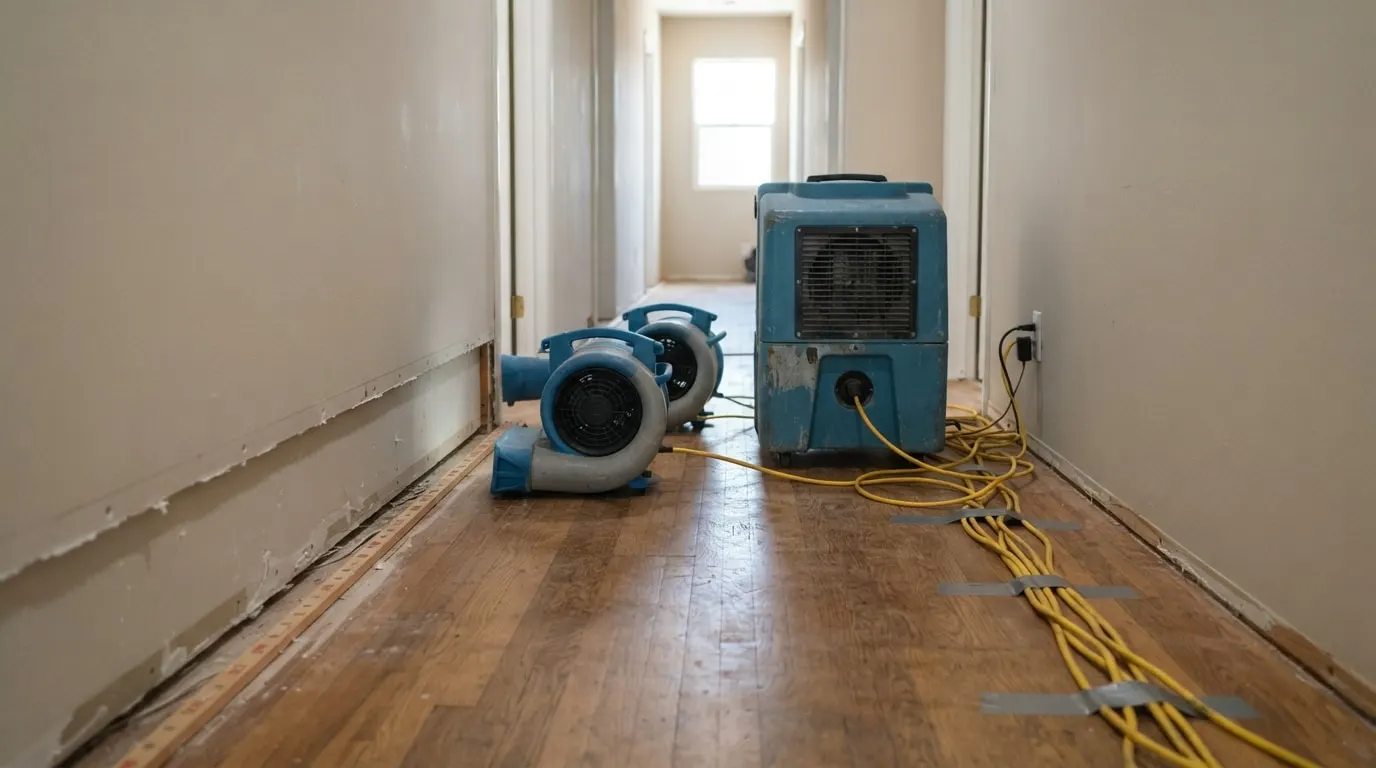
Class describes how much water the structure has to give up. It’s what sets the number of air movers and how much dehumidifier capacity goes into the room. Under the 2021 S500:
- Class 1: less than 5% of the porous materials in the area are wet. Think of a spill on tile that barely touched the baseboard.
- Class 2: 5 to 40%. Wet carpet and pad across a room, with drywall wet along the bottom.
- Class 3: more than 40%, often water from above, like a ceiling leak that soaked the walls on the way down.
- Class 4: water held deep in low-evaporation materials such as plaster, hardwood, concrete or a multilayer subfloor. These need specialty drying methods and more time.
A concrete slab counts as one of those low-evaporation materials. So a slab that’s been under wet carpet or laminate for a while can push an otherwise ordinary job into Class 4, and the equipment plan changes with it. Plaster walls work the same way. Hardwood laid over the slab is its own decision, and the water-damaged floors and walls page explains when boards can be dried in place.
Moisture mapping and the dry standard
A moisture map is a sketch of each wet room with a reading marked at every test point: along the baseboards, across the floor, inside the sink base, at the bottom of the door casings. The crew lead also reads the same materials in a room the water never reached. That number is the dry standard. Drying is finished when the wet areas read like the dry ones.
The map gets drawn before the dehumidifiers go in, for a practical reason. Without that baseline, there’s no way to say when a wall is done. With it, every wet point has a target number, and the map also shows where water climbed high enough in the drywall that a section has to be cut out.
The drying log, day by day
Each check adds a line to the drying log:
- readings at every point on the moisture map
- temperature and relative humidity in the drying area, in an unaffected room and outdoors
- grains per pound, the actual weight of water in the air, which shows whether the dehumidifiers are keeping up
- how many air movers and dehumidifiers are running, and where they sit
- anything removed, and why it couldn’t be dried
Readings should drop at every check. When a point stalls, the log shows it right away and the setup changes. An air mover gets turned or a second dehumidifier goes in, and sometimes a baseboard comes off so air can reach the wall behind it. The finished log is also your proof the structure is dry, and it goes into the claim file next to the photos. Equipment days are one of the bigger cost drivers, and the water damage restoration cost guide covers the rest.
How long does water damage restoration take?
It depends on how wet the structure got and how much has to be rebuilt. Extraction and the drying setup usually happen on the first visit. Drying then runs until every point on the moisture map reaches the dry standard, which is counted in days. Repairs start after that, and their length depends on what came out.
Some things stretch the timeline:
- Category 2 or 3 water, since removal and cleaning happen before any drying
- Class 4 materials like the slab, hardwood or plaster
- cabinets, tub surrounds and built-ins that hold water behind them
- a shared wall or the unit below, where the building or HOA has to sign off on access
- waiting on claim approval before the repairs start
The quickest jobs are the ones where the source got shut off early and the water was pulled up before it spread past the first room.
Repairs after the readings say dry
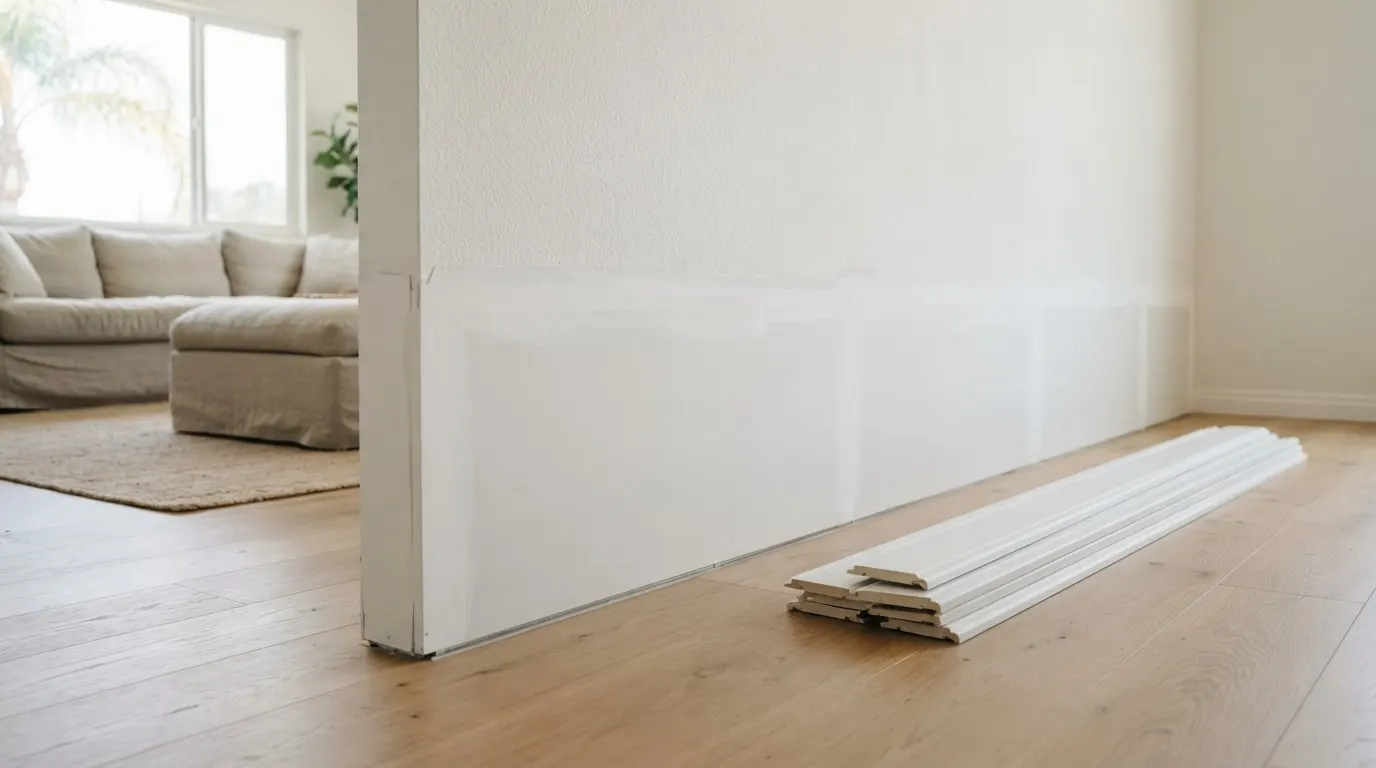
Water damage repair is the last stage, and it waits for the log. FEMA’s 2005 flood restoration advisory warns that closing up a building before it’s dry traps moisture inside, which can lead to structural damage and health problems later. Once every point reads dry, the rebuild is ordinary finish carpentry: new drywall where the cut was made, tape, texture and paint, baseboards, door casings, and the flooring.
You’ll have a written scope and price for the repairs, and you only pay for work you agreed to. If you’re choosing between saving a floor and replacing it, the floors and walls page lays out both sides. Either way, the wall that goes back up has dry framing behind it, with a log that shows when it got there.
Restoration questions: timing, categories and repairs
Will water damage fix itself if I leave it?
No. The surface dries first, so paint and the top of the carpet can feel fine while the pad, the wall's bottom plate and the drywall behind the baseboard stay wet. EPA lists the back side of drywall and the underside of carpet and pad as places mold hides.
What does water damage smell like?
Musty and earthy, like a closed-up basement. EPA says a moldy smell with no visible source is a reason to suspect hidden mold, usually inside a wall cavity, under flooring or in the carpet pad. A moisture meter finds where the water is sitting.
Is a small leak worth an inspection?
Often, yes. A cup of water that runs into a wall, under a sink base or below laminate is harder to find and dry than a puddle on tile. A pin meter reading at the baseboard shows whether it stayed on the surface or soaked in.
Does the restoration crew fix the leak too?
The leak repair is its own trade. The IICRC S500 standard treats fixing the source as the property owner's job, usually through a plumber, roofer or building manager. Tell us on the call if the pipe or roof still needs work, so the drying is planned around that repair.