The number comes from the moisture map
There’s no honest flat price for water damage restoration in Los Angeles, because two leaks that look the same from the doorway can be very different jobs under the floor. The cost is set by how far the water went, what kind of water it was, how hard the space is to dry and how much has to be cut out and put back. Call Los Angeles Water Damage Cleanup at any hour and the licensed, insured crew on your job measures all of that before a figure gets written down.
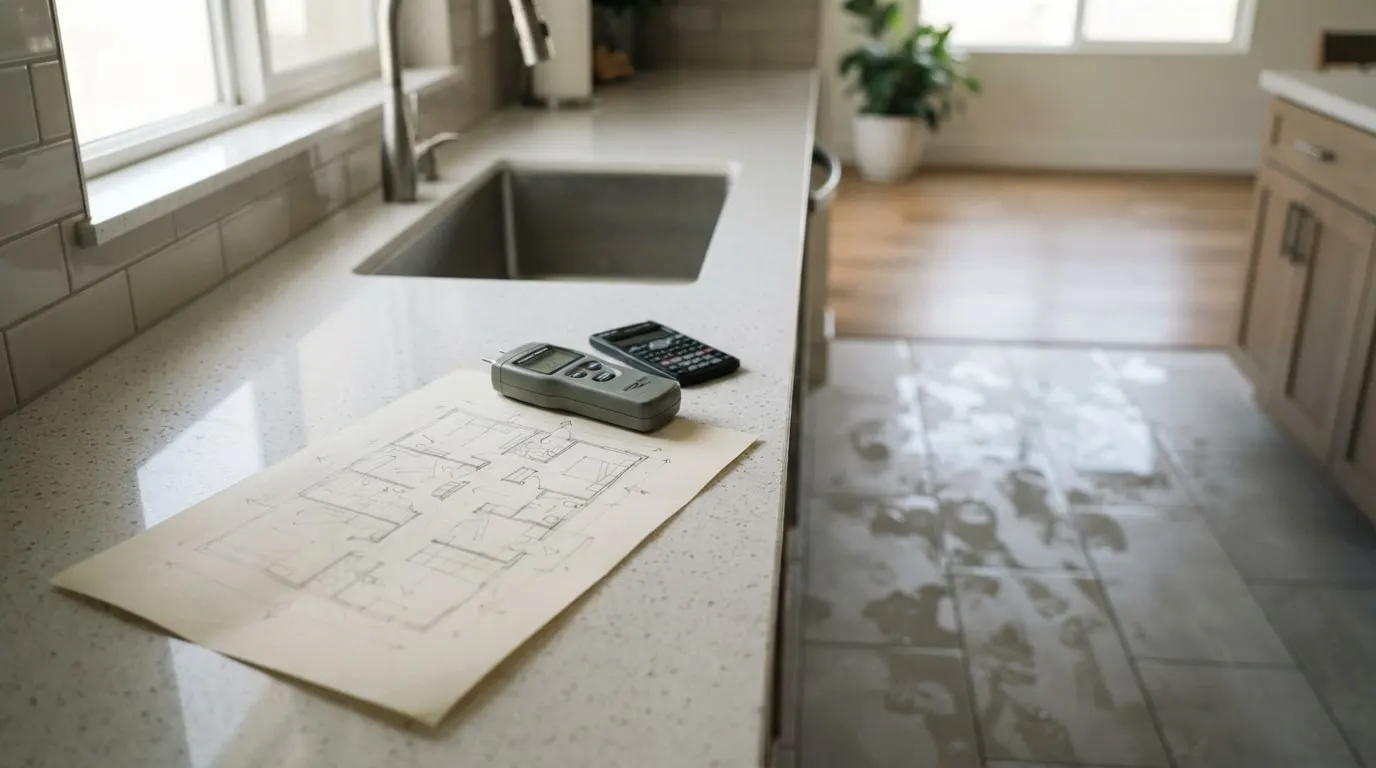
The measuring part is what makes the estimate real. The crew lead walks the rooms with a moisture meter, marks where the readings go from wet to dry, and draws that line on a moisture map. On a slab floor the line often sits well past the puddle, since water slides under laminate, vinyl plank and carpet pad and climbs the drywall from the bottom. The written scope and price are built from that map, room by room.
Is water damage expensive to fix?
It can be. The Insurance Information Institute, using ISO claim data, puts the average homeowners claim for water damage and freezing at $15,400 for 2019 to 2023. That figure covers claims large enough to file, and it includes repairs and damaged belongings along with the dry-out. It also leaves out renters and condo policies.
So it’s a useful sense of scale, and a poor guide to your own job. A supply line caught early in one bathroom and a water heater that ran all night into a hallway, two bedrooms and a closet don’t belong on the same price line. In Los Angeles the freezing part barely applies; most of what lands in that category here is plumbing, appliances and roof leaks.
Per-square-foot pricing and why it slips
No government agency, university extension or standards body publishes a per-square-foot rate for water mitigation or restoration. The averages floating around online blend a closet leak and a flooded first floor into one number, which says little about your floor.
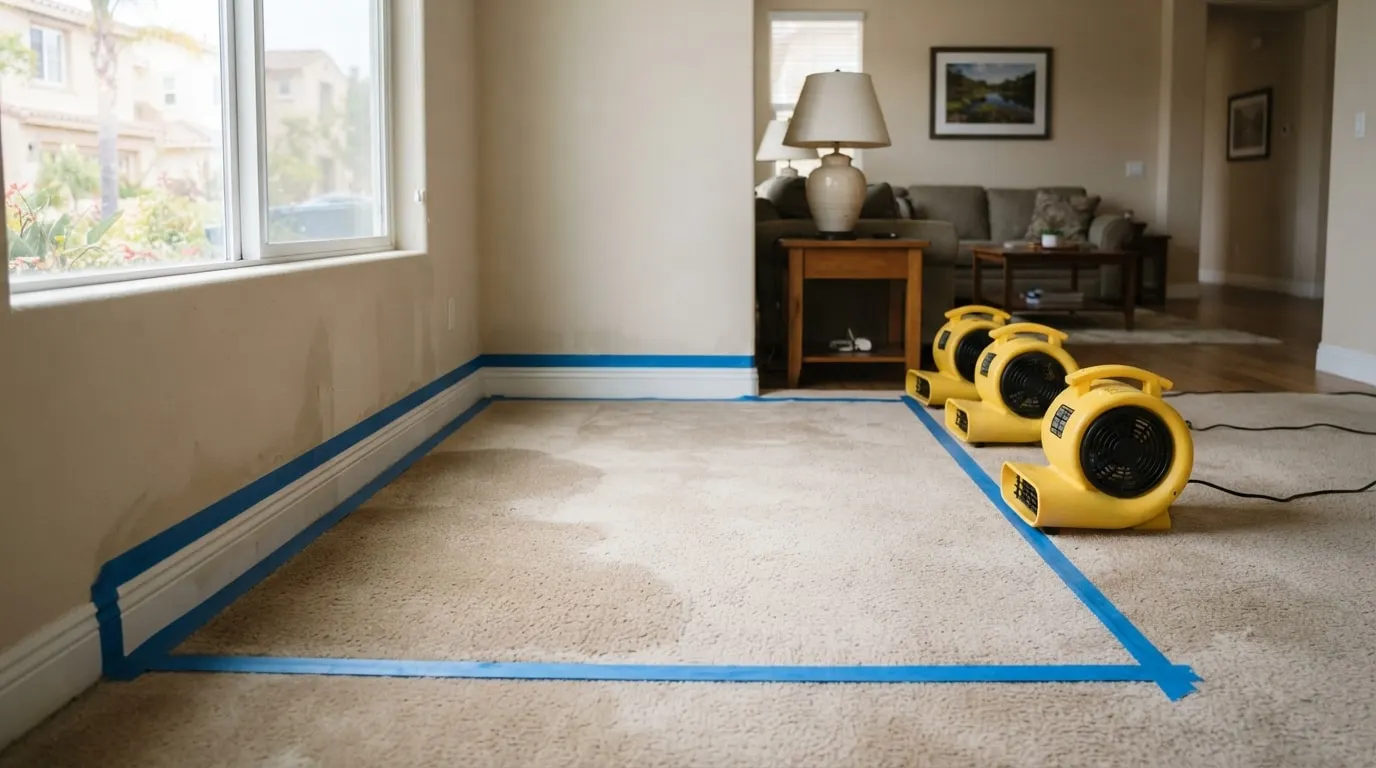
The square footage still matters, but it’s one line on a scope with several others. Wet carpet pad and drywall get measured by area or by the linear foot of wall cut. Air movers and dehumidifiers get counted in units and days, and the count depends on how much water the air has to pull out, which is a separate question from how big the room is. Extraction depends on how much water is standing and for how long. A 300-square-foot room with an inch of water on tile and a 300-square-foot room with soaked carpet, wet pad and wicking drywall are priced as two different jobs.
Emergency water extraction cost and mitigation cost per square foot work the same way. The extraction line follows the gallons and the flooring. The mitigation lines follow the wet area on the moisture map and the number of days it takes to read dry. What happens in those first hours is laid out on the emergency water extraction page.
Cost drivers, line by line
| Driver | What pushes it up | What to mention on the call |
|---|---|---|
| Category of water | Gray or sewage water means more removal, protective gear, cleaning and disposal | Where the water came from: supply line, appliance drain, toilet, sewer, rain |
| Drying class | Water in upper walls, ceilings, hardwood, plaster or slab takes more equipment and more days | Whether water came from above or spread across the floor |
| Square footage on the map | Water running under flooring into rooms next door | How many rooms, and whether the wet spot reaches a wall |
| Materials removed | Flood cuts, baseboards, carpet pad, toe kicks and cabinet bases | Flooring type and whether there are built-in cabinets near the water |
| Equipment days | Dense materials and humid weather slow the readings | When the leak started, as close as you know |
| After-hours start | Night and weekend calls when water is still running | Whether the water is shut off yet |
| Access | High-rise units, gated parking, shared walls, a unit below | Building type, floor number and who has the shutoff keys |
| Contents | Furniture to move, block or pack out of wet rooms | Big pieces sitting in the water |
| Mold | Visible growth or a musty smell means containment before drying | How long the area may have been wet |
| Rebuild | New drywall, paint, flooring and cabinets after the dry-out | Whether you want the repairs scoped now too |
Category 1, 2 and 3 on the scope
Of everything in that table, the water category tends to swing the scope hardest. Clean water from a supply line lets the crew dry a lot in place. With gray water, like a washing machine drain, IICRC S500 guidance has the wet carpet pad pulled and the carpet cleaned and dried on both sides. Category 3, the grossly contaminated kind that includes sewage, means most porous materials it touched are cut out and replaced.
Category isn’t fixed at the moment of the leak either. Clean water that sits for days picks up contamination from what it soaks through, and the crew lead decides the category on the inspection. In February 2026 the S500 consensus body also clarified that rain coming through a roof or window isn’t automatically Category 3. It depends on whether the water is grossly contaminated. The full category and class breakdown is on the water damage restoration page.
Drying class and equipment days
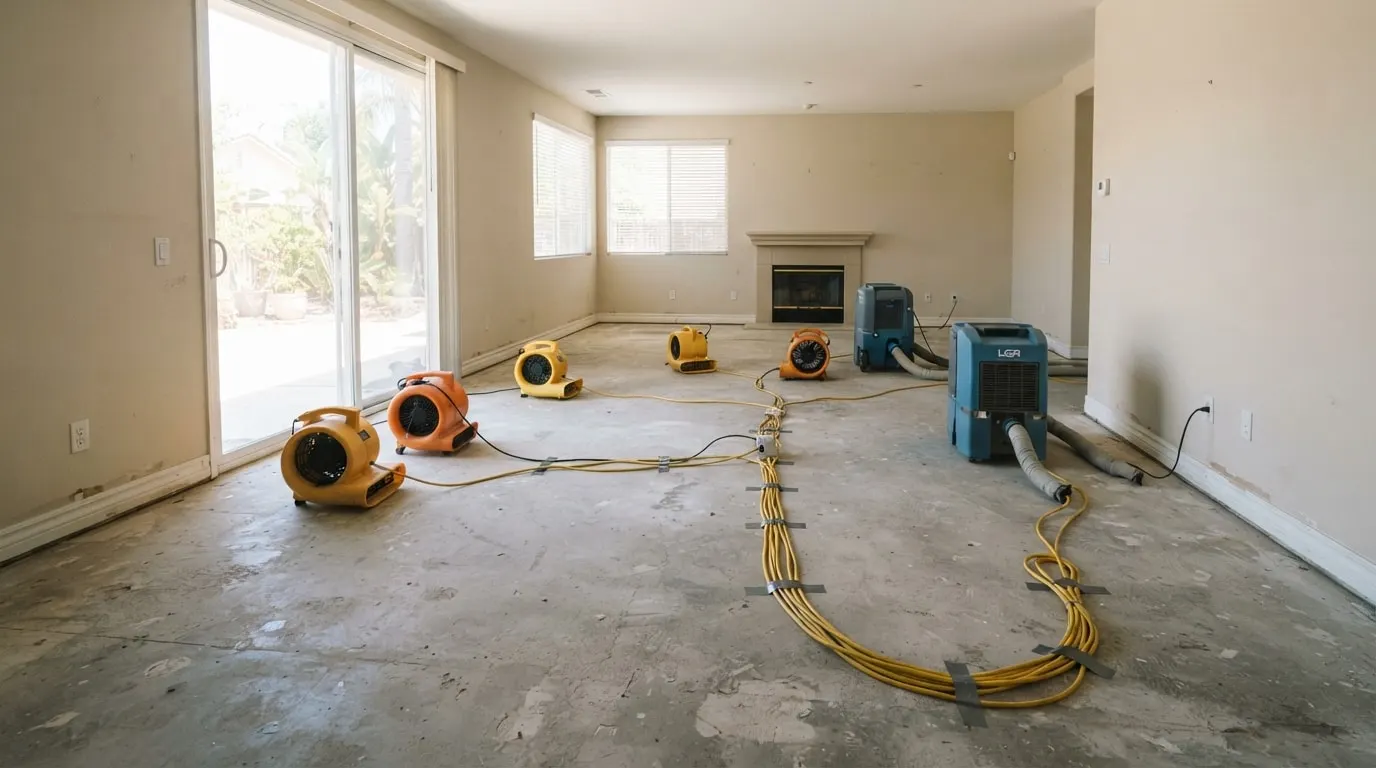
The class is about evaporation load: how much wet material is in the space and how tightly it holds the water. Under the S500, Class 1 means less than about 5 percent of the floor, wall and ceiling surface is wet, Class 2 runs from about 5 to 40 percent, and Class 3 is more than 40 percent, usually with water coming from above. Class 4 is water held deep in dense materials.
That last group shows up a lot in Los Angeles. A slab soaks up water and gives it back slowly, and so do hardwood strip floors, old plaster walls and the bottom plate behind baseboards. Those jobs need more dehumidification and more days before the meter says dry, so a scope lists equipment by the day and the crew lead checks readings on every visit.
Mitigation now, rebuild later
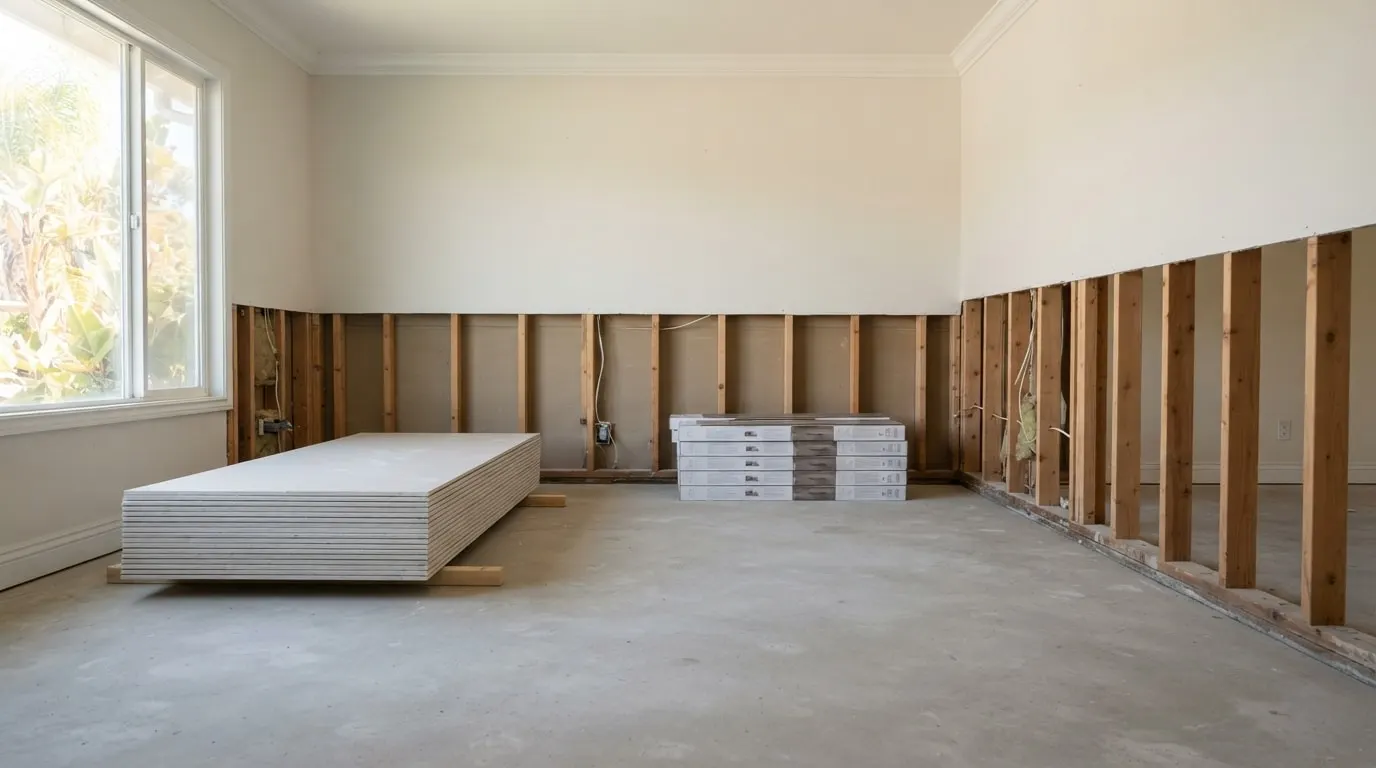
Restoration usually comes in two pieces. Mitigation is the urgent part: extraction, removing what can’t be saved, drying, and readings until the structure is dry. The rebuild is putting it back: drywall, tape and texture, paint, baseboards, flooring and cabinets.
Ask for them as separate lines on the scope. The mitigation number is known early, because it follows the moisture map. The rebuild number depends on what was cut, what flooring you choose and whether new boards have to match old ones in the next room. Hardwood that cupped and then dried flat is a different conversation from laminate that swelled at the seams, and the floors, baseboards and drywall page covers what can be dried in place and what gets replaced.
Sewage backup cleanup cost per square foot
There’s no sourced per-square-foot figure for sewage cleanup either, and the drivers are steeper. Everything porous that the sewage touched comes out, the crew works in protective gear with the area closed off, the waste is bagged and hauled, and what stays gets cleaned and disinfected before drying even starts. The flood cut usually goes higher, and carpet and pad don’t get a second chance. The full picture of what gets thrown out and why is on the sewage backup cleanup page.
High-rises, shared walls and late-night starts
Plenty of the cost on a Los Angeles job is access. A condo on the eighth floor may need the elevator padded and booked, parking for the crew truck and a building manager to open the riser closet. A leak from the unit upstairs can mean two scopes, two sets of readings and a ceiling cavity to dry from below. If the source is above you, the ceiling leak page explains what gets checked up there.
Time of day counts too. A line that bursts at 2 a.m. still gets a person on the phone at 2 a.m., and an after-hours start can appear on the scope as its own line, written down with everything else.
What to tell us for a water damage estimate
A water damage estimate starts with a few plain answers, and the written quote follows the meter. Have these ready when you call:
- where the water came from, and whether it’s shut off
- roughly when it started, or when you last saw the area dry
- how many rooms and floors are wet
- the flooring: carpet, laminate, vinyl plank, tile or hardwood
- house, condo or apartment, and which floor you’re on
- whether the water was clean, from a drain, or from a toilet or sewer line
The crew lead turns that, plus the meter readings, into a written scope and price for you to look over. You only pay for work you agreed to. From there the job runs until the slab and the bottom of every wet wall read dry.
Cost questions before you sign the scope
Can the estimate change after the walls are opened?
It can. Readings taken from the face of the drywall show where water is, and opening a wall sometimes shows it traveled farther along the bottom plate or into insulation. Added work goes onto the written scope for you to agree to before it's done.
Is a dry-out cheaper if it starts the same day?
Usually less comes out of the house. Drywall keeps wicking water upward while it sits, and the EPA warns mold can start on wet drywall, wood and carpet after about 24 hours. A fast start often means a lower flood cut and a pad that can still be saved. More on timing on the mold after water damage page.
Does a condo or apartment cost more to dry than a house?
Often it does, because the water rarely stays in one unit. A supply line that lets go on the third floor can wet the ceiling and walls of the unit below, and each unit gets its own readings and drying setup. Who covers which unit is a separate question, answered on the insurance claims page.
Why are drying days on the scope instead of one flat number?
Because the readings decide when the equipment comes out. The crew lead checks moisture each visit and pulls air movers and dehumidifiers as rooms reach dry, so a room that dries a day early stops adding days.