
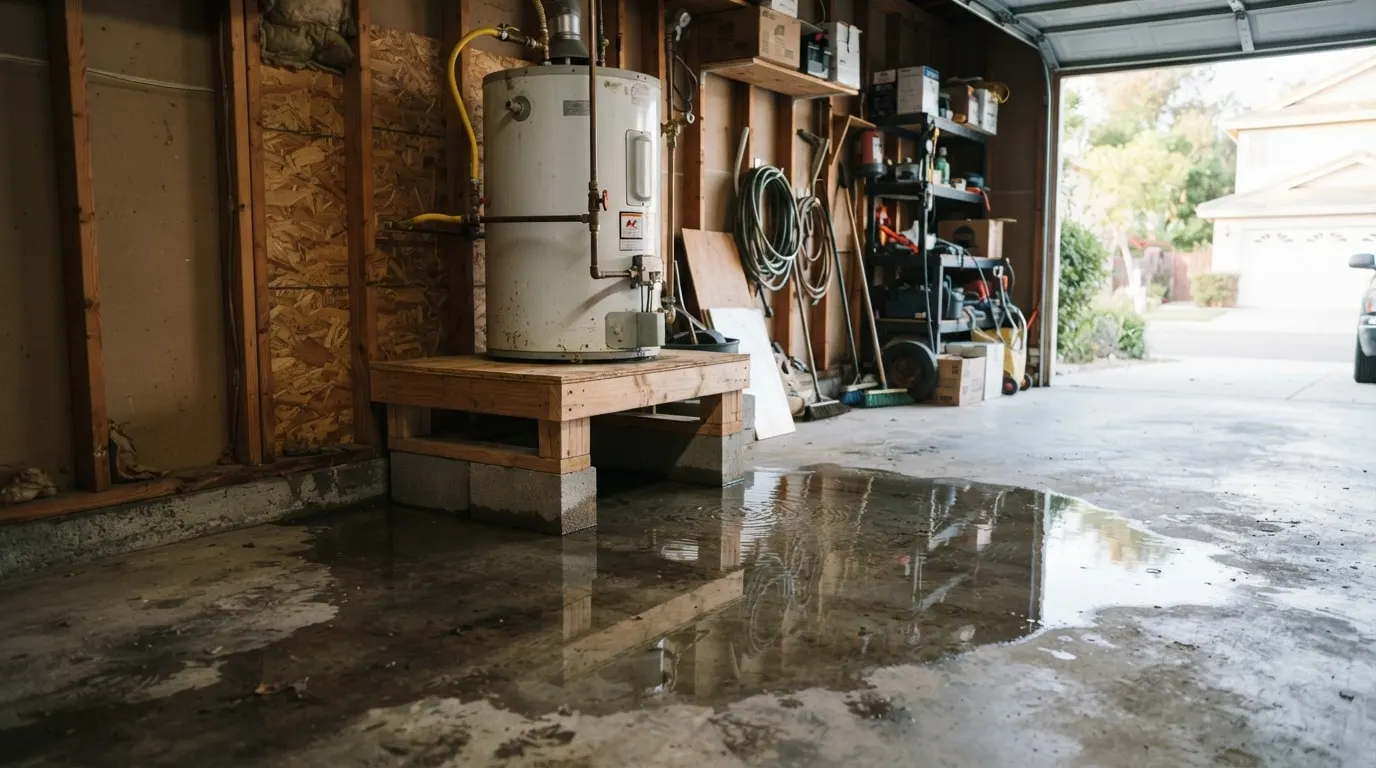
Water on the floor around the tank
A tank water heater holds 30 to 80 gallons, according to A. O. Smith, and it refills from the cold supply as fast as it leaks. So the water doesn’t run out on its own. In a slab-floor house there’s nowhere for it to drain. It spreads across the closet or garage floor, slides under the baseboard and the bottom plate, and starts wicking up the drywall on both sides of the wall.
Calls to Los Angeles Water Damage Cleanup are answered 24/7. On a water heater leak cleanup, a licensed, insured restoration crew pulls the standing water, finds the edge of the wet with a moisture meter and dries everything inside that line. Repairing or replacing the heater is plumbing work, and the drying is planned around it.
Is a leaking water heater an emergency?
A steady stream, a spray from a fitting or a hissing sound is an emergency. So is any water near the burner of a gas heater or the wiring of an electric one. A slow drip at the relief valve pipe is less urgent for the heater, but if the floor under it has been wet for days, the wall next to it needs reading.
A leak from the bottom of the tank doesn’t get better. A. O. Smith’s guidance is plain on this: corrosion that’s eaten through the steel can’t be repaired, and the tank gets replaced.
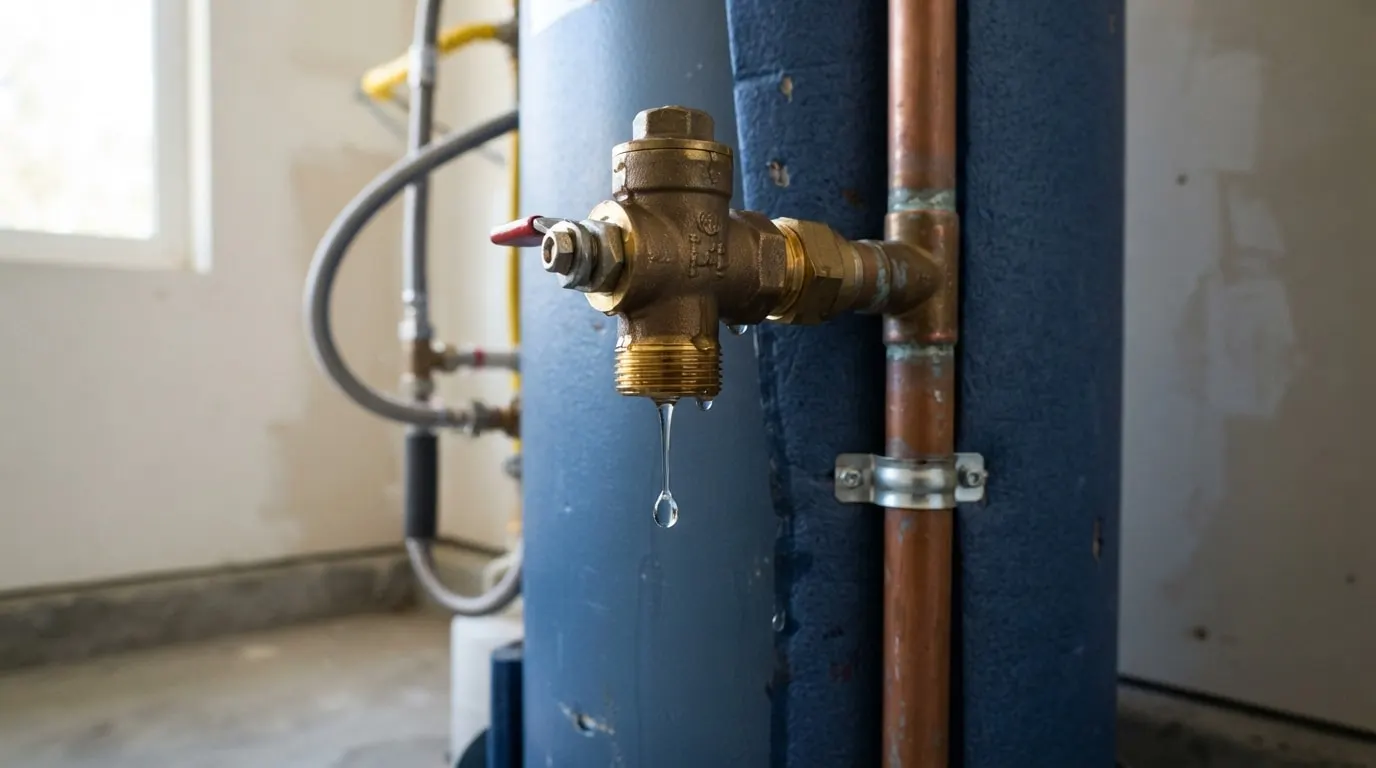
Relief valve or the tank itself
Where the water starts tells you whether the heater needs a part or a replacement, and how much water to expect. The restoration tech traces it back from the wet floor before anything gets moved.
| Where it’s wet | What it usually means | Does it keep coming? |
|---|---|---|
| The pipe running down from the relief valve | The T&P valve opened or failed, or the temperature is set too high | It drips while the heater runs and can turn into a steady flow |
| Top of the tank, where the pipes connect | A loose or corroded inlet or outlet fitting | Yes, under full supply pressure |
| The drain valve near the bottom | A worn washer or a loose valve | Usually a drip |
| Side of an electric tank, at an element | A failed element gasket | A seep down the side |
| Under the tank, from the base | Corrosion through the steel | Yes, until the supply is off and the tank is empty |
The T&P valve (temperature and pressure relief) is a safety valve. It opens when the tank gets too hot or the pressure climbs too high, so a valve that’s discharging may be doing its job. The plumber checks the valve, the thermostat setting and the house pressure before swapping it. High street pressure is its own problem, and the burst pipe page covers it.
Water heater leaking from the bottom
Water pooling under the tank with the fittings dry above it usually means the tank has rusted through. Hard-water sediment settles on the bottom, the anode rod wears away, and the steel corrodes from the inside. Rumbling or popping before the leak, rusty or cloudy hot water, or a tank older than the Department of Energy’s estimated average life of about 15 years all point the same way.
One thing gets checked first. A. O. Smith notes that condensation can wet the outside of a tank, mostly when cold water first fills a hot one. Wiped dry, a sweating tank stays dry for a while. A leaking one is wet again within a few hours.
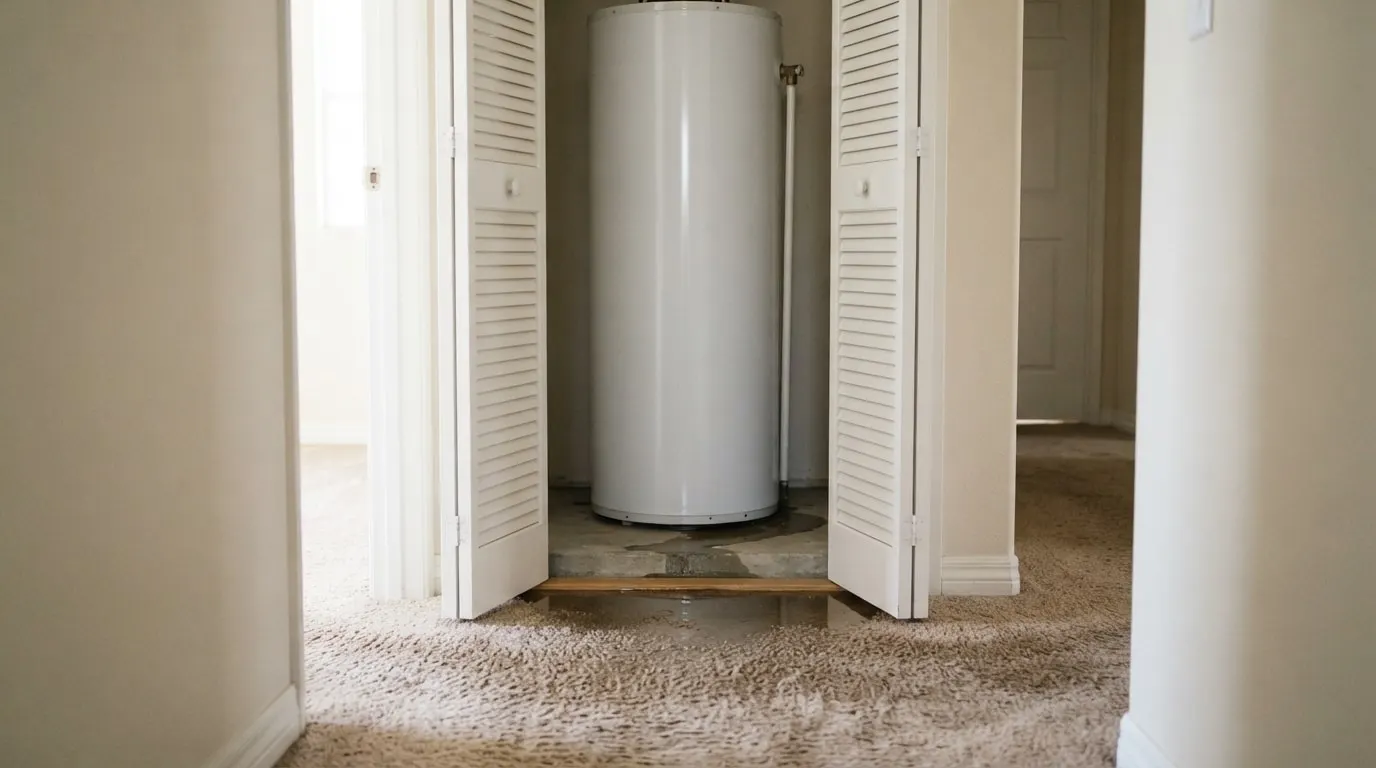
Garage, closet or attic: what gets wet first
Where the tank sits sets the path the water takes, and that’s where the first readings go.
Garage water heaters
The California Residential Code calls for the parking area of a garage floor to slope toward a drain or the main vehicle door, so a lot of the water heads for the big door. What gets wet first is whatever sits on the floor: cardboard boxes, stored furniture, the feet of shelving, the bottom of the drywall on the garage walls. Watch the wall between the garage and the house. If the tank stands against it, water wicks into that wall and can reach the baseboard on the living side, and it can run under the house door if the step up is low.
Hall and laundry closet tanks
An interior closet is the hardest spot for a leak on a slab. The closet floor is small, so the water leaves it fast: under the door into the hall carpet, under the baseboards on both sides, and into the bedroom or bathroom that shares the wall. The back wall behind the tank is often the wettest spot in the house and the last one anyone sees. When the plumber pulls the old tank, that wall and the floor under it are open for the first time in years, and that’s the moment to read them.
Attic and upstairs tanks
A tank in an attic, or over a floor-ceiling assembly like an upstairs closet, sits in a pan. The California Plumbing Code requires a watertight pan there with a drain at least 3/4 inch across, wherever a leak would damage the building. A pan handles a drip. It won’t hold a tank that splits, and a clogged pan drain spills over like there’s no pan at all. Then the water is in the floor below, and the job turns into a ceiling leak in the room underneath.
Water heaters in condos and apartments
In a condo or apartment, the tank may sit in a closet inside the unit, sharing a wall with the neighbor and sometimes sitting over someone else’s ceiling. Give us your unit number, the unit next door or below if water has reached it, and a phone contact for the property manager or HOA. If you rent, let the landlord or manager know when you call us, so the replacement and the drying get scheduled together. Moisture readings go on your side of the shared wall and, with the neighbor’s OK, on theirs.
Is a water heater leak covered by insurance?
The water damage often is when the leak was sudden, and the heater itself usually isn’t. Insurers generally cover sudden, accidental water damage, like a ruptured appliance, while slow seepage and wear count as maintenance. The insurance claims guide goes through sudden and gradual losses, the adjuster’s questions, and responsibility in condos and rentals. Before the old tank gets hauled off, photograph its rating label. The model and serial numbers on it help date the heater.
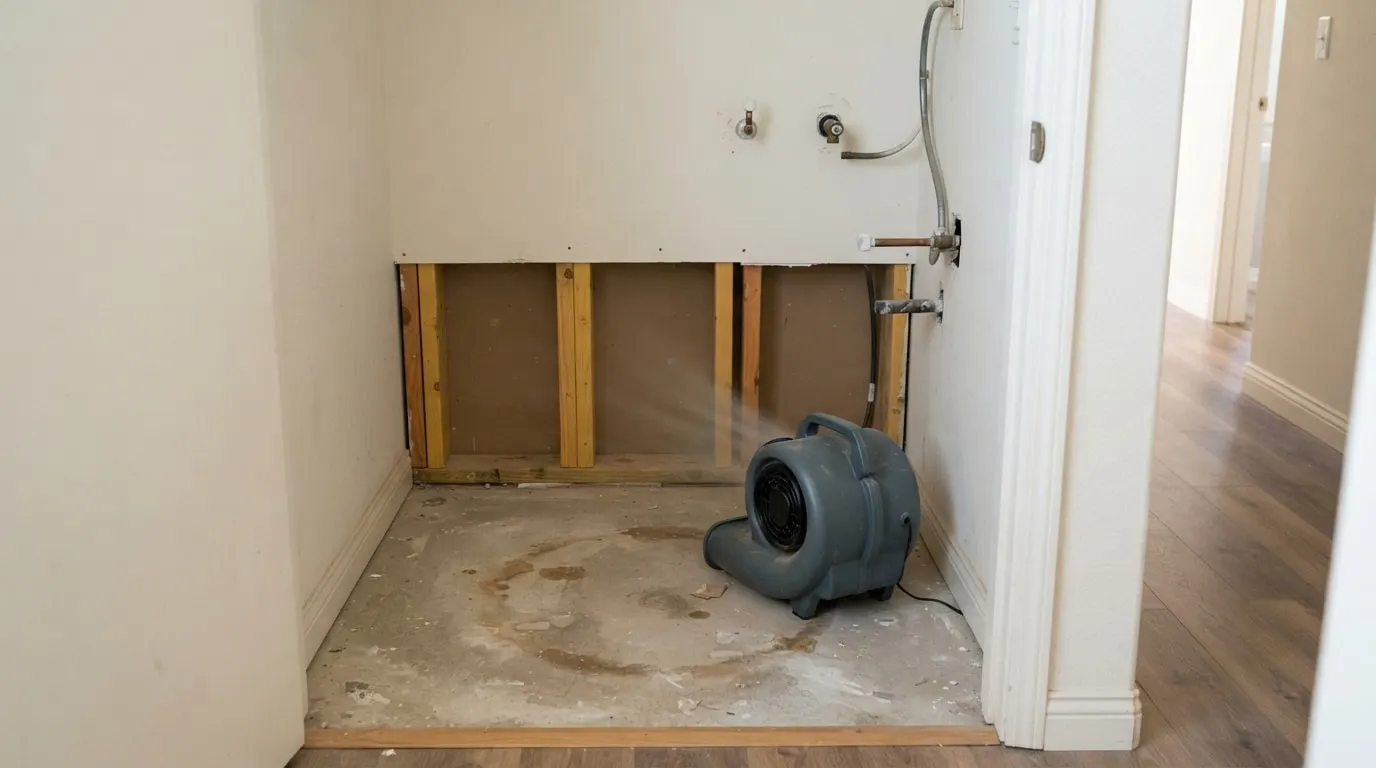
Drying the closet, hall and garage
Most water heater jobs happen in two moves: the plumber pulls the old tank and sets the new one, and the drying runs around that.
The crew extracts the standing water, then reads the floor and every wall the water reached, including the far side of the closet wall. Baseboards come off where the readings are high. Hall carpet gets pulled back so the pad and the slab under it can be checked, and a pad soaked from the closet usually comes out. Dehumidifiers and air movers go in, and small holes behind the baseboard let air into the wall cavity. Readings get logged at each visit until the wall and floor match dry material, and the floors and walls page covers when drywall gets cut instead of dried in place.
How long it takes depends on how long the tank leaked before anyone saw it. A burst found in an hour and a tank that seeped into a closet for a month are different jobs. The emergency extraction page covers the first 48 hours.
What to tell us about the leak
- Where the tank is: garage, hall or laundry closet, attic, upstairs.
- Gas or electric, and whether it’s shut off yet.
- How far the water has reached: hall carpet, the next room, the unit below.
- How long it’s been leaking, if you know.
- Whether a plumber is booked or the new tank is already in.
That’s enough for the crew to know which wall gets read first and what equipment to bring.
Water heater leak questions: tanks, valves and claims
Why is my water heater leaking from the top?
Top leaks usually start at the cold inlet or hot outlet fittings, or at a relief valve mounted on top. Heat and age loosen those connections, and a plumber can often tighten or replace them, so a top leak tends to be better news than a bottom leak. The water still runs down the jacket to the floor.
Does the new water heater have to wait for the drying?
Usually not. Hot water comes back once the replacement is in, and the drying runs around it. The exception is a soaked wall right behind the tank. California requires water heaters to be strapped against earthquakes, and those straps fasten to the wall, so soft drywall there gets dealt with before the new tank goes in.
Could the water by the heater be a slab leak instead?
Yes. A hot line leaking under the slab keeps the tank refilling and can wet the closet floor from below. If the tank, its fittings and the relief valve pipe are dry but the floor is wet or warm, the slab leak page covers the meter test.