
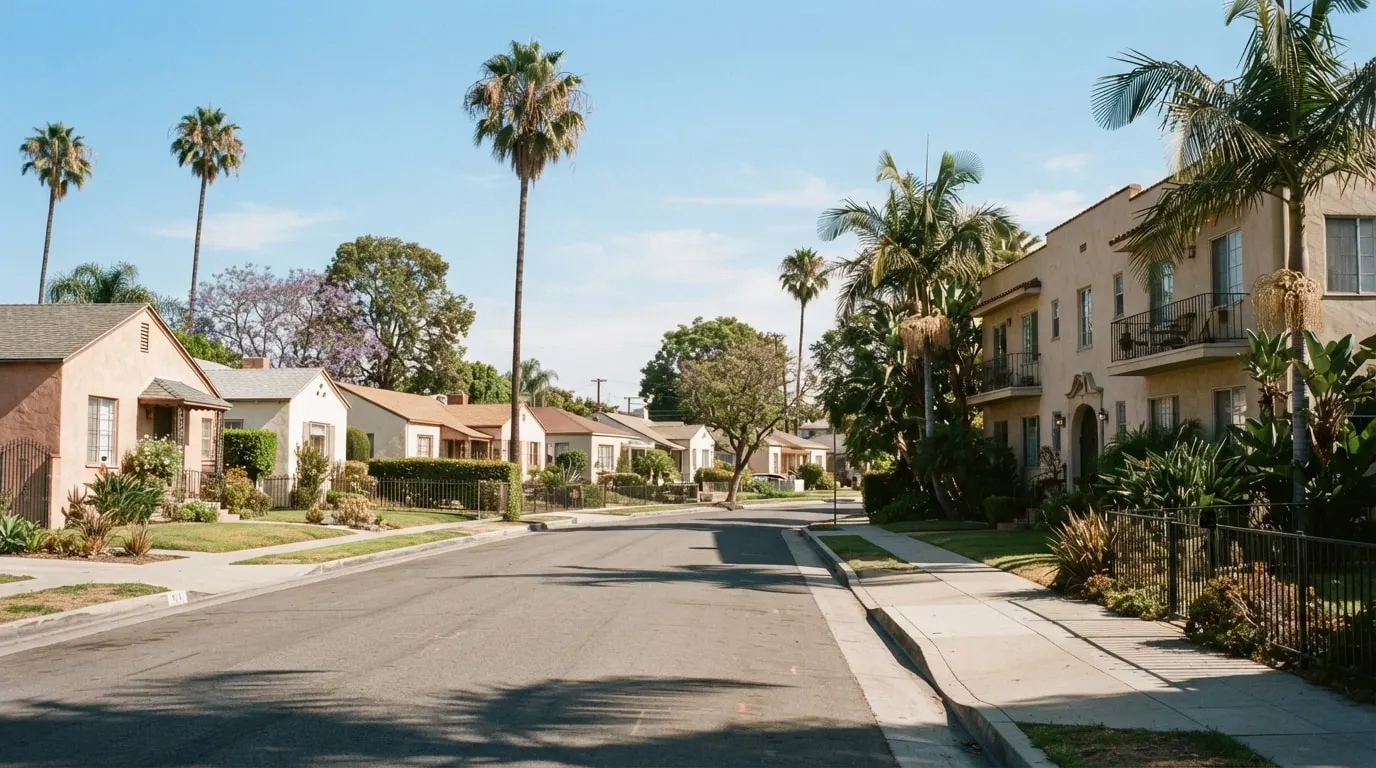
Older units, shared walls, and the first call
Census estimates for 2020 to 2024 show close to two in three Inglewood households renting, and only about a third of homes are owner-occupied. A lot of the city’s housing is in small and mid-size apartment buildings, so a leak here usually involves more than one unit and a manager or owner who isn’t on site. Los Angeles Water Damage Cleanup answers around the clock, and a licensed, insured restoration crew handles water damage restoration in Inglewood and Lennox from the first extraction to the last moisture reading.
Start with the source. If you can reach the shutoff under the sink or behind the toilet, close it. If the water is coming from the unit above or next door, knock, and if nobody answers, call the manager. Then call us with your unit number and the number of the unit the water came from.
The second unit number is the one that gets skipped. If the supply line upstairs keeps dripping into the wall cavity, your floor can run under air movers for days and the readings won’t drop.
Buildings put up before 1960
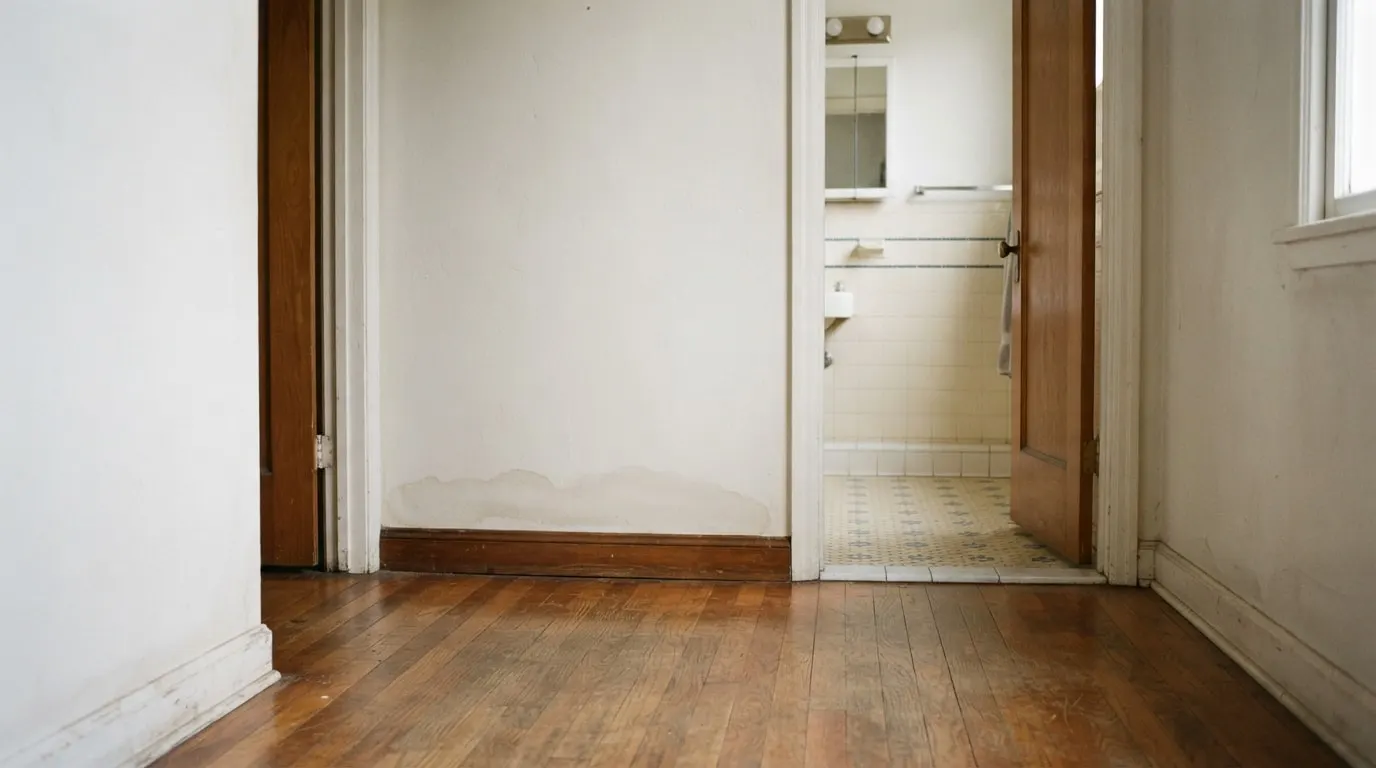
Roughly half of Inglewood’s housing was built before 1960, and about 32 percent before 1950. About 16 percent dates from 1939 or earlier. Torrance, a few miles south, has about 4 percent in that oldest group, so Inglewood’s buildings run a generation older than much of the South Bay.
Age changes the job in a few practical ways:
- Plumbing that’s been patched more than once. A house from the 1940s can have original galvanized lines in one wall and newer copper or PEX in the next. Galvanized steel rusts from the inside, and copper of that age can develop pinholes. Both failure types are explained on the burst pipe and supply line page.
- Floors over a crawlspace. Not every Inglewood house is on a slab. Older homes can sit on a raised wood floor, where water drops into the crawlspace and stays there unless someone dries it from below.
- Layers of flooring. Vinyl over linoleum over hardwood is common in older rentals. Water gets trapped between layers, and the top layer can feel dry while the one under it is soaked. The crew reads each layer before deciding what comes up. How floors and baseboards get dried or replaced is covered on the floors and walls page.
Newer buildings aren’t immune. Only about 7 percent of the city’s housing dates from 2000 or later, though, so for most callers the building is old enough that the crew should expect a surprise or two once the baseboards come off.
Apartments stacked above and beside you
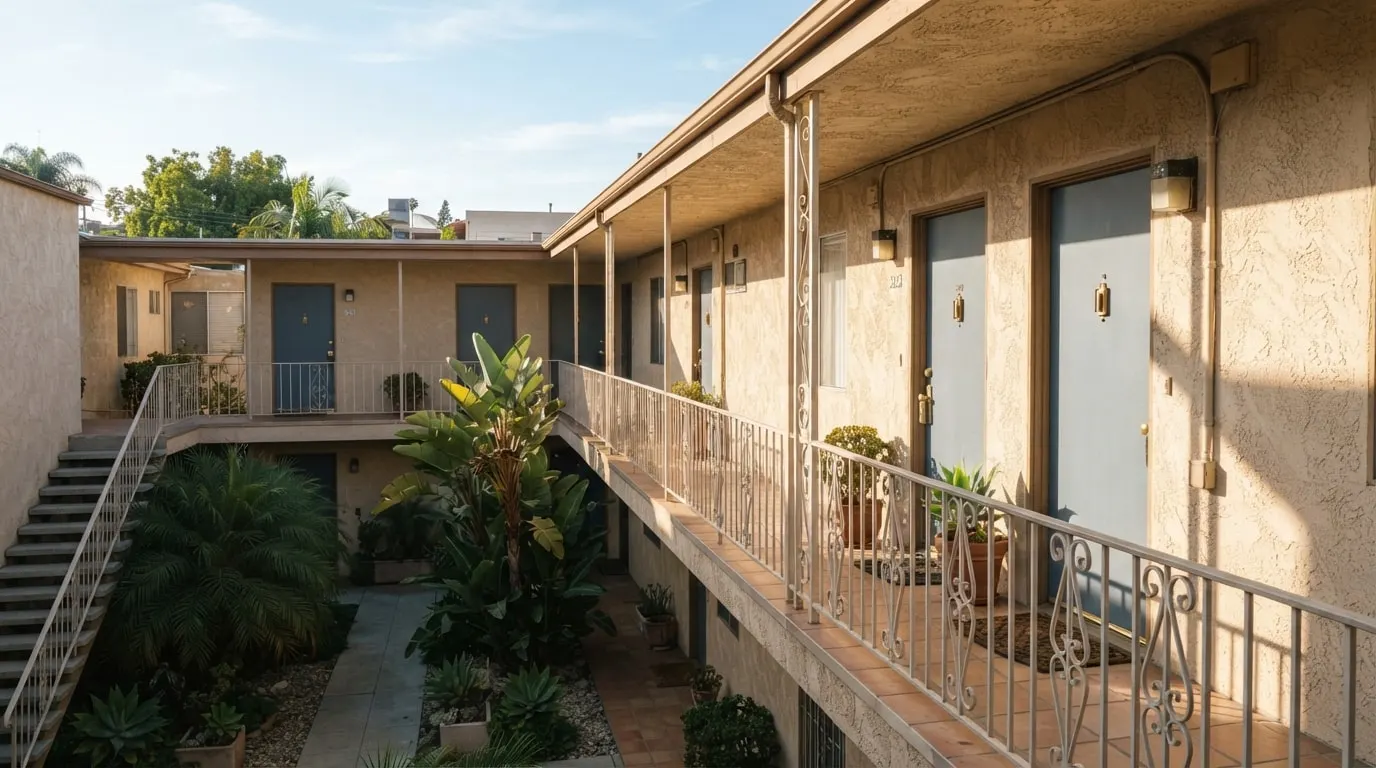
About 42 percent of Inglewood’s homes are in buildings with five or more units, and another 14 percent are duplexes, triplexes and fourplexes. In those buildings water rarely stays in one place. A washer hose or a toilet supply line upstairs runs down the inside of the wall, and the first sign in your unit might be a stain near the ceiling or a wet strip of carpet along the baseboard.
The crew works from the moisture map. Readings start at the wet spot you can see and move outward along the wall, across the ceiling and into the next room until they hit dry material. That map shows where the flood cut goes, and it shows how far into the neighbor’s side the water went, which the building owner will want to know.
When water comes through a ceiling, keep people out from under any sag and put a bucket under the drip. The ceiling leak page covers what a ceiling that’s holding water looks like and when it can come down.
Water heaters are the other common source in older buildings. In a fourplex or a small courtyard building a tank can sit in a closet that shares a wall with a bedroom or a kitchen. When a tank lets go, that’s the wall that soaks first. More on tanks in closets and garages is on the water heater leak page.
Renting: photos, the manager, and the claim
If you rent, two kinds of damage get handled in two places. The building (walls, floors, cabinets) is the owner’s side. Your belongings and any time you can’t stay in the unit usually fall under renters insurance, if you have it. Who covers what in a shared building is laid out on the water damage insurance claims page.
Every claim leans on the same three things:
- Photos and a short video of every wet room before anything gets moved, plus the source if you can see it.
- The date and time you first noticed the water, and when you told the manager.
- The drying log. The crew records moisture readings each day, and that log shows the place was dried, room by room.
Give us the manager’s name and number when you call if you have it. Access to the unit the water came from, and to any shared shutoff, usually goes through them.
Inglewood and Lennox ZIP codes
This page covers 90301, 90302, 90303, 90304 and 90305. Lennox addresses use 90304. Don’t see your ZIP? Call anyway and we’ll check your address.
Lennox is unincorporated Los Angeles County land, so the county, not the City of Inglewood, maintains its roads and provides its local services. Inside your home that changes nothing about extraction or drying. It does change who you’d report a broken main or a flooded street to.
Nearby, the service area page has sections on Hawthorne and Gardena. Farther south in the South Bay, the Torrance page covers a city built mostly in the 1950s and 60s, and the Beverly Hills page covers the Westside.
Which water company serves your block
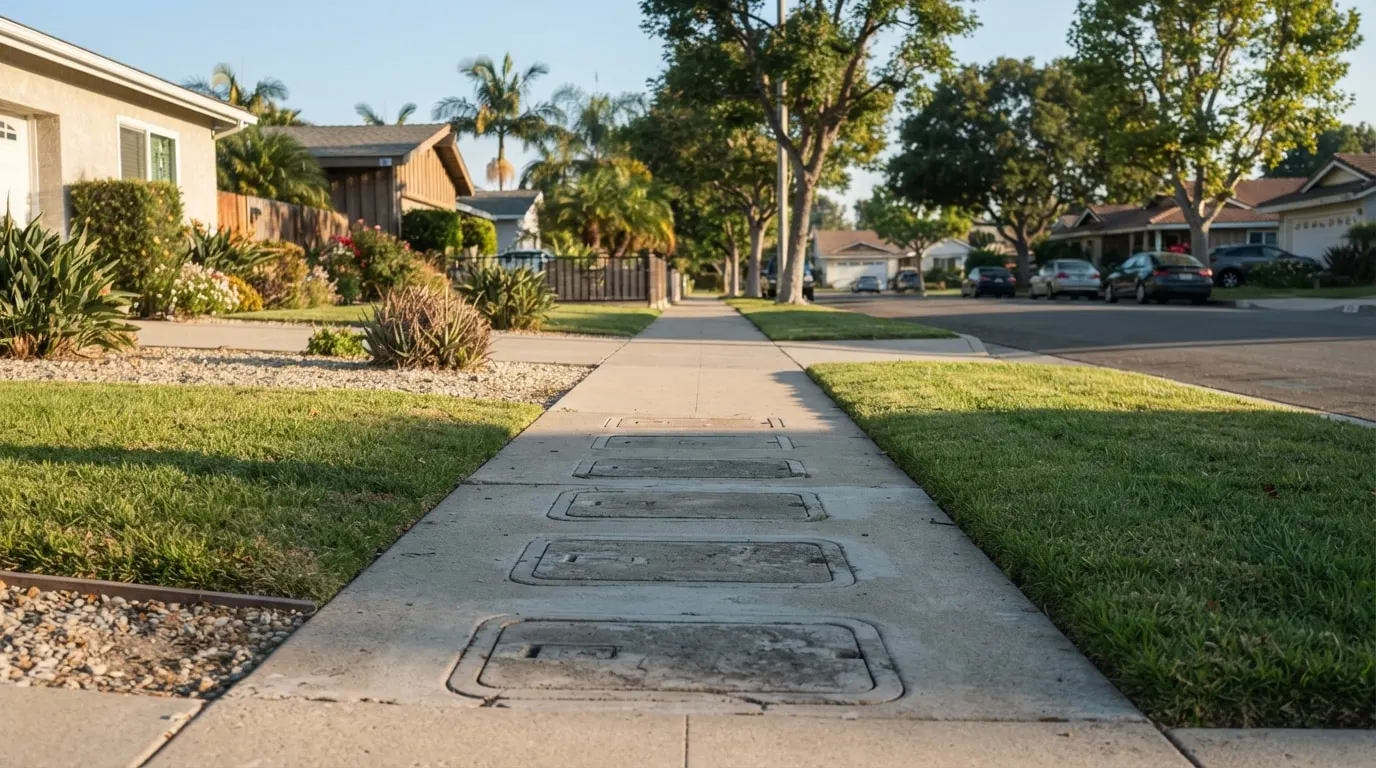
Inglewood is split between three water providers. The city’s Water Division serves about 80 percent of the city’s area. Golden State Water Company serves a portion in the south, and California American Water serves a small area in the northwest. Golden State Water also serves Lennox.
It matters on a water damage call for one reason: where the leak is relative to the meter. Water bubbling up in the parkway or the street on the utility’s side of the meter is the water company’s repair, and it’s that company that shuts it down. A leak on your side of the meter, in the yard line, the slab or the walls, is the property’s repair: a plumber fixes the line and the restoration crew dries what it soaked.
If water is coming into the building from outside, tell us whether it’s from the ground near the meter, from a broken irrigation line or from the street. Each one points the crew to a different first step. Once the source is stopped, extraction starts at the lowest point inside, and the dry-out runs until every reading on the map is back to dry.
Inglewood questions from renters and owners
The water came from my neighbor's unit. Can the crew still dry mine?
Yes. Your unit can be extracted and dried while the neighbor or the manager deals with the source. The crew also needs to see the unit the water came from, because the wall or floor between you is usually the wettest part of the job.
My older house has a raised wood floor. Does that change the dry-out?
It does. Water that gets through the floorboards drips into the crawlspace and stays under the house. The crew checks the subfloor, the joists and the soil or vapor barrier below, and sets drying up from underneath as well as in the room.
Do I have to move out while my apartment dries?
Usually not for a clean-water leak, though the air movers and dehumidifiers run day and night and they're loud. Sewage or a wet ceiling that might come down changes that. Your crew lead will tell you which rooms are safe to use while the equipment runs.
Is Lennox part of this page?
Yes. Lennox addresses use 90304 and are on this page with the rest of Inglewood. Lennox is unincorporated county land, so the streets and the water company aren't the City of Inglewood's, but the dry-out inside your home is the same job.